What Is Orange (Skin-Contact) Wine? Production and Label Terms
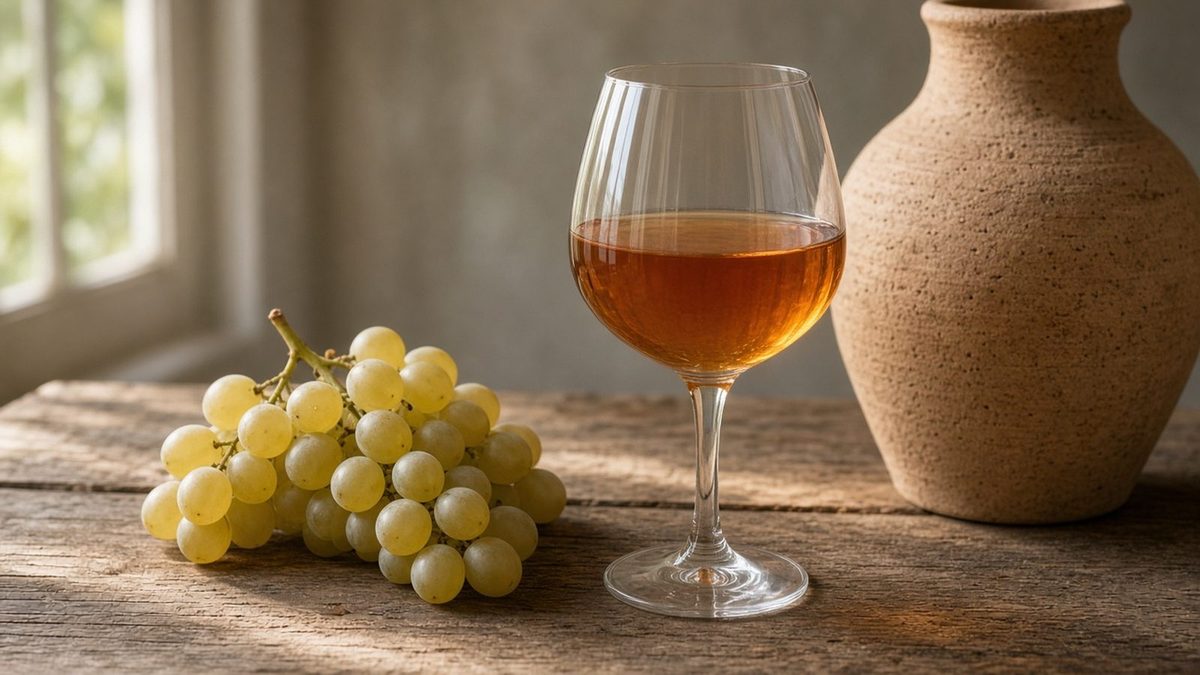
Orange wine is white wine made like a red: white grapes are fermented with their skins for days, weeks or months, which gives the wine an amber or orange colour and more tannin. It contains no oranges. Labels may say orange, amber, skin-contact or skin-fermented, and some say nothing at all.
Third-party trend trackers have listed "skin contact wine" among rising drink searches this autumn, and the term turns up more and more often on wine lists. The idea is old, but the vocabulary can still confuse. This guide explains what the style is, how it is made, how it differs from white and rosé, and what to look for on a label.
Definition: white grapes, skin contact
Most white wine is made by pressing white grapes quickly and fermenting only the juice. Red wine is made by fermenting red grapes with their skins, which is where colour and tannin come from.
Orange wine applies the red-wine method to white grapes. The juice ferments while in contact with the skins (and sometimes the stems and seeds). The skins release colour pigments, tannins and other compounds, giving a wine that ranges from deep gold to amber to copper. "Orange" describes the colour, not the fruit.
How long the skins stay in
Skin-contact time, or maceration, is the main decision a producer makes. It ranges widely:
- Hours to a few days: a light gold colour and a gentle effect. Some producers would not call this orange wine.
- One to several weeks: a clear amber colour and noticeable tannin.
- Several months: deep colour and strong tannic structure; often associated with traditional clay-vessel methods.
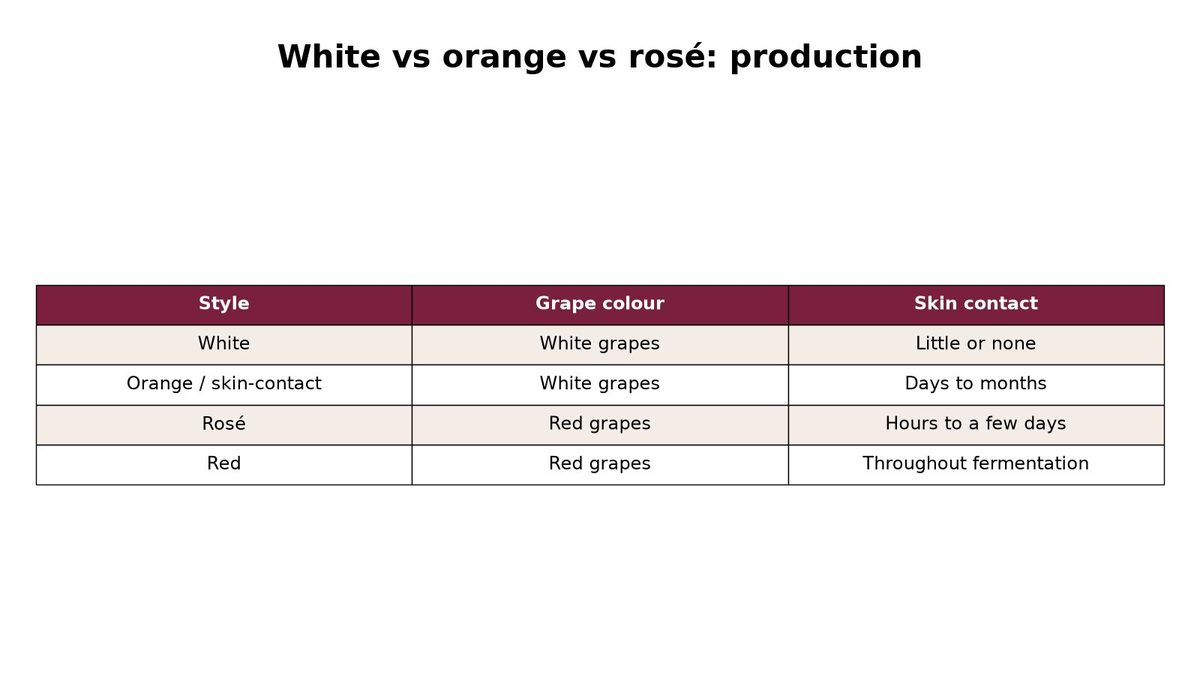
Step by step: how skin-contact wine is made
- Harvest and crush white grapes.
- Leave the juice on the skins in a tank, barrel or clay vessel.
- Ferment with the skins, often with natural yeasts and minimal intervention, though methods vary by producer.
- Press the skins off once the producer decides maceration is complete.
- Age in tank, barrel or clay, then bottle. Some producers filter; many do not, so sediment can occur.
Orange vs rosé vs white: production
| Style | Grape colour | Skin contact time | Typical label term |
|---|---|---|---|
| White | White grapes | Little or none | Grape or place name |
| Orange / skin-contact | White grapes | Days to months | Orange, amber, skin-contact, skin-fermented, ramato (for some Pinot Grigio), or none |
| Rosé | Red grapes | A few hours to a couple of days | Rosé, rosado, rosato |
| Red | Red grapes | Throughout fermentation, often longer | Grape or place name |
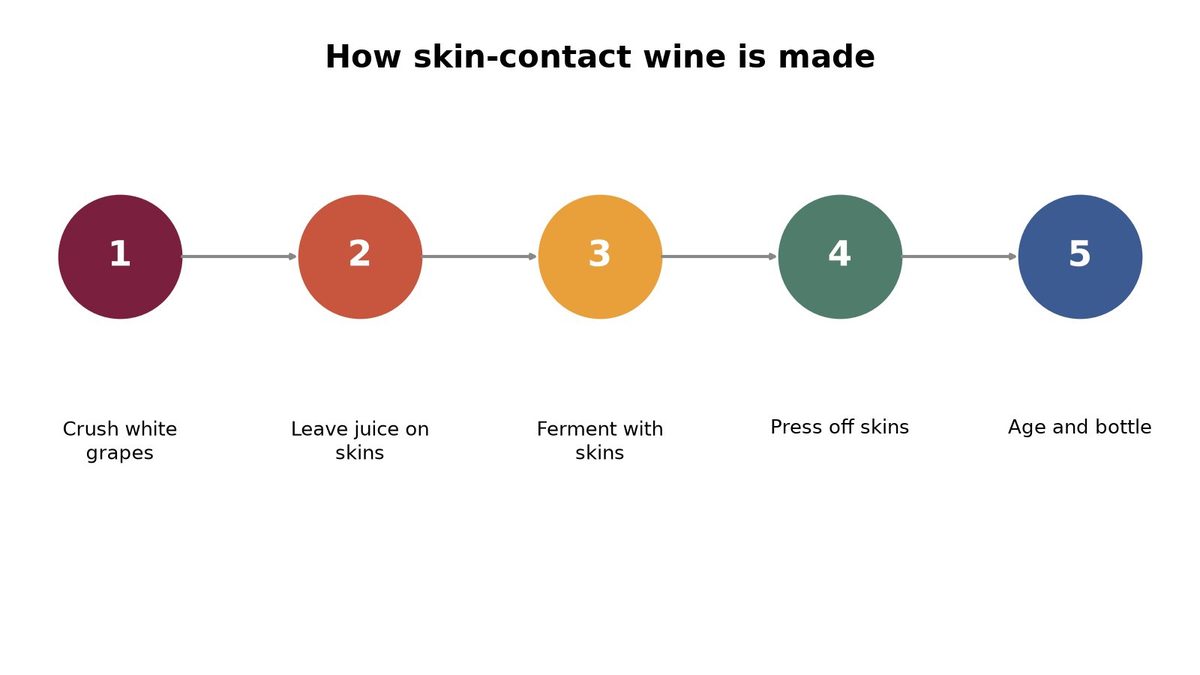
The key distinction: rosé comes from red grapes with short skin contact; orange wine comes from white grapes with longer skin contact. They can look similar in the glass, but they are made from different grapes and in different ways.
Origins
Skin-contact white wine is one of the oldest ways of making wine. Georgia has a winemaking tradition in large clay vessels called qvevri, buried in the ground, which is recognised on UNESCO's list of intangible cultural heritage. In north-east Italy, particularly Friuli, and across the border in Slovenia, producers revived long skin-contact winemaking from the late twentieth century onward. Today the style is made in many wine regions around the world.
You can browse wines by origin in our catalogue at wines from Italy and wines from France, though these pages are not specific to skin-contact styles.
Label terms: orange, amber, skin-contact
There is no single international legal definition of "orange wine", so labels vary:
- Orange wine: the common popular term.
- Amber wine: preferred by some producers and used in Georgian tradition.
- Skin-contact / skin-fermented / macerated: describes the method directly.
- Ramato: an Italian term for copper-coloured Pinot Grigio made with some skin contact.
- Some labels state nothing. A producer may label a skin-contact wine only by grape and place, so the back label or producer notes are worth reading.
Some wine regions' rules restrict how orange wines can be labelled or which category they fall under, which is one reason the terminology on labels is inconsistent. Our how to read a wine label post explains the standard fields.
ABV and closure facts
Orange wines are still wines, so ABV generally falls within the usual still-wine range; check the printed figure. Closures vary: natural cork, technical cork and screwcap are all used. Because many orange wines are unfiltered, you may see sediment or haze; this is a production choice and the label sometimes says so. Store cork-sealed bottles on their side, as covered in our storage guide.
Serving temperature: many producers suggest serving skin-contact wines a little warmer than a light white, often in the 10–14 °C range, but follow the label. See the serving temperature chart.
What's in our list
At the time of writing, our catalogue does not include a wine labelled as orange, amber or skin-contact, so this post does not link to one. Related categories you can browse:
- White wine, the grape colour orange wines start from.
- Rosé wine, for comparison.
- Sparkling wine, some of which uses brief skin contact in rosé styles.
- Wine for the full range, and sale for current offers.
If skin-contact listings are added, they will appear under white wine or wine. Check the FAQ for how to ask about a specific product.
Grape varieties often used
Orange wine can be made from any white grape. Varieties producers often use include Ribolla Gialla, Pinot Grigio (as ramato), Rkatsiteli and Mtsvane in the Georgian tradition, Malvasia, Sauvignon Blanc and Chardonnay. Our types of white wine post covers the major white grapes.
How to serve orange wine
- Check the label for any suggested serving temperature.
- Chill lightly, commonly to 10–14 °C.
- Use a standard white or universal wine glass.
- Pour gently if the wine is unfiltered, leaving any sediment in the bottle.
- Reseal and refrigerate any leftover wine and finish within a few days.
A note on describing orange wine
Orange wines are often described with words such as "tannic", "textured" or "savoury". Those descriptions come from producers, critics and drinkers, and they vary from bottle to bottle. We do not make taste claims about any specific wine; the facts we can state are grape colour, skin-contact method, ABV and closure.
Frequently asked questions
What is orange wine?
A white wine made with extended skin contact during fermentation, giving it an amber colour and more tannin than most whites.
Is orange wine made from oranges?
No. The name refers to the colour. It is made from white grapes.
How is orange wine different from rosé?
Rosé is made from red grapes with brief skin contact. Orange wine is made from white grapes with longer skin contact.
Is orange wine the same as natural wine?
Not necessarily. Many orange wines are made with minimal intervention, but "natural wine" refers to winemaking philosophy, while "orange wine" refers to skin contact. A wine can be one without the other.
Why is my orange wine cloudy?
Many are bottled unfiltered, so haze or sediment is common and expected. Pour gently.
Related reading
- Types of White Wine
- Types of Red Wine
- How to Read a Wine Label
- Champagne vs Prosecco vs Cava vs Crémant
- Port vs Sherry vs Vermouth
You must be of legal drinking age in your province. ID and adult signature required at delivery.