Low-Alcohol Wine and Spirits: What the ABV Label Terms Mean
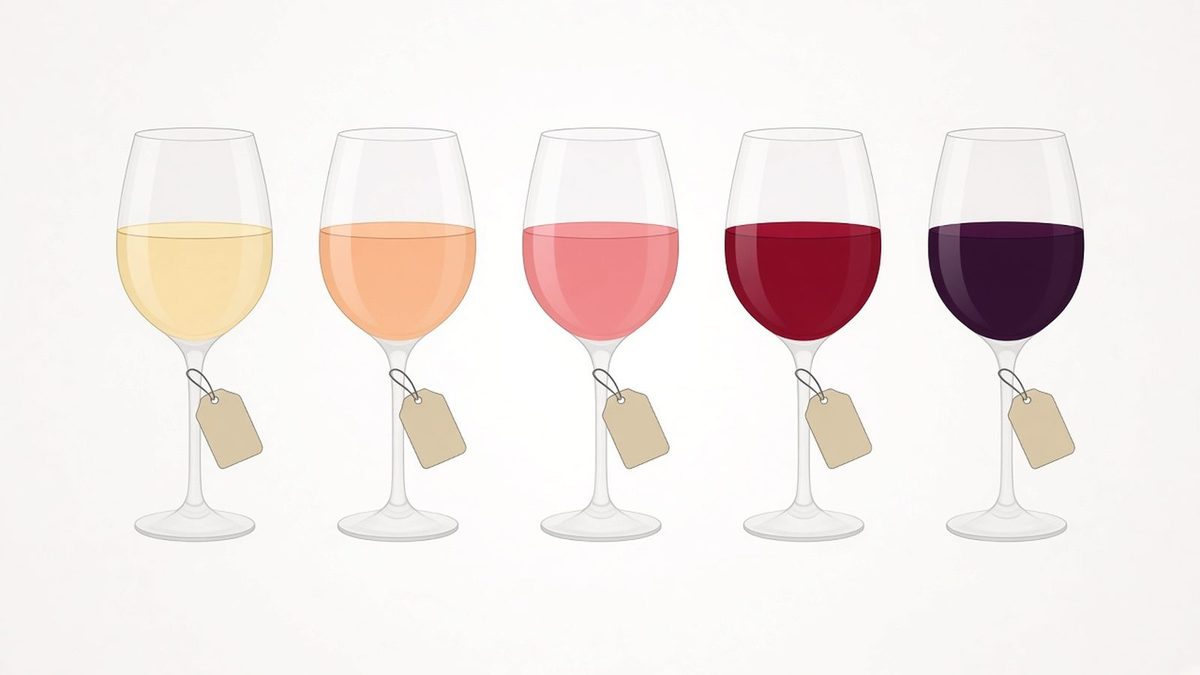
Low-alcohol wine is wine with less alcohol than a standard bottle. Terms such as "low", "light", "reduced" and "non-alcoholic" have different meanings, and legal thresholds depend on where the product is sold, so the printed ABV is the fact to rely on. Most still wines sit around 11–15% ABV; some styles are naturally lower.
Lower-alcohol choices are a growing part of the market; retail reporting has pointed to growth in no- and low-alcohol products, and third-party trackers list related searches such as "mini drinks" as rising. Whatever the reason for choosing a lower-ABV drink, the label is where the facts are. This guide explains the terms, the typical ABV ranges and how to work out what you are pouring.
Label terms: low, light, reduced, non-alcoholic
Exact legal definitions vary by jurisdiction, so treat the descriptions below as general and check the printed ABV.
- Non-alcoholic / alcohol-free: very little or no alcohol, often up to 0.5% or 0.0%. See non-alcoholic holiday drinks.
- Low-alcohol: contains alcohol, but well below the standard for its category. In some rules this is a defined band, often in the low single digits.
- Reduced-alcohol or "lighter": lower than the producer's or category's usual level, but not necessarily low. A "lighter" wine at 9% is still more than half the alcohol of a 15% wine.
- "Light" for calories: sometimes refers to calories rather than alcohol. Read the full label.
Comparison: terms, thresholds and examples
| Label term | ABV threshold (general; varies by jurisdiction) | Example style | How to find it in our listings |
|---|---|---|---|
| Non-alcoholic / alcohol-free | Often 0.0–0.5% | De-alcoholised wine | Not currently listed |
| Low-alcohol | Often a defined low band, check rules | Some lighter wines, aperitif spritzes | Check ABV on each listing |
| Reduced / lighter | Lower than the usual level for that wine | "Lighter" Sauvignon Blanc | Matua Regional Lighter Sauvignon Blanc, Casillero del Diablo Belight Sauvignon Blanc |
| Naturally lower-ABV style | Often around 5–11% | Moscato d'Asti, Vinho Verde, some Riesling | La Pranda Moscato d'Asti, Várzea Low Alc Rosé Vinho Verde |
| Standard still wine | Around 11–15% | Most red and white wine | Wine |
We have not stated the ABV of the listed products; read it on each product page or bottle.
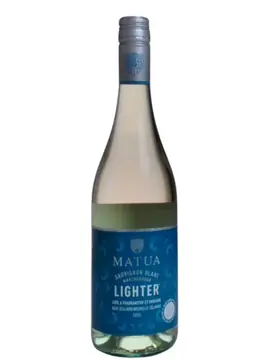
Matua Regional Lighter Sauvignon Blanc
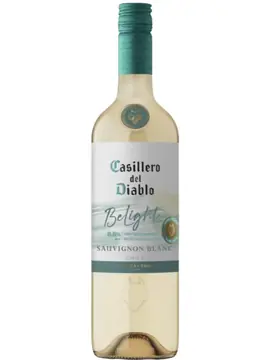
Casillero Del Diablo Belight Sb
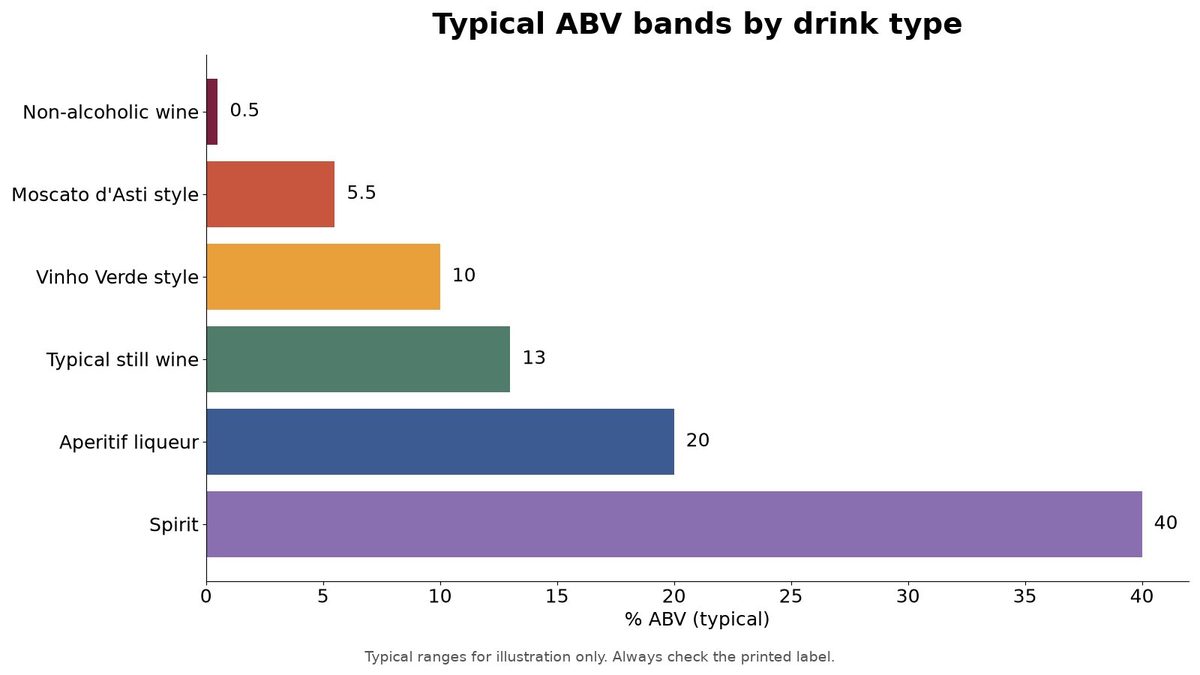
ABV ranges by category
Typical ranges, for illustration only:
- Non-alcoholic wine: 0.0–0.5%.
- Moscato d'Asti style: around 5–6%.
- Vinho Verde: often around 9–11%.
- Most still wine: around 11–15%.
- Fortified wine: around 15–22%. See port vs sherry vs vermouth.
- Aperitif liqueurs: wide range, often 11–25%.
- Spirits: commonly 37.5–40% and above.
How lower ABV is achieved
- Earlier harvest. Grapes picked earlier have less sugar, so fermentation produces less alcohol.
- Stopping fermentation early. Chilling or filtering stops yeast before all sugar is converted; this leaves residual sugar, as in Moscato d'Asti.
- Removing alcohol after fermentation. Vacuum distillation, membrane filtration or spinning cone methods reduce alcohol, as with "lighter" and de-alcoholised wines.
- Blending or dilution in some aperitif and RTD products.
Standard-drink maths
A standard drink is a fixed amount of pure alcohol. Under commonly used guidance it is about 17.05 ml (13.45 g) of pure alcohol, which is roughly:
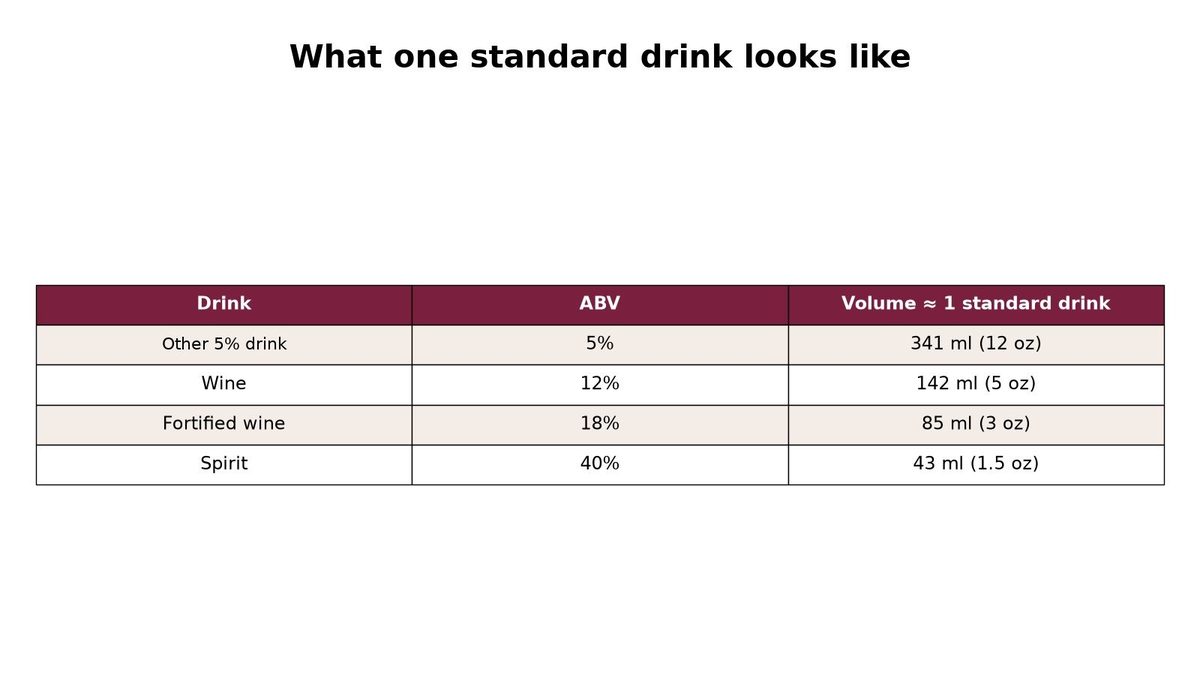
Step by step: work out standard drinks in a glass
- Measure the pour in millilitres.
- Read the ABV on the label and convert to a decimal (12% = 0.12).
- Multiply: pour × ABV = ml of pure alcohol.
- Divide by 17.05 for standard drinks.
Example: a 150 ml glass of 12% wine contains 18 ml of alcohol, about 1.06 standard drinks. The same glass of 9% wine contains 13.5 ml, about 0.8. A lower-ABV wine reduces alcohol per glass only if the pour stays the same.
Lower-ABV wine styles
- Moscato d'Asti: a lightly sparkling wine from Italy, typically around 5–6% because fermentation is stopped early. Martini Asti is an Asti wine from the Martini range; Asti and Moscato d'Asti are related but distinct categories.
- Vinho Verde: a wine region in Portugal whose wines are often lower in alcohol than many still wines.
- Some German Riesling, especially sweeter Kabinett styles, can be lower in alcohol.
- "Lighter" branded wines that remove some alcohol.
Find these through white wine, rosé and sparkling wine. Our types of white wine post covers Riesling.
Lower-ABV spirit aperitifs
Aperitif liqueurs and fortified wines sit between wine and spirits. A spritz built from an aperitif, sparkling wine and soda is lower in alcohol per glass than a straight spirit drink, but it still contains alcohol. See spritz recipes.
Finding ABV in our listings
Every bottle prints its ABV. On our site, check the product page and the bottle on delivery. Our FAQ explains how to ask about a product. If you are comparing value, remember that ABV and price per litre are separate questions; see the price-per-litre calculator.
Planning lower-alcohol options for a gathering
Lower-ABV choices fit well alongside a standard order when hosting.
- Offer at least one lower-ABV wine and one non-alcoholic option, so guests have a real choice.
- Use smaller pours. A 100 ml pour of a 9% wine is about half a standard drink.
- Offer spritzes and long drinks built with soda, which stretch a measure of wine or aperitif across a larger glass.
- Label bottles at the table with their ABV so guests can choose.
- Keep water and food out throughout the event.
- Plan safe rides home in advance.
For quantity planning, see how much wine and liquor for a wedding and Christmas wine and spirits planning.
Reading the ABV on the label
ABV is usually printed as "% vol" or "% alc./vol." on the front or back label, often in small type near the volume. Labelling rules allow a small tolerance between the printed figure and the actual content, so treat it as a close guide. If a bottle shows two figures, such as "alcohol 11.5% vol" and "sugar content", the ABV is the alcohol figure. Our how to read a wine label post shows where each field usually appears.
Residual sugar and sweetness labels
Several of the naturally lower-ABV styles in this guide, such as Moscato d'Asti, are made by stopping fermentation early. Yeast is halted before it converts all of the grape sugar into alcohol, so the finished wine has less alcohol and more leftover grape sugar, known as residual sugar.
Sweetness terms on wine labels are category descriptions, not tasting notes. You may see words such as "dry", "medium dry", "medium" or "sweet", or a residual-sugar figure in grams per litre. A "lighter" wine that had alcohol removed after a full fermentation can have a lower ABV with little residual sugar; a wine whose fermentation was stopped early can have a lower ABV and a higher residual-sugar figure. The two bottles are not interchangeable just because the ABV looks similar.
When you compare listings, read the printed ABV, any sweetness or residual-sugar statement, and the style name (for example Moscato d'Asti or "lighter" Sauvignon Blanc). Our how to read a wine label post shows where those fields usually appear. Use the ABV for standard-drink maths; treat the sweetness term as a label category, not a description of flavour.
Frequently asked questions
What counts as low-alcohol wine?
It depends on the jurisdiction. In general, a wine noticeably below the usual 11–15% range. The printed ABV is what to check.
Which wine styles are naturally lower in alcohol?
Moscato d'Asti, Vinho Verde and some Riesling styles are commonly lower than most still wines.
What is a standard drink?
A fixed amount of pure alcohol, about 17.05 ml under commonly used guidance, roughly a 142 ml glass of 12% wine or 43 ml of 40% spirit.
Is "light" wine lower in alcohol?
Sometimes; sometimes it refers to calories. Read the ABV.
Does lower ABV mean I can drink more?
No. It means less alcohol per glass at the same pour. Keep track of how much you pour.
Related reading
- Non-Alcoholic Drinks for Holiday Hosting
- Types of White Wine
- Port vs Sherry vs Vermouth
- How to Read a Wine Label
- Champagne vs Prosecco vs Cava vs Crémant
You must be of legal drinking age in your province. ID and adult signature required at delivery.