Non-Alcoholic Drinks for Holiday Hosting: Wines, Spirit Alternatives and Mocktails
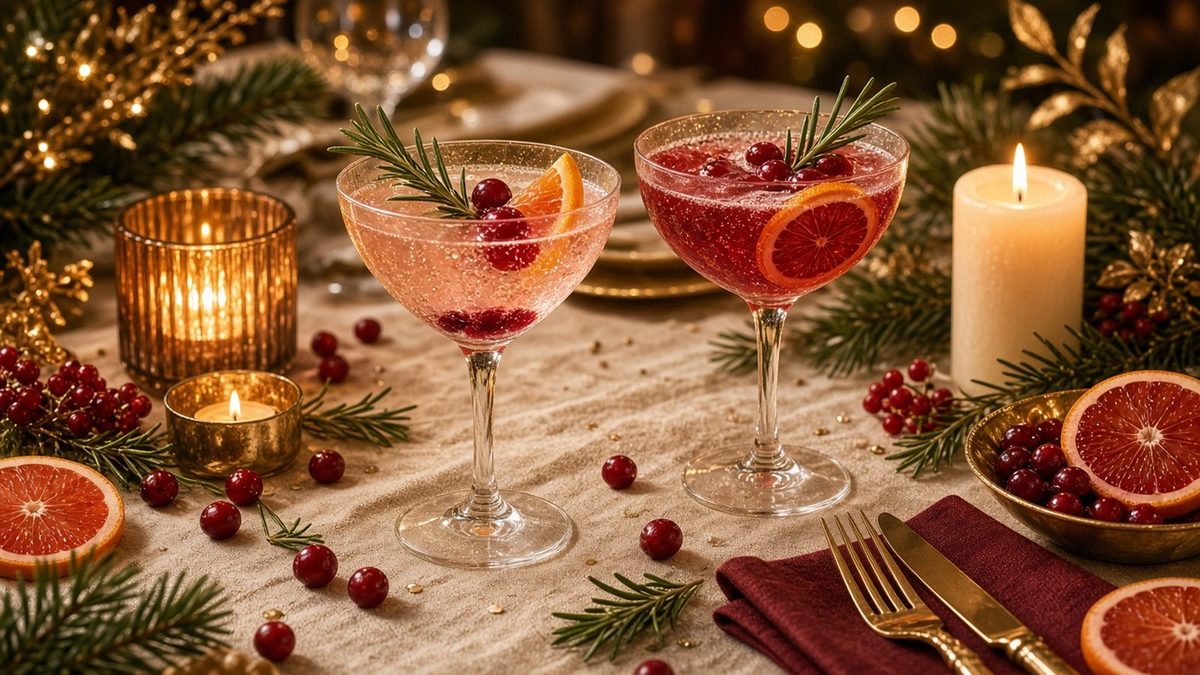
Non-alcoholic holiday drinks fall into three groups: de-alcoholised wine, alcohol-free spirit alternatives and mocktails made from juice, syrups and soda. Read the ABV line on each label, because "non-alcoholic" can still mean a trace of alcohol. Plan two or three options per gathering, chill them with the wine and label them clearly.
More hosts are planning for guests who are not drinking, are driving, are pregnant or simply prefer an alcohol-free glass. Third-party trend trackers have recently placed "non alc drinks" among rising drink searches, and retail reporting has pointed to December as a busy month for no- and low-alcohol products. Neither is a measure of your own guest list, of course, so the practical approach is to plan for it the same way you plan wine and spirits: by category, by quantity and by label.
What "non-alcoholic" and "de-alcoholised" mean on a label
Label terms for low- and no-alcohol drinks are regulated, and the exact thresholds depend on the rules where the product is sold. The words you will see most often are:
- Non-alcoholic: a drink that contains very little alcohol. Many labels using this term show an ABV of up to 0.5%, but always read the printed figure.
- Alcohol-free: often used for products at or very close to 0.0% ABV. Again, the printed ABV is the fact to rely on.
- De-alcoholised (or dealcoholized): made as a normal wine first, then most of the alcohol is removed. The label should still show the remaining ABV.
- Low-alcohol or reduced-alcohol: contains alcohol, just less than the standard version. These are not non-alcoholic drinks. We explain the terms in Low-Alcohol Wine and Spirits.
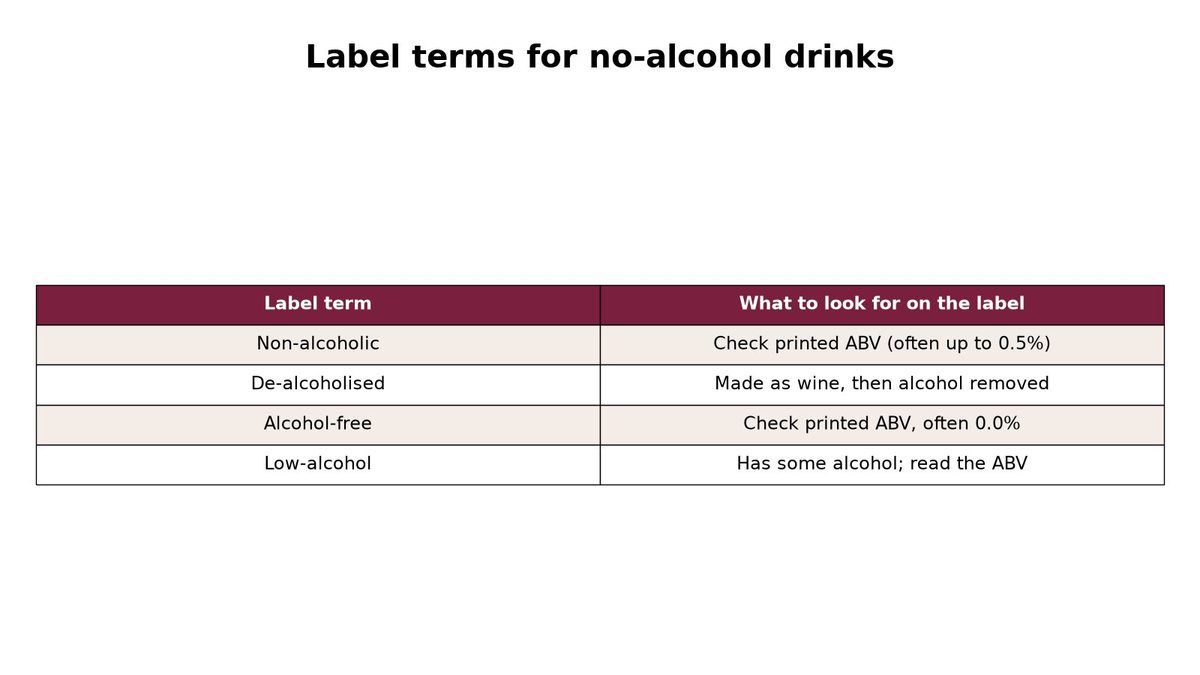
The key point for a host: if a guest needs to avoid alcohol completely, look for a printed 0.0% and check the ingredient list, not just the front-label wording.
Comparison: no-alcohol options for hosting
| Product type | Label ABV to check | How it is made | Opened shelf life (general guide) |
|---|---|---|---|
| De-alcoholised wine | Printed ABV, often up to 0.5% | Fermented as wine, then alcohol removed | A few days, refrigerated and resealed; check the label |
| Alcohol-free sparkling | Printed ABV, often 0.0–0.5% | De-alcoholised wine or a grape-based drink, then carbonated | Bubbles fade within a day or two with a stopper |
| Alcohol-free spirit alternative | Printed ABV, often 0.0% | Distilled botanicals or extracts in water | Follow the label; many recommend use within weeks |
| Mocktail (made at home) | 0.0% if all ingredients are alcohol-free | Juice, syrups, soda, herbs | Make fresh; juice-based mixes keep about a day refrigerated |
These shelf-life notes are general. The label or producer guidance on the specific bottle takes priority.
Non-alcoholic wine: how it is made
De-alcoholised wine starts as ordinary wine. After fermentation, producers remove most of the alcohol, usually by one of two broad methods:
- Vacuum distillation: the wine is heated gently under reduced pressure so the alcohol evaporates at a lower temperature.
- Membrane filtration (reverse osmosis): the wine is passed through a fine membrane that separates alcohol and water from the other components, which are then recombined.
Some producers also use a spinning cone column, a form of low-temperature distillation. Because alcohol carries part of a wine's body, many producers add back grape juice or other ingredients after removal. Those additions should be shown in the ingredient list where required.
Alcohol-free spirit alternatives
Alcohol-free spirit alternatives are designed to be used where a recipe calls for gin, rum, whisky or an aperitif. Common methods include distilling botanicals in water, macerating them in a small amount of alcohol that is later removed, or blending extracts. Labels differ widely, so the useful checks are:
- The printed ABV. Most are labelled 0.0%, but confirm it.
- The serving suggestion. Many alternatives are built to be mixed with tonic or soda rather than sipped.
- Storage after opening. Without alcohol as a preservative, some alternatives have a "use within" period printed on the label.
Three measured mocktail recipes
Each recipe makes one drink. Multiply for a pitcher and add any carbonated ingredient at serving time.
Cranberry rosemary fizz
- 90 ml (3 oz) unsweetened cranberry juice
- 15 ml (0.5 oz) fresh lime juice
- 15 ml (0.5 oz) rosemary or plain simple syrup
- 90 ml (3 oz) soda water
- Rosemary sprig and a few cranberries to garnish
Method: shake the juices and syrup with ice, strain into a coupe or wine glass and top with soda water.
Alcohol-free spritz
- 90 ml (3 oz) alcohol-free sparkling wine alternative
- 30 ml (1 oz) alcohol-free bitter aperitif alternative
- 30 ml (1 oz) soda water
- Orange slice
Method: build over ice in a large wine glass, stir once and garnish. Our spritz recipes post explains the ratio.
Ginger citrus highball
- 15 ml (0.5 oz) fresh lemon juice
- 15 ml (0.5 oz) honey syrup (equal parts honey and warm water)
- 120 ml (4 oz) spicy ginger soda or ginger ale
- Lemon wheel
Method: stir the lemon and honey syrup in a highball glass, add ice, top with spicy ginger soda and stir gently.
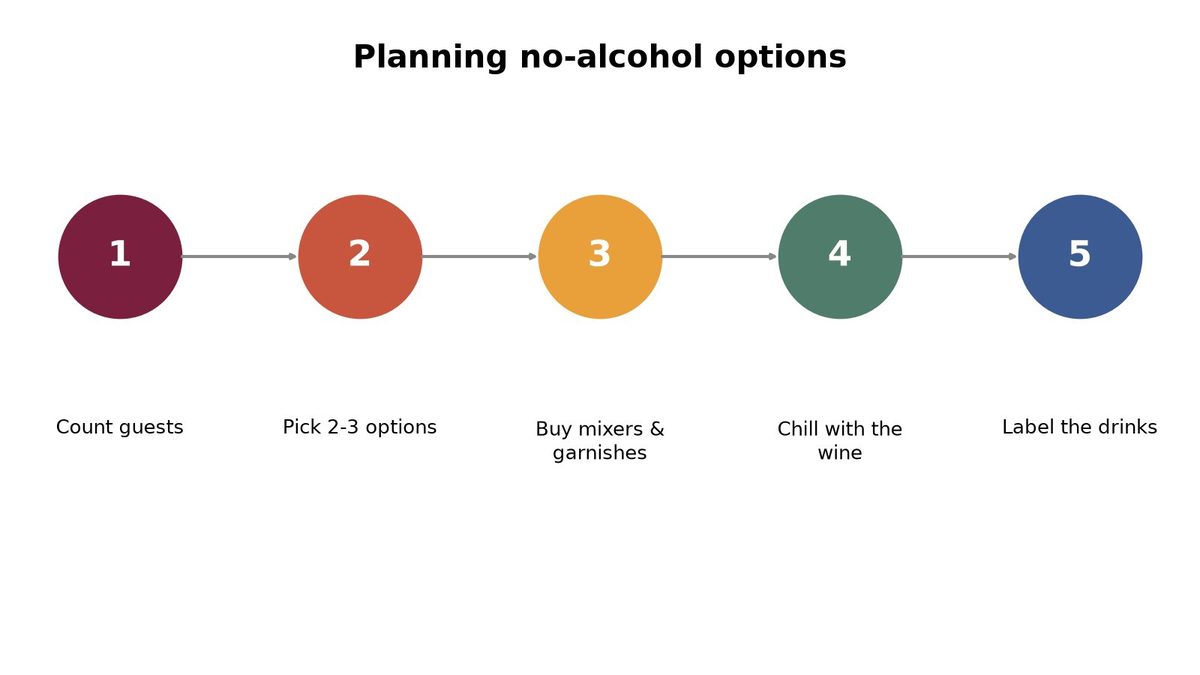
Step by step: planning non-alcoholic options alongside a case order
- Start from the guest list. Estimate how many guests will want an alcohol-free option for all or part of the evening, including designated drivers.
- Pick two or three options. For example, one sparkling alternative for toasts, one mocktail for the evening and plenty of sparkling water.
- Buy mixers and garnishes with the rest of the order. Juices, syrups, soda, spicy ginger soda, citrus and herbs.
- Chill them with the wine. Alcohol-free sparkling needs the same chilling time as sparkling wine; see the wine serving temperature chart.
- Label everything. Use a card or a different glass shape so guests can tell what is in each glass.
- Keep water available all evening. It is the simplest no-alcohol option and helps everyone pace themselves.
For the alcoholic side of the order, Christmas wine and spirits planning and holiday batch cocktails cover quantities and batching, and our multi-case ordering guide helps when you combine categories.
Storage and shelf life once opened
Alcohol acts as a preservative, so alcohol-free drinks generally keep for less time once opened than their alcoholic counterparts.
- De-alcoholised still wine: reseal and refrigerate; follow the label's "consume within" guidance.
- Alcohol-free sparkling: use a sparkling-wine stopper and refrigerate; the bubbles will fade within a day or two.
- Spirit alternatives: follow the printed guidance; some recommend refrigeration after opening.
- Homemade syrups: refrigerate in a clean, sealed jar; simple syrup generally keeps for a couple of weeks.
What we stock and what we don't
Our catalogue focuses on wine and spirits sold by the bottle and by the case. At the time of writing we do not have dedicated non-alcoholic wine or alcohol-free spirit listings, so this guide does not link to any. If listings are added, they will sit within the wine and spirits categories.
What we can help with is the rest of the order. Browse wine, sparkling wine and the occasions page for seasonal planning, check current sale items, and read the FAQ and delivery pages for how ID and adult-signature delivery work. If you want lower-alcohol rather than alcohol-free wine, see the listings mentioned in our low-alcohol guide.
Tips for hosting with no-alcohol options
- Offer the alcohol-free option first, not as an afterthought. Put it on the same tray as the wine.
- Use real glassware. A mocktail in a coupe or wine glass feels part of the occasion.
- Avoid pressuring anyone to drink, and do not ask guests to explain why they are not.
- Serve food throughout the evening.
- Help guests plan their ride home before the event starts.
Frequently asked questions
What does non-alcoholic mean on a wine label?
It means the wine contains very little alcohol. Many labels using the term show up to 0.5% ABV, but the threshold depends on local rules, so read the printed ABV.
Is de-alcoholised wine the same as alcohol-free?
Not always. De-alcoholised describes how the wine was made: as normal wine, with most alcohol removed afterwards. Some de-alcoholised wines are 0.0%; others keep a trace. Check the ABV line.
How many non-alcoholic options should a host offer?
Two or three is a practical number: one sparkling option for toasts, one mixed drink and water. Base the quantity on your guest list and the length of the event.
Do non-alcoholic drinks need ID at delivery?
Our deliveries include age-restricted products, so ID and an adult signature are required for orders containing alcohol. See the FAQ for details.
How long does an opened alcohol-free sparkling wine last?
With a stopper in the fridge, usually a day or two before the bubbles fade noticeably. Follow any guidance on the label.
Related reading
- Holiday Batch Cocktails: Mulled Wine, Eggnog, Sangria and Punch
- Christmas Wine and Spirits by the Case: A Planning Guide
- Paloma, Whisky Sour and French 75
- Low-Alcohol Wine and Spirits
- How Much Wine and Liquor for a Wedding
You must be of legal drinking age in your province. ID and adult signature required at delivery.