Hugo, Aperol and Campari Spritz: Three Recipes and Their Base Bottles
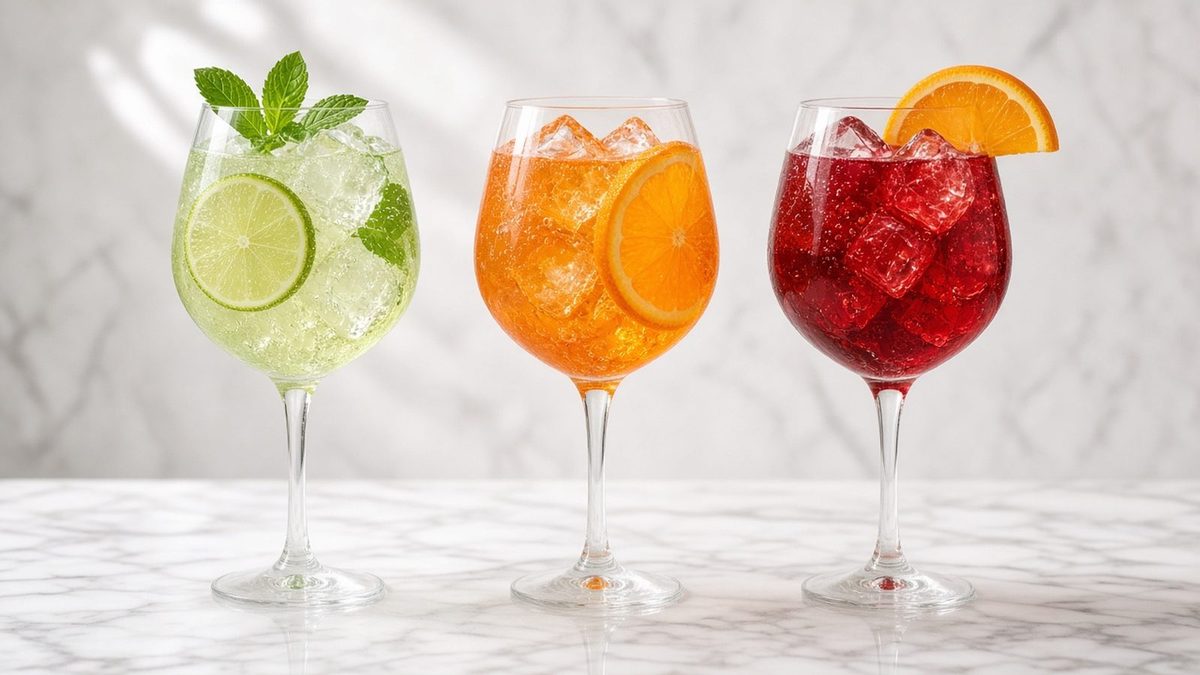
A Hugo spritz recipe uses elderflower liqueur, prosecco, soda water and fresh mint over ice in a wine glass. Aperol and Campari spritzes follow the same build with a bitter orange aperitif instead. The common starting ratio is 3 parts sparkling wine, 2 parts liqueur and 1 part soda, adjusted to the glass.
Interest in the spritz family has been climbing again this autumn. Third-party trend trackers list "hugo spritz", "spritz cocktail" and "campari spritz" among rising drink searches, which tells us that a lot of people want a measured recipe rather than a vague "splash of this". This guide gives you three measured recipes, explains the ratio behind them, shows how to scale a spritz for a group and covers a non-alcoholic version. It also explains which label terms to check on the sparkling wine you use as the base.
What a spritz is
A spritz is a long, lower-strength drink built from three components: a sparkling wine, a bitter or floral liqueur and a splash of soda water. It is served over plenty of ice in a large wine glass, so the dilution from the ice and soda is part of the design. The style comes from northern Italy, where wine "spritzed" with water became a café drink and later picked up aperitif liqueurs.
The three versions in this post share the same structure. What changes is the liqueur:
- Hugo spritz: elderflower liqueur or elderflower syrup, with mint and lime.
- Aperol spritz: Aperol, a bright orange bitter aperitif with a lower ABV than most bitters.
- Campari spritz: Campari, a red bitter aperitif with a higher ABV than Aperol.
Because each liqueur has a different printed ABV and sweetness, the finished drinks differ in strength. Always read the ABV on the bottles you actually use.
The spritzes compared
| Spritz | Liqueur | Sparkling base | Liqueur ABV (check label) | Glass size |
|---|---|---|---|---|
| Hugo | Elderflower liqueur (or syrup) | Prosecco or other dry sparkling | Varies widely by brand; syrup is 0% | Large wine glass, about 400–500 ml |
| Aperol | Aperol | Prosecco | Printed on the bottle; lower than Campari | Large wine glass, about 400–500 ml |
| Campari | Campari | Prosecco or other dry sparkling | Printed on the bottle; higher than Aperol | Large wine glass, about 400–500 ml |
Browse Campari Milano or the 375 ml Campari in our liqueur category, and the full sparkling wine range for the base.
Campari (Campari Milano)
Campari 375 ml
Hugo spritz: measured recipe
Ingredients (one glass)
- 90 ml (3 oz) prosecco or another dry sparkling wine, chilled
- 30 ml (1 oz) elderflower liqueur, or 20 ml elderflower syrup for a lighter build
- 30 ml (1 oz) soda water, chilled
- 6–8 mint leaves
- 1 lime wedge or wheel
- Ice
Method
- Put the mint leaves in a large wine glass and press them gently once with a spoon to release the aroma. Do not shred them.
- Fill the glass with ice.
- Add the elderflower liqueur.
- Pour in the sparkling wine slowly down the inside of the glass.
- Top with the soda water and stir once, gently, from the bottom.
- Add the lime and a mint sprig.
The Hugo uses slightly less liqueur than the 3-2-1 ratio because elderflower liqueurs are usually sweeter than bitter aperitifs. Adjust to the bottle you have.
Aperol spritz: measured recipe
Ingredients (one glass)
- 90 ml (3 oz) prosecco, chilled
- 60 ml (2 oz) Aperol
- 30 ml (1 oz) soda water, chilled
- 1 orange slice
- Ice
Method
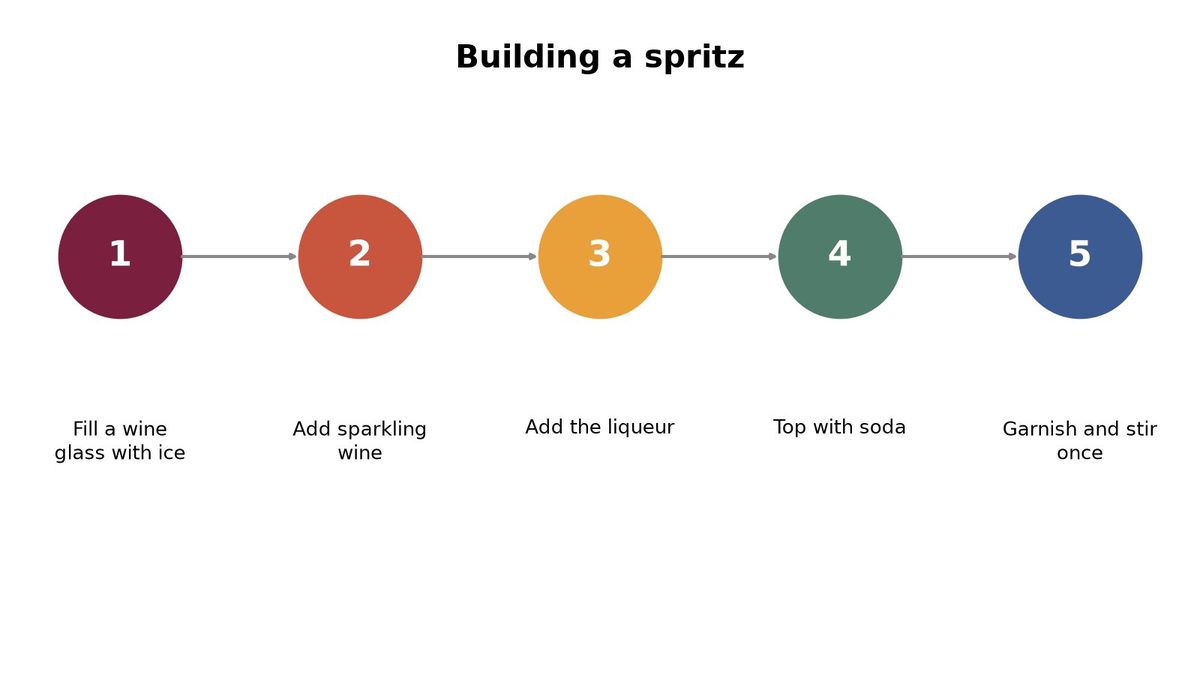
- Fill a large wine glass with ice.
- Pour in the prosecco first, so the denser liqueur mixes as it goes in.
- Add the Aperol.
- Top with soda water.
- Stir once and garnish with the orange slice.
This is the classic 3-2-1 build. Aperol is not currently listed in our catalogue; if a listing appears it will sit in the liqueur category.
Campari spritz: measured recipe
Ingredients (one glass)
- 90 ml (3 oz) prosecco or another dry sparkling wine, chilled
- 45–60 ml (1.5–2 oz) Campari
- 30 ml (1 oz) soda water, chilled
- 1 orange wedge or slice
- Ice
Method
- Fill a large wine glass with ice.
- Add the sparkling wine, then the Campari.
- Top with soda and stir once.
- Garnish with the orange.
Many people start the Campari version at 45 ml because Campari's printed ABV is higher than Aperol's. Check the label and remember that a higher-ABV liqueur makes the whole drink stronger.
The 3-2-1 ratio and how to scale to a pitcher
The 3-2-1 ratio is a proportion, not a fixed measure: three parts sparkling wine, two parts liqueur, one part soda. One "part" can be 30 ml for a single glass, or a full cup for a pitcher.
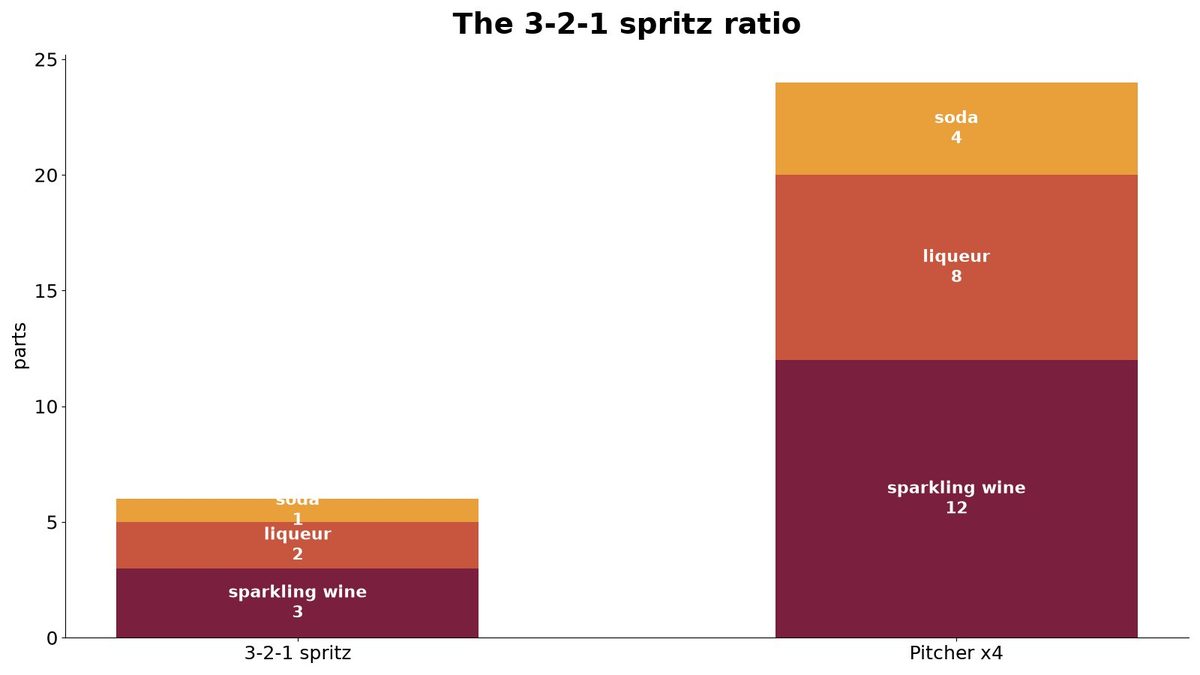
Step by step: a pitcher for four glasses
- Chill everything. Put the sparkling wine and soda in the fridge several hours ahead. Our wine serving temperature chart gives approximate chill times.
- Measure the liqueur into the pitcher. For four Aperol-style spritzes, that is 240 ml (8 oz).
- Add the sparkling wine at serving time. Four glasses need 360 ml (12 oz), about half of a 750 ml bottle.
- Add the soda last. 120 ml (4 oz).
- Do not put ice in the pitcher. Ice in the pitcher dilutes the batch as it sits. Put the ice in each glass instead.
- Stir once and pour. Garnish each glass separately.
If you are planning drinks for a larger group, our holiday batch cocktails post covers batching methods and how to think about quantities, and Christmas wine and spirits planning covers ordering by the case.
Choosing the sparkling base: label terms
Most spritz recipes call for prosecco, but any dry sparkling wine works structurally. What matters is reading the sweetness term on the label, because it changes the balance of the drink:
- Brut is the driest of the common terms.
- Extra Dry (or Extra Sec), despite the name, is a little sweeter than Brut.
- Dry (Sec) is sweeter again.
A sweeter base plus a sweet liqueur gives a sweeter drink, so many recipes pair a Brut or Extra Dry prosecco with the liqueur. We cover what prosecco, cava, crémant and champagne mean on a label in Champagne vs Prosecco vs Cava vs Crémant; this post does not repeat it.
Prosecco listings in our catalogue include La Marca Prosecco, Mionetto Prosecco Brut, Martini Prosecco from the Martini range and Bolla Prosecco Spumante Extra Dry. If you prefer a smaller format for a single evening, La Marca Prosecco 375 ml is a half bottle. Champagne houses such as Moët & Chandon also make sparkling wine that can be used, though most spritz recipes call for prosecco. Prosecco listings carry the "Italy" origin, so you can also browse via wines from Italy.
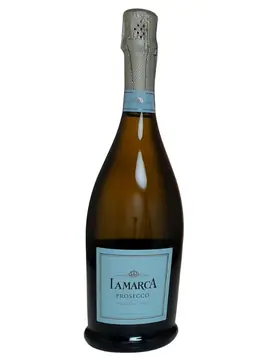
La Marca Prosecco
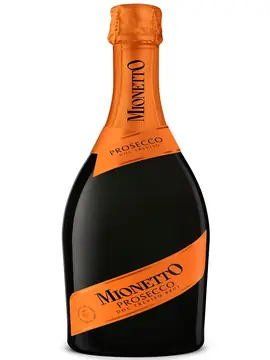
Mionetto Prosecco Brut
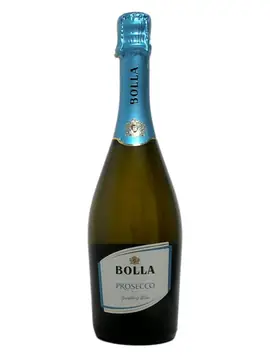
Bolla Prosecco Spumante Extra Dry
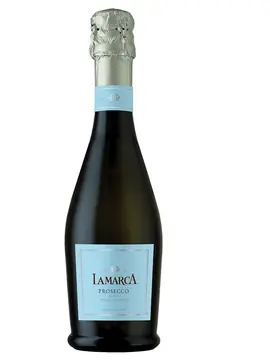
La Marca Prosecco
Non-alcoholic spritz variant
A spritz works well without alcohol because its structure is mostly bubbles, bitterness and citrus.
Ingredients (one glass)
- 90 ml (3 oz) non-alcoholic sparkling wine alternative, or extra soda water
- 30–45 ml (1–1.5 oz) non-alcoholic bitter aperitif alternative, or 20 ml elderflower syrup for a Hugo-style drink
- 30 ml (1 oz) soda water
- Orange slice or mint and lime
- Ice
Method: build it exactly like the alcoholic versions, in a large wine glass over ice. Label the glass or the pitcher clearly so guests can tell the drinks apart. For more ideas, see our guide to non-alcoholic holiday drinks.
Base bottles in our catalogue
| What you need | Where to browse |
|---|---|
| Prosecco and other sparkling wine | Sparkling wine |
| Campari | Campari Milano 750 ml, Campari 375 ml |
| Other liqueurs | Liqueur |
| Larger formats for a group | La Marca Prosecco 1.5 L |
| Current deals | Sale |
Check each listing for bottle size and bottles per case before ordering by the case. Our explainer on how case pricing works and the bottle sizes guide help you compare formats. Seasonal ideas are on the occasions page.
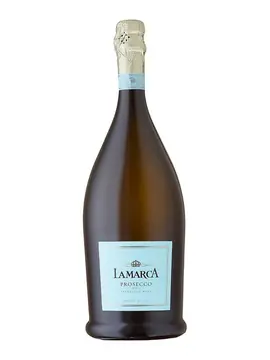
La Marca Prosecco 1.5L
Glassware and ice
A large wine glass, sometimes sold as a "balloon" glass, is the standard spritz glass. It holds enough ice to keep the drink cold, leaves room for the garnish and lets the bubbles come up through the ice. A highball glass works if that is what you have, but use less of each component so the drink fits.
Use plenty of fresh, hard ice. A full glass of ice melts more slowly than a few cubes, so the drink dilutes less over time. Crushed ice melts quickly and is not the usual choice for a spritz.
Frequently asked questions
What is the difference between a Hugo and an Aperol spritz?
Both are built from sparkling wine, a liqueur and soda over ice. A Hugo uses elderflower liqueur or syrup with mint and lime. An Aperol spritz uses Aperol, a bitter orange aperitif, with an orange slice. Their ABVs differ, so check both labels.
Which sparkling wine goes in a spritz?
Prosecco is traditional, usually labelled Brut or Extra Dry. Any dry sparkling wine works structurally. Read the sweetness term on the label, because a sweeter base makes a sweeter drink.
Can a spritz be made without alcohol?
Yes. Use a non-alcoholic sparkling alternative or soda water, plus a non-alcoholic bitter aperitif or elderflower syrup, and build it the same way over ice.
What is the 3-2-1 spritz ratio?
Three parts sparkling wine, two parts liqueur and one part soda water. Scale the "part" to the size of your glass or pitcher.
How many spritzes does one bottle of prosecco make?
At 90 ml of sparkling wine per glass, a 750 ml bottle covers about eight spritzes. Measure your pours, because glass sizes vary.
Related reading
- Champagne vs Prosecco vs Cava vs Crémant
- 10 Classic Cocktail Recipes and the Bottles Behind Them
- Paloma, Whisky Sour and French 75
- Port vs Sherry vs Vermouth
- Low-Alcohol Wine and Spirits: What the ABV Label Terms Mean
You must be of legal drinking age in your province. ID and adult signature required at delivery.