What Is Irish Cream? Cream Liqueur Label Terms, ABV and Storage
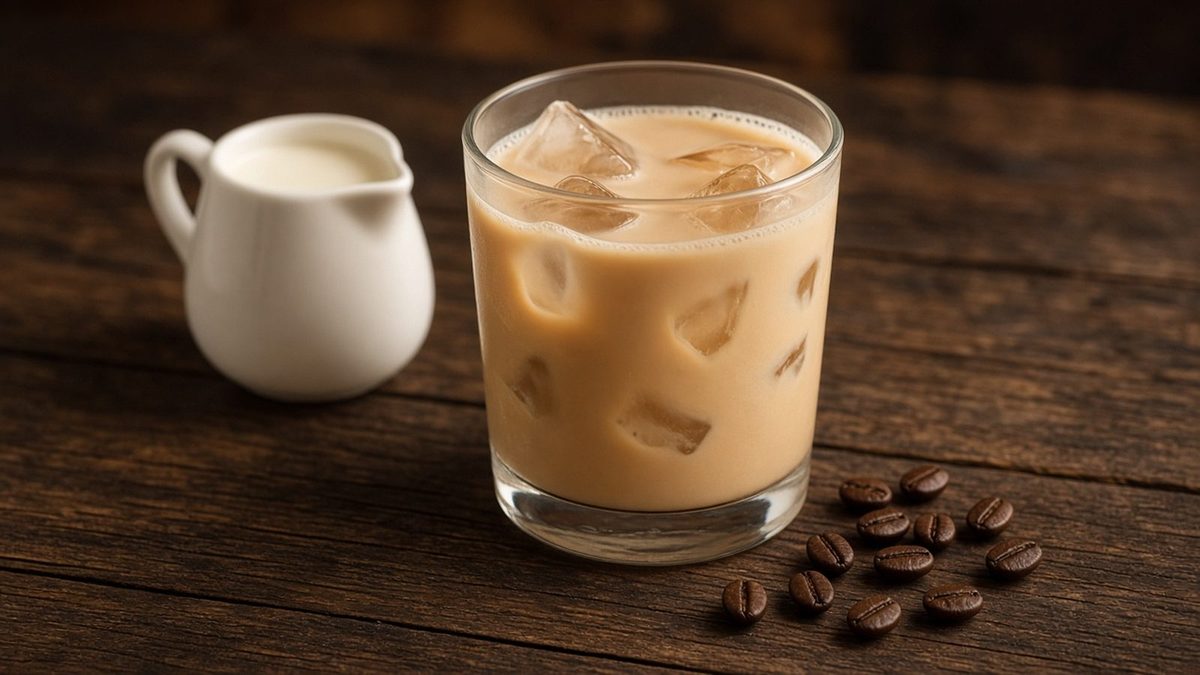
Irish cream is a cream liqueur made from dairy cream, Irish whiskey, sugar and flavourings, blended and homogenised so it stays stable in the bottle. "Irish cream" is a protected geographical indication in the European Union, tied to production in Ireland. ABV is commonly around 15–17%; check the label and the best-before date.
Cream liqueurs appear on many holiday shopping lists. This guide explains what Irish cream is, how it differs from other cream liqueurs, what the label tells you, and how to store an opened bottle, which is different from storing ordinary spirits.
Definition: cream, spirit, sugar
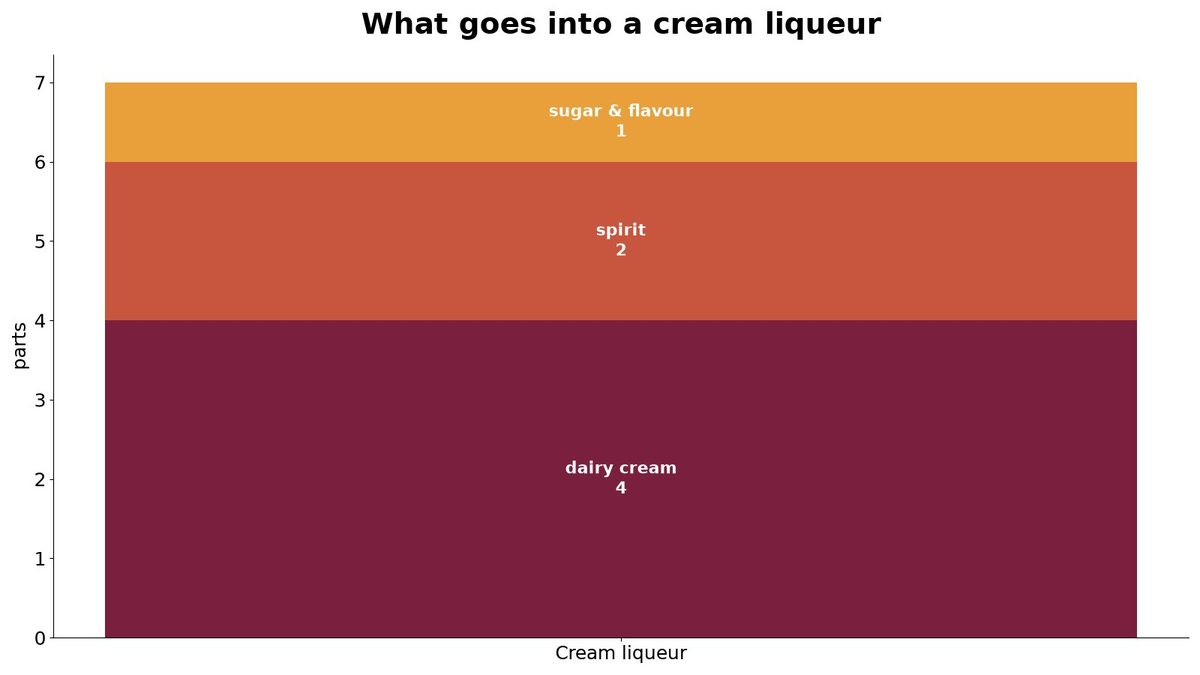
A cream liqueur combines three main components:
- Dairy cream, which gives body and colour.
- A spirit, which provides alcohol and acts as a preservative. In Irish cream it is Irish whiskey; other cream liqueurs use rum, tequila, vodka or neutral spirit.
- Sugar and flavourings, often cocoa, vanilla or coffee notes depending on the product.
Cream and alcohol do not normally mix well; the cream would separate. Producers homogenise the blend, breaking fat into tiny droplets, and use emulsifiers so the liqueur stays blended and shelf-stable unopened.
Irish cream vs other cream liqueurs
"Irish cream" is a geographical indication in the European Union: products using the name for sale there must be made in Ireland according to a technical file, which includes using Irish whiskey and cream. Other cream liqueurs use other spirits and cannot use that name in those markets.
| Liqueur | Base spirit | ABV (commonly printed; check label) | Opened shelf life (general; follow label) |
|---|---|---|---|
| Irish cream | Irish whiskey | Around 15–17% | Often up to about 6 months, kept cool or refrigerated |
| Rum cream liqueur | Rum | Varies, often 15–17% | Follow label |
| Tequila cream liqueur | Tequila | Varies | Follow label |
| Coffee cream liqueur | Neutral spirit or rum | Varies | Follow label |
| Egg-based liqueur (e.g. advocaat) | Neutral spirit or brandy | Varies, often lower | Follow label |
Shelf-life guidance varies by producer. Some labels give a "best within" period after opening; treat that as the rule.
ABV as labelled
Cream liqueurs are much lower in alcohol than straight spirits. A typical 40% Irish whiskey becomes roughly 15–17% after blending with cream and sugar. Even so, cream liqueurs contain alcohol and are not "light" drinks; standard drink maths applies. A 60 ml pour at 17% contains about 10 ml of pure alcohol, a little over half a standard drink. Our low-alcohol guide explains the maths.
Shelf life opened and unopened
Unopened: cream liqueurs carry a best-before date, often around two years from production. Unlike spirits, they do change over time because of the dairy content. Our storage guide contrasts this with spirits, which are stable.
Opened: many producers say an opened bottle keeps for several months when sealed and stored cool, and some recommend refrigeration. Follow the label.
Signs a bottle has gone off: curdling, thickening, separation that does not recombine when gently shaken, or a sour smell. If in doubt, discard it.
Storage temperature
Step by step: storing cream liqueur
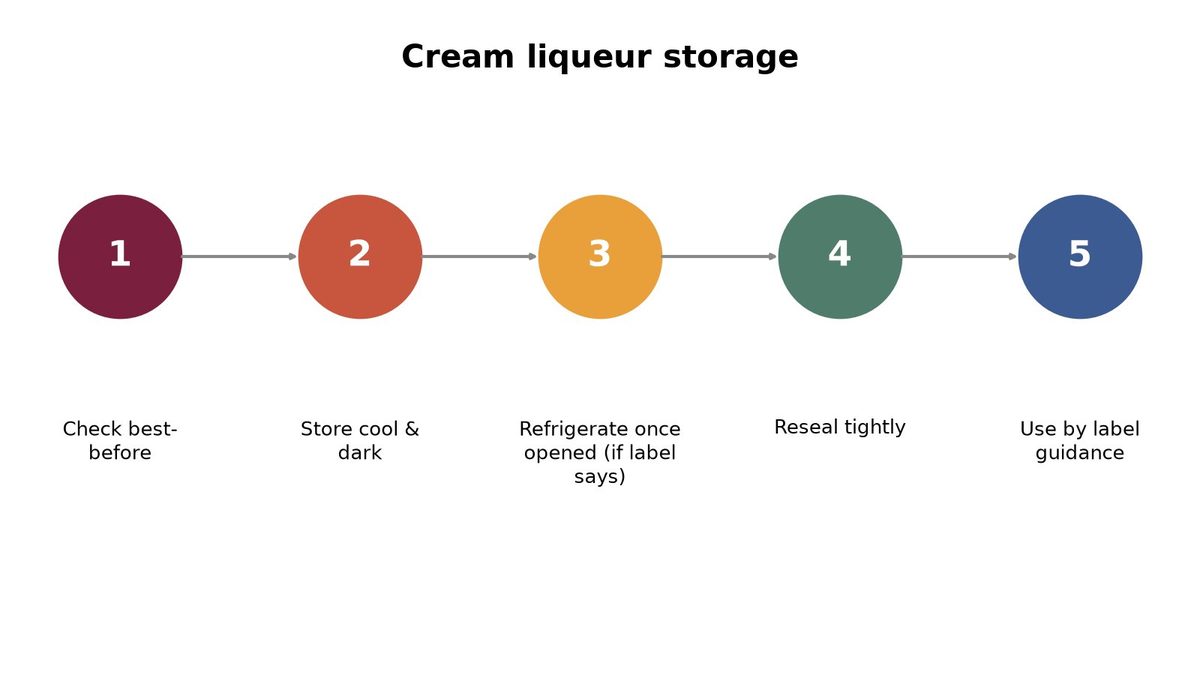
- Check the best-before date when the bottle arrives.
- Store unopened bottles cool and dark, commonly below about 25 °C, upright.
- After opening, refrigerate if the label recommends it, or keep in a cool place.
- Reseal tightly after each pour.
- Note the opening date on the label and use within the producer's guidance.
- Avoid freezing, which can affect the texture.
Measured recipes
Irish cream coffee
- 150 ml (5 oz) hot brewed coffee
- 30 ml (1 oz) Irish cream
- Whipped cream, optional
Method: pour the coffee into a mug, stir in the Irish cream and top with whipped cream. Do not add cream liqueur to very acidic drinks such as citrus juice, which can make the cream curdle.
Irish cream hot chocolate
- 180 ml (6 oz) hot chocolate
- 30 ml (1 oz) Irish cream
- Grated chocolate or cocoa, to garnish
Method: prepare the hot chocolate, stir in the liqueur and garnish.
On ice
- 45–60 ml (1.5–2 oz) Irish cream over ice in a short glass.
Non-alcoholic variant: for either hot drink, replace the liqueur with 30 ml of cream or a dairy-free alternative plus 5–10 ml of vanilla or caramel syrup.
For other holiday drinks, see holiday batch cocktails, which covers eggnog, and the espresso martini recipe.
What's in our list
At the time of writing our catalogue does not include an Irish cream or other cream liqueur, so this post does not link to one. If cream liqueurs are listed in future, they will appear in the liqueur category.
What we do list is the base spirit category. Irish whiskey listings in Irish whiskey include Jameson Irish Whiskey from Jameson, Bushmills Original and Tullamore D.E.W.. For other categories, browse whisky and rum. Our St Patrick's Day Irish whiskey post explains the Irish whiskey categories, and whisky vs whiskey vs bourbon vs Scotch covers the label rules.
Jameson Irish Whiskey
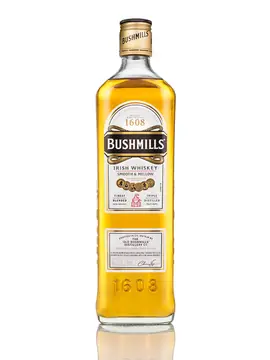
Bushmills Original Irish Whiskey
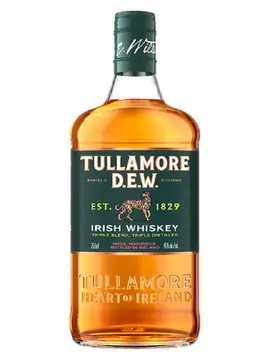
Tullamore Dew Irish Whiskey
Common questions about dairy and allergens
Cream liqueurs contain milk, and labels list it as an allergen where required. People avoiding dairy should check the ingredient list; some producers make dairy-free versions using plant-based alternatives, which are different products. Labels may also state other allergens depending on flavourings.
Serving and hosting notes
- Chill the bottle before serving if you plan to pour it over ice or neat.
- Offer smaller pours, such as 30–45 ml; cream liqueurs still contain alcohol.
- Keep it away from citrus and tonic, which can curdle the cream.
- Return the bottle to the fridge between pours at a gathering if the label recommends refrigeration.
Reading a cream liqueur label
Five things to check on any cream liqueur bottle:
- The product name and category, for example "Irish cream liqueur" or "cream liqueur".
- The base spirit, if stated.
- ABV, usually on the front or back label.
- Best-before date, often printed on the neck or back.
- Storage instructions, including any advice to refrigerate after opening and a "use within" period.
How many serves are in a bottle
Cream liqueur is usually sold in a 750 ml bottle, the same standard size as many spirits. How far a bottle goes depends on the pour, not on a fixed serving size.
Using the pours already described in this guide:
- A 30 ml (1 oz) measure, as in the coffee and hot chocolate recipes above, gives 25 serves from a 750 ml bottle.
- A 45 ml (1.5 oz) pour gives 16 serves, with 30 ml left over.
- A 60 ml (2 oz) pour over ice gives 12 serves, with 30 ml left over.
Alcohol per serve still depends on ABV. At 17% ABV, a 30 ml pour contains about 5.1 ml of pure alcohol, a little under one-third of a standard drink under the 17.05 ml figure used in our low-alcohol guide. A 60 ml pour at the same strength contains about 10 ml, a little over half a standard drink. If the label prints a different ABV, multiply the pour in millilitres by that ABV and divide by 17.05.
When hosting, start with the smaller 30–45 ml measures, reseal the bottle between pours, and follow the storage instructions on the label.
Frequently asked questions
What is Irish cream made of?
Dairy cream, Irish whiskey, sugar and flavourings, blended and homogenised.
Does Irish cream need refrigeration?
Unopened bottles can be stored cool and dark. After opening, many labels recommend refrigeration or a cool place, with use within a stated period. Follow the label.
What is the ABV of cream liqueur?
Commonly about 15–17% for Irish cream; other cream liqueurs vary. The label states the exact figure.
Does Irish cream go bad?
Yes, eventually. Check the best-before date, and discard if it curdles, thickens or smells sour.
Can I mix Irish cream with any drink?
Avoid acidic mixers such as citrus juice or tonic, which can curdle the cream. Coffee, hot chocolate and milk-based drinks are common partners.
Related reading
- St Patrick's Day Irish Whiskey by the Case
- Whisky vs Whiskey vs Bourbon vs Scotch
- Holiday Batch Cocktails
- How to Store Unopened Wine and Spirits by the Case
- Types of Rum
You must be of legal drinking age in your province. ID and adult signature required at delivery.