Whisky vs Whiskey vs Bourbon vs Scotch: The Label Rules
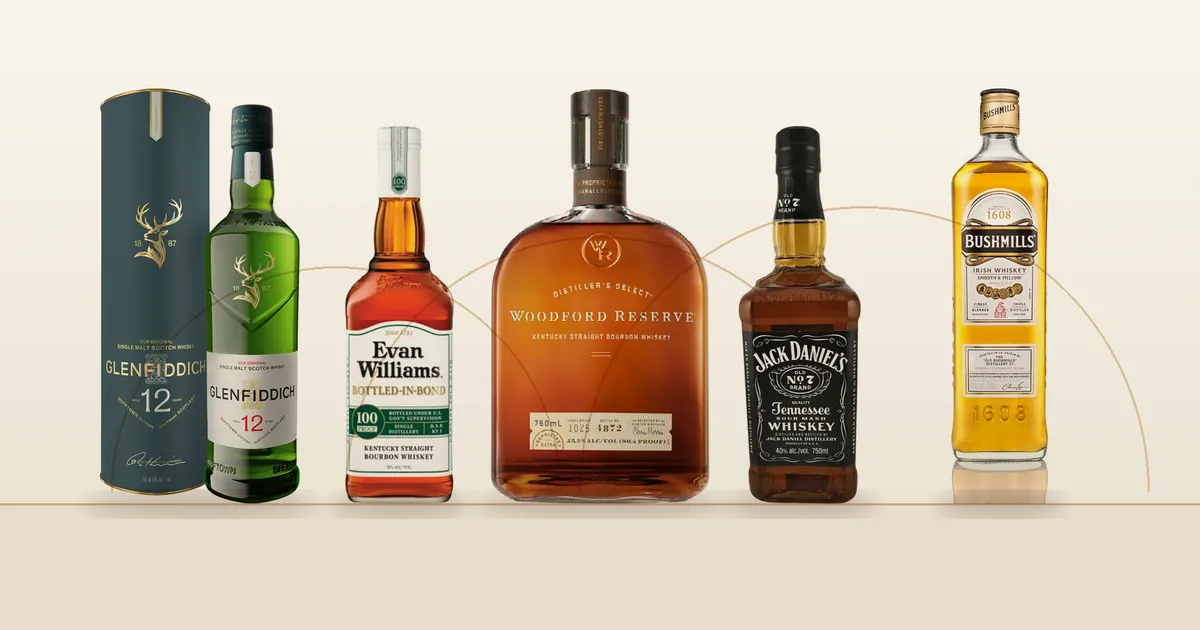
Whisky is the umbrella term for spirits distilled from fermented grain and aged in wood. Scotch is whisky made and aged at least three years in Scotland. Bourbon is American whiskey made from at least 51% corn and aged in new charred oak containers. "Whiskey" with an "e" is the usual spelling in Ireland and the US.
Whisky or whiskey: it's about spelling, not quality
The spelling follows tradition, not law. Scotland, Canada and Japan generally write whisky. Ireland and most American producers write whiskey. There are exceptions on both sides, so the spelling alone tells you little. The country of origin and the category named on the label are what matter. Our whisky hub uses one spelling but lists every style, with separate pages for Canadian, Irish and American whisky.
The rules at a glance
| Scotch | Bourbon | Irish whiskey | Canadian whisky | |
|---|---|---|---|---|
| Where made | Scotland | United States | Island of Ireland | Canada |
| Grain | Malted barley, plus other cereals for grain whisky | At least 51% corn | Malted and unmalted cereals | Cereal grains |
| Minimum ageing | 3 years in oak casks of no more than 700 L | No minimum for bourbon; at least 2 years for "straight bourbon" | 3 years in wooden casks | 3 years in small wood (no more than 700 L) |
| Cask rule | Oak | New, charred oak containers | Wooden casks | Small wood |
| Minimum bottling strength | 40% ABV | 40% ABV (80 proof) | 40% ABV | 40% ABV |
These are the core legal requirements. Each country's regulations include further details on distillation, additives and labelling.
Scotch
Scotch whisky must be distilled and matured in Scotland, in oak casks, for at least three years. Any age statement on the label refers to the youngest whisky in the bottle. The law recognises five categories: single malt, single grain, blended malt, blended grain and blended Scotch whisky. We cover them in detail in single malt vs blended Scotch.
In our catalogue at time of writing, all 182 in-stock Scotch listings show Scotland as their origin. 105 are 750 ml bottles and 49 are 700 ml, the standard EU bottle size. Browse them on the Scotch page, for example Glenfiddich 12 Year Old.
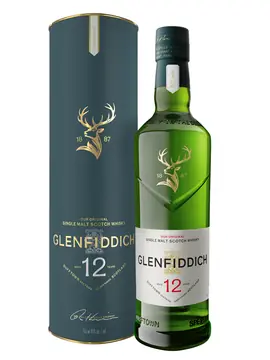
Glenfiddich 12 Yr. Old
Bourbon
Under US federal rules, bourbon must:
- be made in the United States,
- be made from a mash of at least 51% corn,
- be distilled to no more than 80% ABV (160 proof),
- enter new, charred oak containers at no more than 62.5% ABV (125 proof),
- be bottled at 40% ABV (80 proof) or more,
- contain nothing added except water to reduce strength.
Bourbon doesn't have to come from Kentucky, though most does. Straight bourbon must be aged at least two years, and if it's under four years old the label must state its age. Bottled-in-bond bourbon comes from one distillery and one distilling season, is aged at least four years in a bonded warehouse, and is bottled at exactly 50% ABV. Evan Williams Bottled-in-Bond in our catalogue is listed at 50%.
Our bourbon page includes Woodford Reserve Kentucky Bourbon and Bulleit Bourbon.
What about Tennessee whiskey?
Tennessee whiskey meets the bourbon requirements and adds steps under Tennessee state law, including filtering the new spirit through maple charcoal before ageing (the Lincoln County Process), with some exceptions. On our site it's listed under whisky, for example Jack Daniel's Old No. 7.
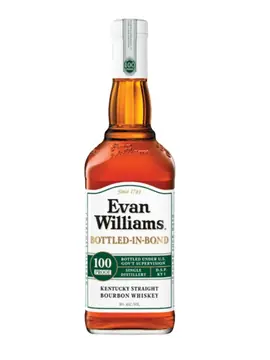
Evan Williams Bottled In Bond Bourbon
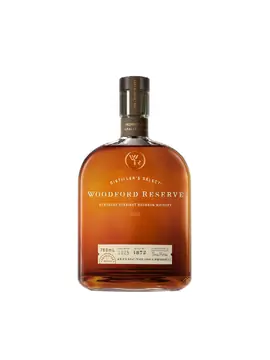
Woodford Reserve Kentucky Bourbon
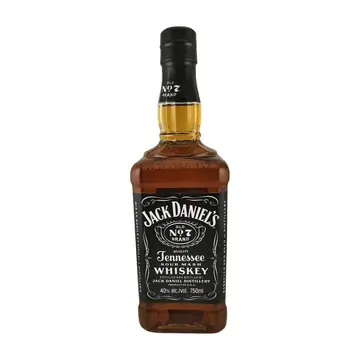
Jack Daniels Old No. 7 Tennessee Whisky
Irish whiskey
Irish whiskey must be distilled and aged on the island of Ireland, in wooden casks, for at least three years. Styles include single malt, single grain, blended, and single pot still, a style made from a mix of malted and unmalted barley in pot stills. Our Irish whiskey page includes Jameson and Bushmills.
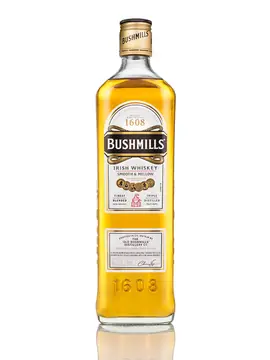
Bushmills Original Irish Whiskey
Canadian whisky
Canadian whisky must be mashed, distilled and aged in Canada, for at least three years in small wood, and bottled at 40% ABV or more. Canadian labels may use the word "rye" for whisky that isn't mostly rye grain; it's a historical term. Some products state "100% rye", such as Canadian Club 100% Rye.
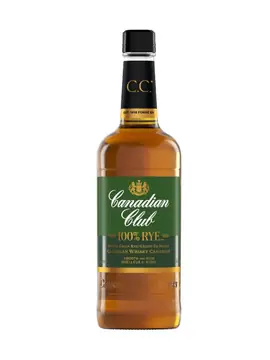
Canadian Club 100% Rye
Our whisky catalogue by origin
At time of writing, our non-Scotch whisky listings break down like this:
| Origin | Listings | ABV range |
|---|---|---|
| Canada | 86 | 35%–62.1% |
| United States | 72 whisky, plus 10 bourbon | 32.5%–62.5% (bourbon 40%–50%) |
| Ireland | 33 | 30%–57.4% |
| Scotland (Scotch) | 182 | 40%–64.7% |
The median strength across Scotch listings is 43% and across other whisky 40%. Products under 40% ABV are flavoured whisky-based spirits, which carry their own labelling.
Frequently asked questions
Is bourbon a type of whiskey?
Yes. Bourbon is American whiskey made to a specific legal definition, including at least 51% corn and new charred oak containers.
Does bourbon have to be made in Kentucky?
No. It must be made in the United States, but it can come from any state.
Is all Scotch single malt?
No. Single malt is one of five legal categories. Blended Scotch is the most widely produced. See single malt vs blended Scotch for the full breakdown.
What does the age on a Scotch label mean?
It is the age of the youngest whisky in the bottle.
Related reading
You must be of legal drinking age in your province. ID and adult signature required at delivery.