Types of Wine Glasses: Red, White, Sparkling and Dessert Shapes Explained

Wine glasses differ mainly in bowl width, rim diameter and stem. Red wine glasses usually have wider bowls and white wine glasses are narrower. Sparkling wine goes in flutes, tulips or coupes, and dessert and fortified wines go in small glasses for smaller pours. One all-purpose stemmed glass covers most wine served at home.
Search interest in wine glasses has climbed through the autumn, according to Google Trends. The rise fits the season: this is the stretch of the year when people host dinners, buy gifts and realise they own four matching glasses and a guest list of ten. This guide explains the main shapes, what each design change does in physical terms, how big each glass usually is, and how to build a practical set without buying one of everything. It sticks to shape and size facts. Glass makers design a bowl for a style of wine, but nothing here claims a glass changes how any bottle tastes.
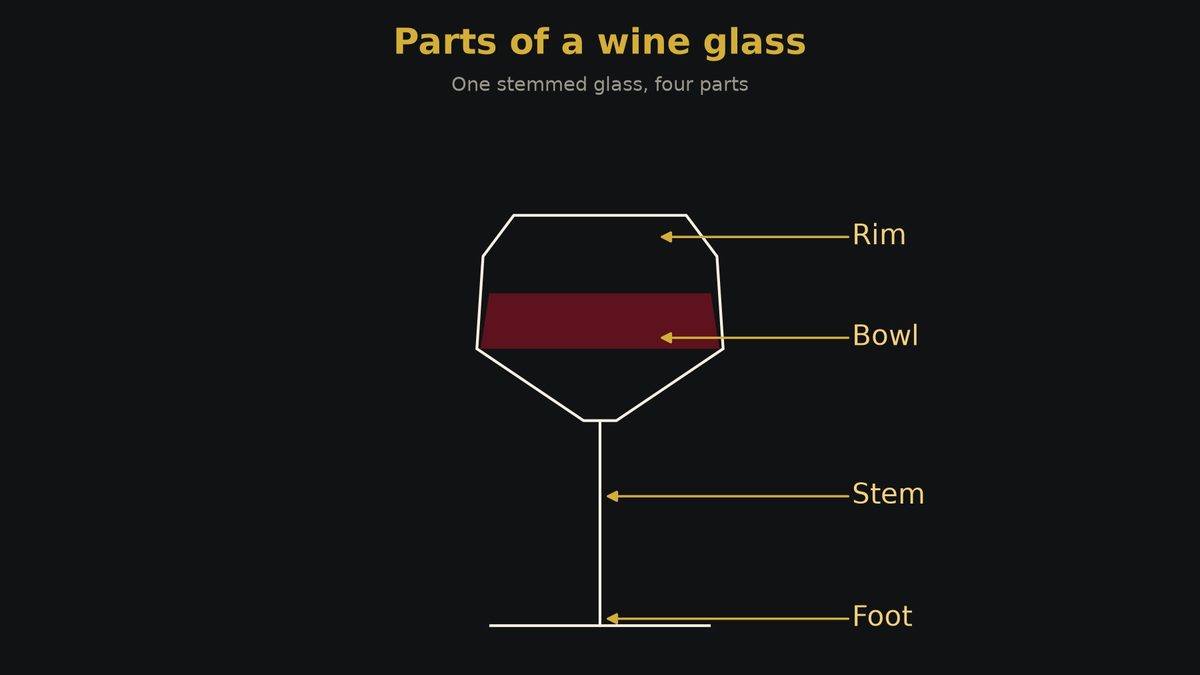
The parts of a wine glass
Every stemmed glass has four parts, and each one has a job.
- Rim. The opening you drink from. A narrower rim concentrates the aroma that collects above the wine, and a wider rim lets more air in.
- Bowl. The part that holds the wine. Its width sets how much surface the wine has in contact with air, and its height sets how much headroom is left above a standard pour.
- Stem. A handle that lets you hold the glass without warming the bowl with your hand. It also keeps fingerprints off the bowl.
- Foot. The base. A broad foot makes the glass stable on a table.
Comparison table: wine glass shapes at a glance
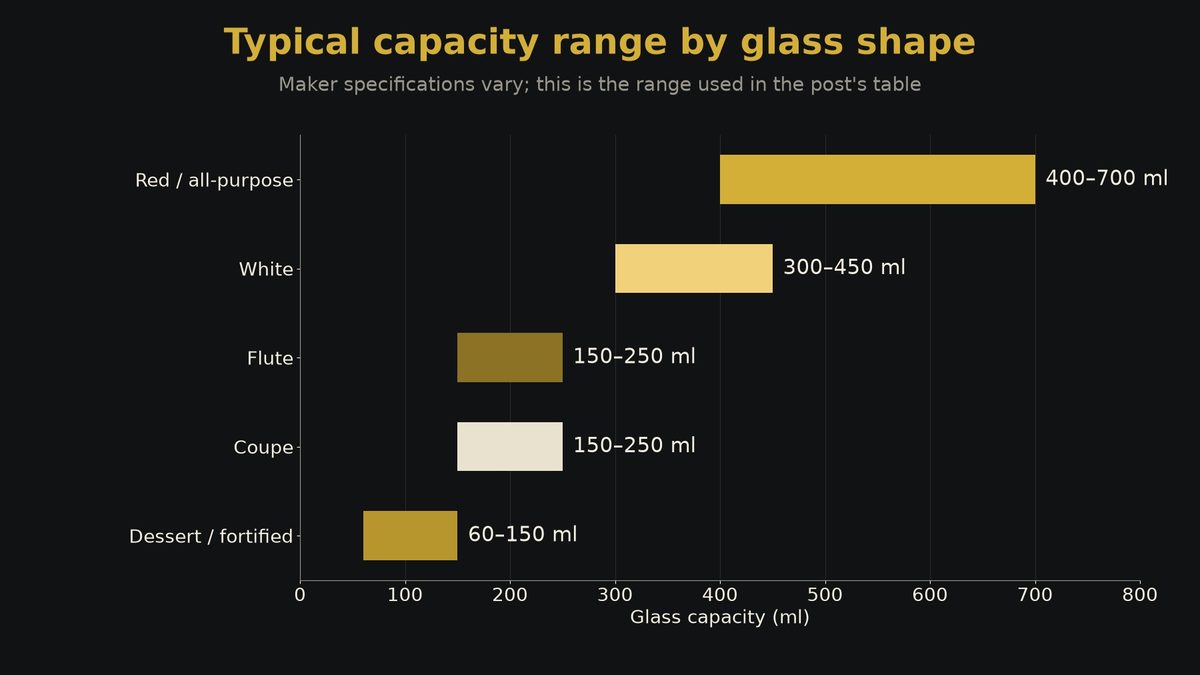
Capacity ranges below are typical for each shape. Makers vary widely, so check the specification on the box. Capacity is the brim-full volume, not a pour: a normal pour fills a glass only a third to a half of the way.
| Glass | Typical bowl shape | Typical capacity range | Used for | Example category |
|---|---|---|---|---|
| Red or all-purpose | Wide, rounded bowl with a medium rim | 400–700 ml | Still red wine, and most still wine in a home set | Red wine |
| White | Narrower, often taller bowl with a smaller opening | 300–450 ml | Still white wine | White wine |
| Rosé | Similar to a white glass, sometimes with a slightly wider bowl | 300–450 ml | Still rosé | Rosé wine |
| Flute | Tall, narrow bowl | 150–250 ml | Sparkling wine | Sparkling wine |
| Coupe | Shallow, wide saucer | 150–250 ml | Sparkling wine for a toast | Sparkling wine |
| Dessert or fortified | Small bowl with a narrow rim | 60–150 ml | Sweet and fortified wines in small pours | Dessert wine guide |
Red, white, rosé, sparkling and dessert shapes
Red wine glasses
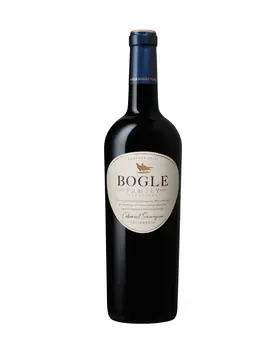
A red wine glass has a wide bowl. The extra width gives the wine a large surface to air, which is why makers often pair it with full-bodied reds in their own catalogues. Larger bowls also leave room to swirl without spilling. Red wines that are often served in these glasses include the styles covered in our types of red wine guide. An example from the catalogue is Bogle Cabernet Sauvignon.
White and rosé glasses
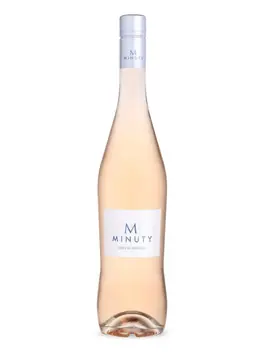
White wine is served colder than red, and a narrower bowl has less surface exposed to room air. That is the physical reason makers give for a smaller bowl: the wine warms more slowly. A taller, narrower shape also keeps a smaller volume in each glass, which suits a standard pour. Rosé follows the same logic, and Château Minuty M de Minuty Rosé is an example of a bottle that goes in this kind of glass. Our white wine styles guide explains the categories.
Sparkling wine: flute, tulip or coupe
Flutes are tall and narrow. The narrow bowl keeps the surface area small, so the bubbles stay in the glass longer, which is the reason the shape became standard. A tulip is a flute with a slightly wider belly and a narrowed rim. A coupe is a shallow saucer. It has a large surface area, so the bubbles disperse faster, but it is easy to hand around at a party and popular for toasts and drinks served at a table. All three work. A bottle such as Nicolas Feuillatte Brut Réserve can go in any of them. For help with sweetness terms on the label, see our brut and demi-sec guide.
Dessert and fortified glasses
Dessert wines and fortified wines are higher in sugar and often higher in alcohol, so they are poured in smaller amounts. The glass is correspondingly smaller, usually 60 to 150 ml, with a narrow rim that keeps the pour looking full. A small pour is also a sensible way to keep alcohol intake in check.
Bogle Cabernet Sauvignon
Chateau Minuty M De Minuty Rose
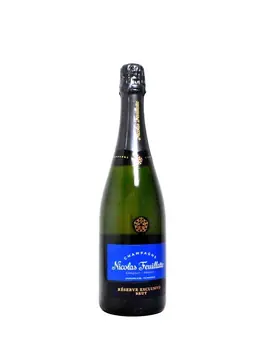
Nicolas Feuillatte Brut Reserve
Stemmed or stemless, glass or crystal
Stemmed glasses keep your hand away from the bowl. For chilled wine, that matters, because body heat warms the wine. Stemless glasses are sturdier, fit in a dishwasher more easily and take less cupboard space. They suit casual evenings and outdoor tables. If you choose them, hold the glass near the base.
Glass or crystal is mostly a durability and care question. Crystal can be made thinner, and many people like the look. Thin rims chip more easily, and many crystal makers recommend washing by hand. Standard glass is thicker and better suited to the dishwasher. Check the maker's care label before you buy a set to put in a rack.
Steps: building a home set for hosting
- Count your usual guests, then add spares. Think of the biggest dinner you host in a year, add two, and buy to that number. Glasses break, and guests set them down and lose them.
- Start with one universal stemmed shape. A mid-sized, tulip-shaped bowl handles still red, white and rosé well enough for a home set.
- Add flutes or tulips if you serve sparkling wine often. They are inexpensive and take little room.
- Add small dessert glasses if you serve ice wine, fortified wine or other sweet wines. Four to six is plenty.
- Store glasses upright and wash crystal by hand. Upright storage avoids rim chips and trapped cupboard odours, and a soft cloth keeps the bowl clear.
For party layouts, including how many glass shapes to put on a bar, see our holiday party bar setup guide. Gift-minded readers may like the host gift wine and spirits guide or the holiday party gift edit.
How full to pour
A glass is not meant to be filled to the brim. A common guide is to pour red wine to about a third of the bowl, white wine to about half, and sparkling wine to about three quarters of a flute. The empty space above the wine lets aroma collect and gives room to swirl. A standard still-wine pour is about 150 ml (5 oz), which is about one standard drink at 12% ABV, and stronger wines contain more. Serve chilled wines at the temperature in our wine serving temperature chart.
Frequently asked questions
Does the shape of a wine glass matter?
Shape affects how fast wine warms, how much surface touches air and how aroma collects near the rim. Those are physical effects, and glass makers design bowls with them in mind. Whether the difference matters to you is personal preference, and a clean all-purpose glass works for nearly everything.
What is the difference between a red and a white wine glass?
A red wine glass usually has a wider, larger bowl. A white wine glass usually has a narrower bowl and a smaller opening. The narrower shape exposes less surface, so a chilled wine stays colder for longer.
Flute or coupe for sparkling wine?
Both work. A flute keeps the bubbles in the glass longer because its surface area is small. A coupe is wider and shallower, so the bubbles fade faster, but it is easy to carry and stack for a toast. A tulip sits between the two.
Are stemless glasses OK for wine?
Yes. They are sturdy, easy to store and dishwasher friendly. The trade-off is that your hand touches the bowl, which warms chilled wine. Hold the glass by its base if the wine is served cold.
How many wine glasses should a host have?
Buy for your largest usual gathering, then add two to four spares. If you serve more than one kind of wine at the same meal, plan for one glass per guest per wine, or ask guests to keep one glass for the evening and provide water glasses too.
Is crystal better than regular glass?
Crystal can be thinner and some people prefer how it looks. It also tends to chip more easily and often needs hand washing. Regular glass is thicker and usually dishwasher safe.
Related reading
You must be of legal drinking age in your province. ID and adult signature required at delivery.