Types of Corkscrews and How to Open a Wine Bottle Cleanly
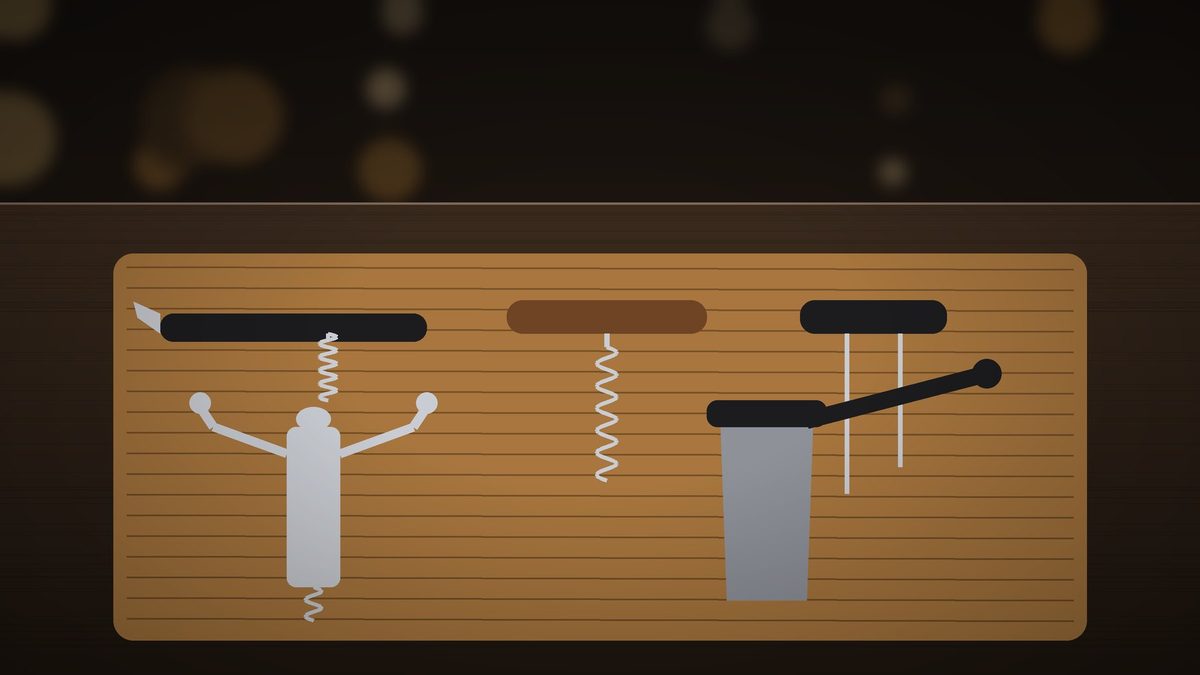
The main corkscrew types are the waiter's friend (a folding lever, often double-hinged), the winged corkscrew, the lever or "rabbit" style, the simple T-handle, the two-prong puller for fragile corks and electric openers. For most still wine, a double-hinged waiter's friend opens bottles cleanly with a two-stage lift and fits in a drawer or pocket.
Corkscrews are a classic hosting and gifting search, and they are climbing right now. In this morning's Google Trends pull, interest in "corkscrew" has more than doubled from its late-summer average, the same lift that shows up every year as holiday dinners and gift lists come together. A good opener is a small thing that makes a big difference at the table: no crumbs in the glass, no cork stuck halfway, no struggling bottle between the knees. This guide compares the six common types, gives step-by-step instructions for the waiter's friend, explains what to do with an old or broken cork and covers the difference between corks and screw caps. It is about still wine only. Sparkling wine is opened by hand, without a corkscrew.
Comparison table: types of corkscrews
| Type | How it works | Effort | Suits fragile corks? | Portable? |
|---|---|---|---|---|
| Waiter's friend (single or double hinge) | Folding knife and worm; a hinged lever rests on the bottle lip and lifts the cork | Low to medium; double hinge is easier | Somewhat, with care | Yes |
| Winged corkscrew | Turning the top drives the worm in and raises two arms; pressing the arms down lifts the cork | Low | Somewhat | Bulky but possible |
| Lever ("rabbit") opener | Clamps the bottle neck; one lever stroke in and out | Very low | Not ideal | No |
| T-handle (direct pull) | A worm on a handle; you pull straight up | High | No | Yes |
| Two-prong puller | Two thin blades slide down either side of the cork; twist and pull | Medium | Yes | Yes |
| Electric opener | A motor drives the worm in and pulls the cork out | Very low | Not ideal | Rechargeable, countertop |
There is no single right choice. A waiter's friend is the most versatile. A winged or electric opener suits anyone with less hand strength. A two-prong puller is the specialist tool for old corks.
The six types in more detail
Waiter's friend. Also called a sommelier knife, it folds like a pocket knife and has three parts: a small foil cutter, a spiral worm and a lever. The double-hinged version has a two-step lever, which lets you lift the cork in two short stages so it comes out straight instead of bending. That is why it is the standard tool in restaurants.
Winged corkscrew. You place it over the bottle, turn the handle to drive the worm in, and two arms rise as the worm goes down. Pressing both arms down pulls the cork. It is easy to use, but the worm on cheaper models is often a solid screw rather than an open spiral, and that can tear a soft cork.
Lever opener. Often called a rabbit because of its shape, it clamps around the neck. One push of the lever drives the worm in; a second movement pulls the cork out. It is fast for a party but heavy and bulky.
T-handle. The simplest design: a worm with a wooden or metal handle. It relies entirely on your arm, and the straight pull can break old corks.
Two-prong puller. Sometimes called a butler's friend, it has no worm at all. Two thin, flexible blades slide down between the cork and the glass. You rock it in, then twist and pull gently. Because it never pierces the cork, it is the safest choice for old, dry or crumbly corks.
Electric opener. A battery-powered motor drives the worm in and reverses to pull the cork out. Most come with a separate foil cutter. They need charging but very little strength.
Steps: how to open a wine bottle with a waiter's friend
- Cut the foil below the lip. Run the small blade around the neck just under the raised lip of the bottle, then peel the top of the foil away. Cutting below the lip keeps wine from running over the foil when you pour.
- Wipe the bottle mouth. Use a clean cloth or napkin to remove any dust or residue on top of the cork.
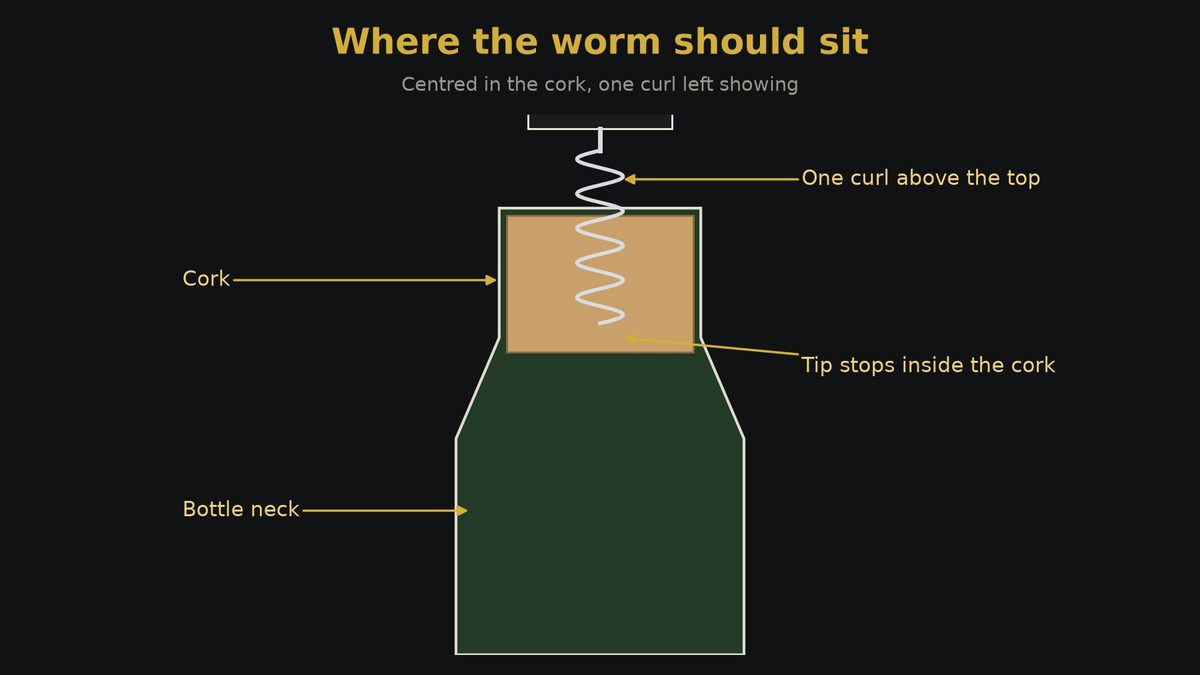
- Centre the worm tip and turn straight down. Place the point slightly off-centre so the spiral itself sits in the middle of the cork, then turn the handle while keeping the worm upright.
- Stop with one curl showing. Going all the way through the cork can push crumbs into the wine. One visible curl leaves enough grip without piercing the bottom.
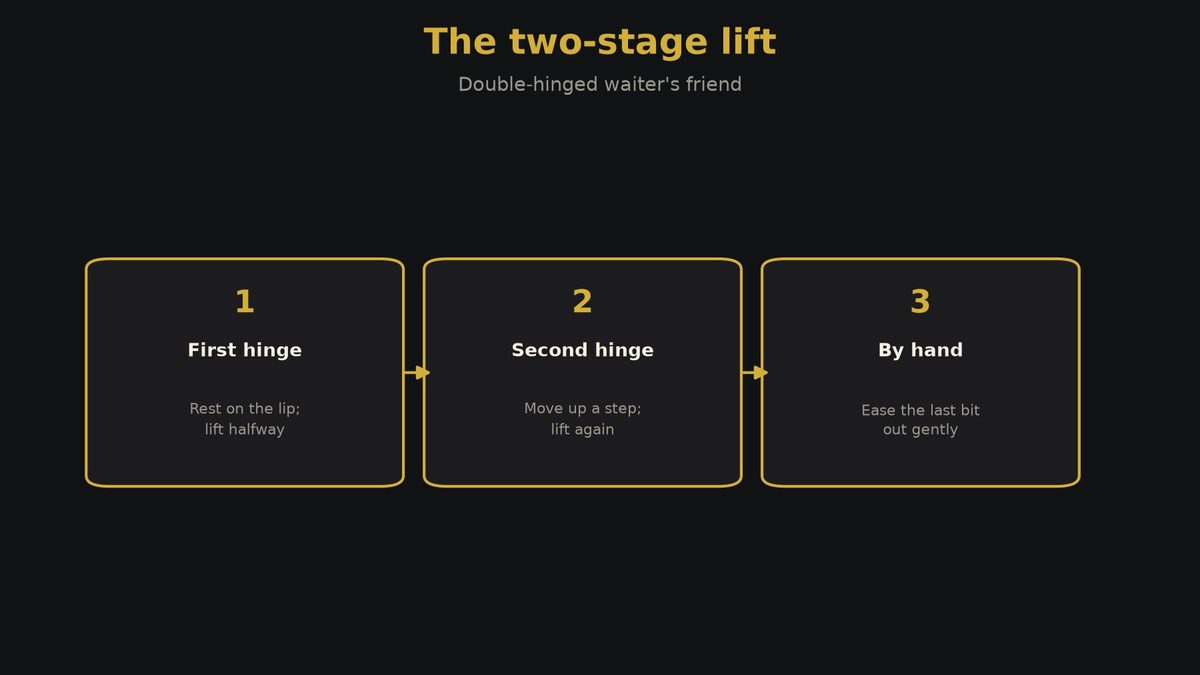
- Lever on the first hinge, then the second. Rest the first step on the bottle lip and lift the handle until the cork rises halfway. Move to the second step and lift again.
- Ease the last bit out by hand. Hold the cork and wiggle it out gently to avoid a pop or a splash.
Old or fragile corks, and what to do if the cork breaks
Corks from older bottles can dry out and crumble. Storing bottles on their side helps keep corks moist, which our guide to how to store wine and spirits explains. For a fragile cork:
- Use a two-prong puller. Slide the longer blade in first, then the shorter one, rocking gently until both are fully down. Twist slowly while pulling up.
- If the cork breaks with a piece left in the neck, reinsert the worm at a slight angle into the remaining piece, turning slowly, and lift gently. Angling the worm gives it more grip in a short piece.
- If the cork crumbles or falls in, pour the wine through a fine mesh strainer or an unbleached paper coffee filter into a decanter or jug. A few crumbs are harmless, but straining keeps them out of the glass. Our guide to how to decant wine covers pouring into a decanter.
Natural corks, synthetic corks and screw caps
Not every bottle needs a corkscrew.
- Natural cork is cut from the bark of the cork oak. It compresses and springs back, which is what seals the bottle.
- Technical or agglomerated corks are made from cork granules bonded together, sometimes with natural cork discs on the ends.
- Synthetic corks are made from plastic compounds. They can be very firm, so a sharp, open-spiral worm and a two-stage lever help.
- Screw caps need no tool at all. Hold the bottle, twist the base of the cap until the seal breaks, and unscrew the top.
Screw caps are common on wines made for drinking young, and they appear across many price levels. Once any bottle is opened, our guide to how long opened wine lasts gives practical timings.
Sparkling wine is different
Never use a corkscrew on a sparkling wine. The cork is under several bar of pressure and can fly out with force. Sparkling wine is opened by hand: remove the foil, loosen the cage while keeping a thumb on the cork, then hold the cork and turn the bottle slowly. Point it away from people the whole time. The sparkling wine category lists our sparkling range.
Practice bottles and a gift angle
Any still wine with a natural or synthetic cork is a good bottle to practise on before a dinner. Examples in our catalogue include Kendall-Jackson Vintner's Reserve Chardonnay, Bogle Merlot, Apothic Red and 19 Crimes Cabernet Sauvignon. Closures can change between vintages, so check the bottle you receive. The red wine and white wine categories list the full range, and the main wine category covers everything.
A corkscrew is also a practical gift to pair with a bottle. A double-hinged waiter's friend tied to the neck of a bottle makes a complete host gift. Our host gift guide has more ideas, and the affordable gifts page collects bottles that suit a modest budget. For the glass to pour into, see our guide to types of wine glasses.
Kendall-Jackson Chardonnay Vintner Resrv
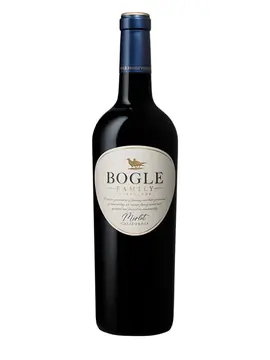
Bogle Merlot
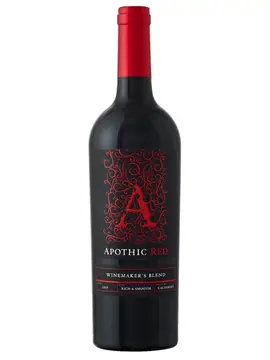
Apothic Red

19 Crimes Cabernet Sauvignon
Using openers safely
- Keep the foil cutter folded away when you're not using it, and cut away from your hand.
- Hold the bottle on a flat, stable surface, not between your knees.
- Don't force a stuck cork with a straight pull. Re-seat the worm and use the lever.
- Keep electric openers charged and away from spills.
Frequently asked questions
What is the easiest type of corkscrew to use?
Lever and electric openers need the least strength. A winged corkscrew is also easy. For a compact tool that works on most bottles, a double-hinged waiter's friend is easy once you've practised a few times.
How do you open wine without breaking the cork?
Centre the worm, turn it straight down, stop with one curl showing, and lift in two stages with a double-hinged lever. For old or dry corks, use a two-prong puller instead.
What do you do if the cork breaks?
Reinsert the worm at a slight angle into the remaining piece and lift slowly. If pieces fall into the bottle, strain the wine through a fine mesh strainer or paper coffee filter.
What is a two-prong cork puller for?
It removes old, dry or fragile corks without piercing them. The two blades grip the sides of the cork, which reduces crumbling.
Do screw-cap wines need a corkscrew?
No. Twist the base of the cap to break the seal and unscrew the top by hand.
Can you use a corkscrew on sparkling wine?
No. Sparkling wine is under pressure, so the cork is removed by hand, with the bottle pointed away from people.
Related reading
You must be of legal drinking age in your province. ID and adult signature required at delivery.