How Long Opened Wine and Spirits Last After a Gathering
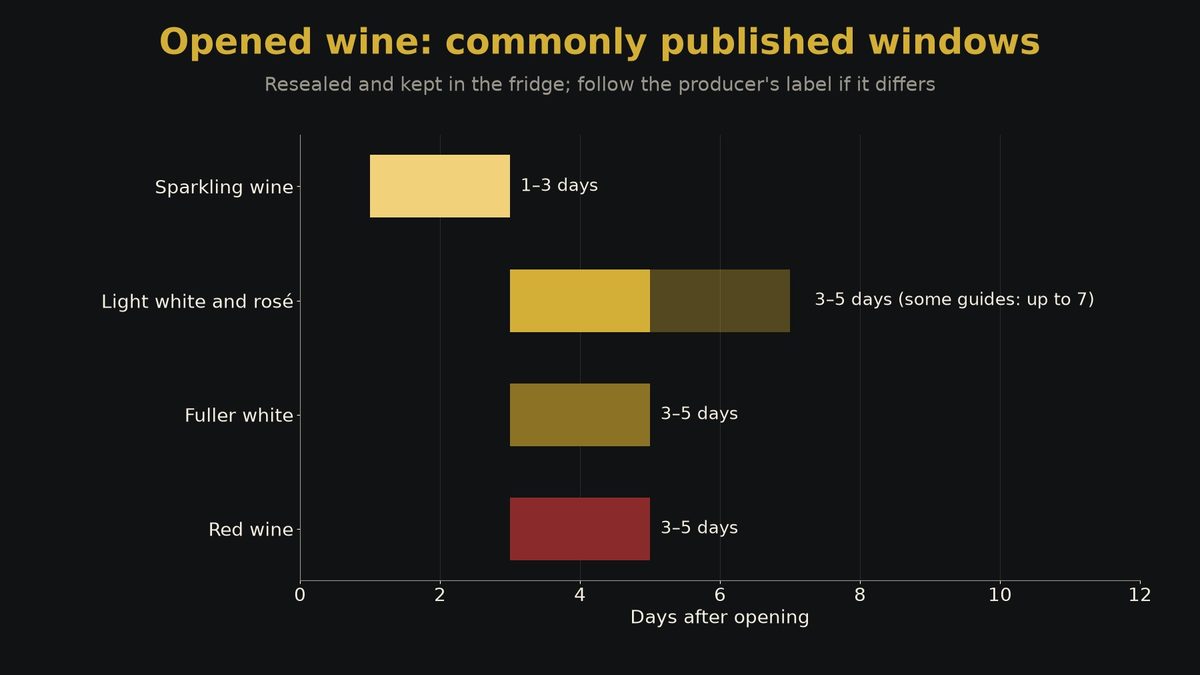
Opened wine lasts days, not weeks. Commonly published ranges are about 1–3 days for resealed sparkling wine in the fridge, 3–5 days for most still white, rosé and red wines resealed and kept cold, and several weeks for fortified wines. Spirits at 40 percent ABV keep for many months to years if capped tightly and stored upright. Cream liqueurs are shorter-lived; follow the label.
Searches for "opened wine" and "how long does wine last" have both risen sharply this autumn, and the reason is easy to guess: holiday dinners, open houses and New Year's toasts leave half-finished bottles on the counter. This guide is about those opened bottles only. It gives the commonly published ranges by category, how to reseal each type, where to keep it, and a short clear-down checklist for the end of the night. The ranges are general guidance; if a producer prints different advice on the label, follow the producer.
What changes after the seal is broken
Three things work on an opened bottle:
- Oxygen. Air reaches the wine as soon as the cork comes out. Over a few days, oxygen changes wine's aroma and colour. The more air in the bottle, the faster this happens, which is why a nearly empty bottle changes faster than a nearly full one.
- Heat. Warmth speeds up those chemical changes. A fridge slows them down considerably, which is why every opened wine keeps longer cold.
- Lost carbonation. Sparkling wine also loses dissolved carbon dioxide once the pressure is released. That is the first thing to go, usually before any change from oxygen.
Spirits behave differently. At 40 percent ABV or more, there is little that can spoil, and changes from air are slow. The main risk is evaporation through a loose cap.
Comparison: commonly published opened windows
| Category | Commonly published opened window | Reseal method | Where to keep it | Shop the category |
|---|---|---|---|---|
| Sparkling wine | 1–3 days | Sparkling wine stopper with clamps | Fridge, upright | Sparkling wine |
| Light white and rosé | 3–5 days, some guides say up to 7 | Original cork or screw cap, or a wine stopper | Fridge, upright | White wine, rosé |
| Fuller white (oaked styles) | 3–5 days | Cork, cap or stopper | Fridge, upright | White wine |
| Red wine | 3–5 days | Cork, cap or stopper | Fridge, then out for a while before serving | Red wine |
| Fortified wine | Several weeks; check the label | Original stopper | Fridge, or a dark cupboard for some styles | Wine |
| Spirits (40% ABV and up) | Many months to years | Original cap, tight | Upright, dark cupboard, away from heat | Vodka, whisky, rum |
| Liqueurs | Months; check the label | Original cap, tight | Cupboard or fridge, as the label says | Liqueur |
| Cream liqueurs | Follow the label's best-before | Original cap, tight | Cool, often the fridge once opened | Liqueur |
Sparkling wine: stopper, fridge, short window
Sparkling wine has the shortest window, and the reason is pressure, not oxygen. Once the cork is out, the dissolved gas starts escaping.
- Use a proper sparkling wine stopper, the kind with hinged clamps that grip the bottle lip. A regular cork pushed back in at an angle will not hold the pressure and may pop out.
- Refrigerate immediately. Cold liquid holds dissolved gas better than warm liquid.
- Plan on 1–3 days. After that, the wine is still wine, but most of the bubbles will have gone.
The often-repeated tip about a spoon in the bottle neck has no good evidence behind it. A real stopper and cold storage are what help.
Still white, rosé and red wine
For still wines, the advice is the same across colours: put the closure back on, and refrigerate.
- White and rosé go straight back in the fridge. Commonly published ranges are 3–5 days, with some guides allowing up to a week for lighter styles.
- Red wine also keeps longer in the fridge. Many people leave opened red on the counter, but warmth speeds up change. Refrigerate it, then take it out a while before serving so it is not too cold. Our serving temperature chart gives the range for each style.
- Wine in a bag-in-box lasts longer once opened, because the bag collapses as wine is poured and little air gets in. Follow the date or window printed on the box.
If you want to know more about the styles themselves, our guides to types of red wine and types of white wine describe each grape and label term.
Fortified wines, spirits and cream liqueurs
Fortified wines have extra spirit added, which raises the ABV, usually to somewhere between 15 and 22 percent. That higher strength gives them a longer opened window than table wine, commonly several weeks. Lighter and drier fortified styles have shorter windows and belong in the fridge; read the label.
Vermouth is also a fortified wine. Once opened, keep it in the fridge and use it within the window on the label.
Spirits such as vodka, gin, rum, whisky and tequila do not spoil in the way wine does. Keep the cap tight and the bottle upright, because a high-strength spirit can slowly degrade a cork that it sits against. A bottle with only a little left, and a lot of air above it, will change faster over many months than a full one.
Cream liqueurs contain dairy cream. Most producers print a best-before date and storage advice on the bottle. Follow that, and refrigerate after opening if the label says so.
Steps: a clear-down checklist for the end of a gathering
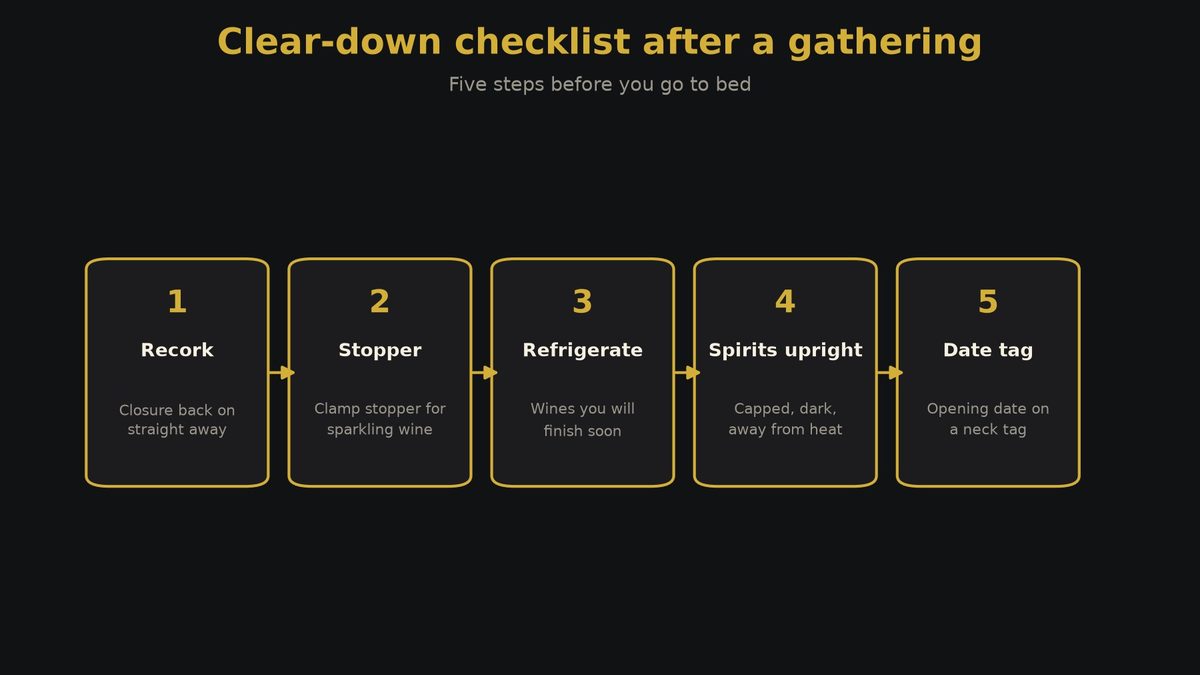
- Recork or recap each bottle straight away. The sooner the closure goes back on, the less air gets in.
- Use a sparkling stopper for sparkling wine, not the original cork wedged in sideways.
- Refrigerate the wines you plan to finish within the commonly published window: sparkling, white, rosé and red.
- Stand spirits upright, capped, in a dark cupboard away from the oven, radiators and sunny windows.
- Write the opening date on a tag or a piece of tape on the neck, not on the label itself, so you know how long each bottle has been open.
- Pour away anything that smells or looks clearly wrong. If in doubt, do not serve it to guests.
What not to do
- Do not leave sparkling wine on the counter overnight and expect it to be ready for brunch. Cold and a stopper are the only things that help.
- Do not pour leftovers from several bottles into one unlabelled jug or decanter. You lose track of what is in it and when it was opened.
- Do not boil leftover wine if you use it in a warm drink. For mulled wine, heat it gently and keep it below a simmer. Our holiday batch cocktails post has a measured mulled wine recipe that works well for using up an opened bottle of red.
- Do not store spirits on their side. Wine bottles are stored on their side before opening; spirits always stand upright.
Storage before opening is a separate topic, covered in our guide to storing wine and spirits.
Planning to have fewer leftovers
The easiest way to avoid half-finished bottles is to plan the order around the guest count. A 750 ml bottle gives five 150 ml glasses of still wine or six 125 ml flutes of sparkling. For 20 guests having two glasses of wine each, that is 40 glasses, or eight bottles. Our Christmas wine and spirits planning guide walks through guest maths for holiday parties, and the Boxing Day collection and New Year's Day collection group bottles for the days after the main event. Delivery questions are answered on our FAQ page.
Frequently asked questions
How long does opened red wine last?
Commonly published ranges are 3–5 days, resealed and kept in the fridge. Take it out a while before serving so it is not too cold.
How long does opened sparkling wine last?
About 1–3 days with a proper sparkling wine stopper in the fridge. The bubbles fade first, so the sooner you finish it, the more carbonation it will have.
Do opened spirits go bad?
Spirits at 40 percent ABV or more do not spoil like wine. With the cap tight and the bottle upright, away from heat and light, they keep for many months to years. A nearly empty bottle changes faster.
Should opened red wine go in the fridge?
Yes. Cold slows the changes caused by oxygen. Let it warm up a little before you pour it.
How do you keep leftover sparkling wine from going flat?
Seal it with a clamp-style sparkling wine stopper and refrigerate it immediately. Even then, plan to finish it within a few days.
How long do cream liqueurs last once opened?
Follow the best-before date and storage instructions on the bottle. Many producers recommend refrigeration once opened.
Related reading
You must be of legal drinking age in your province. ID and adult signature required at delivery.