How to Open Sparkling Wine Safely and Pour Without Overflow
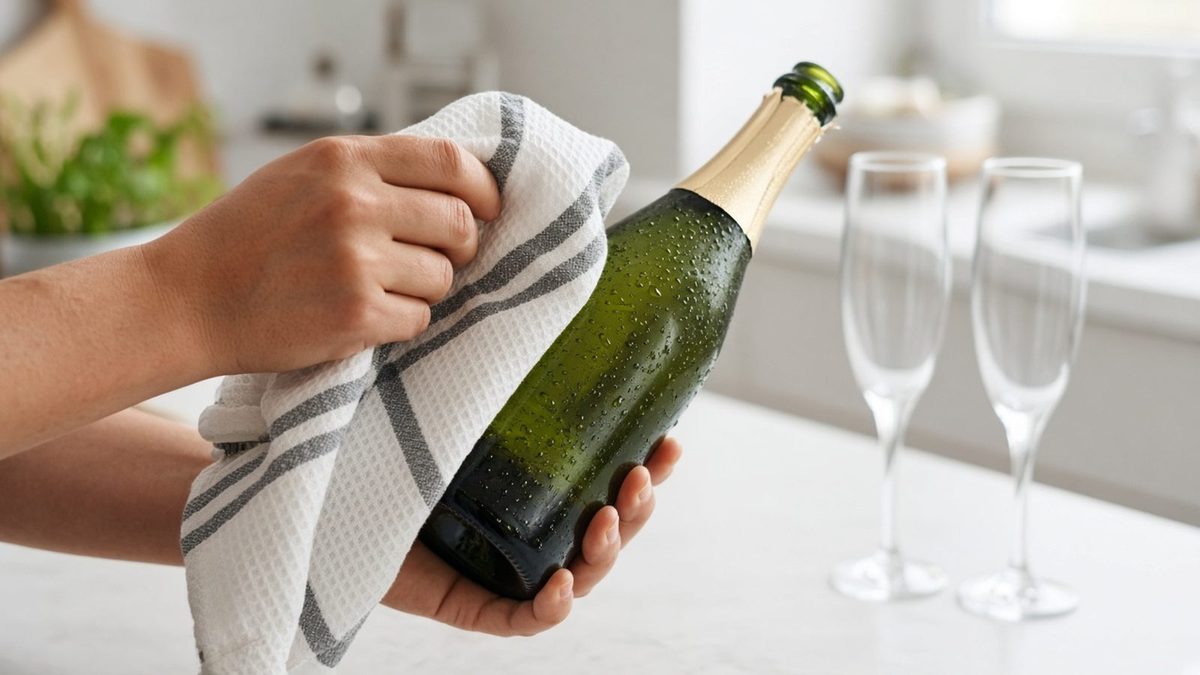
To open champagne safely, chill it to 6–8 °C, remove the foil, keep your thumb on the cork while loosening the cage, cover the cork with a towel, tilt the bottle to 45° away from people and turn the bottle, not the cork, until it eases out with a quiet sigh. Pour in two stages.
A sparkling wine bottle is under several atmospheres of pressure, which is why a cork can leave the bottle fast enough to injure someone, particularly their eyes. Opening it calmly is a skill worth having before the holiday season. This guide covers chilling, opening, pouring, glassware and resealing for champagne, prosecco, cava and other sparkling wines. Buying advice is in our New Year's Eve sparkling wine post, and style differences are in Champagne vs Prosecco vs Cava vs Crémant.
Chill first
Temperature is a safety step, not just a serving preference. A cold bottle holds its carbon dioxide in solution better, so the cork is under less effective pressure and the wine foams less when opened. Commonly published serving ranges for sparkling wine are 6–8 °C. Our wine serving temperature chart gives approximate chilling times: about three hours or more in a fridge, or about 25–30 minutes in a bucket of ice and water.
Also, do not shake the bottle or carry it around just before opening. If a bottle has been moved, let it rest for a few minutes.
Cage and cork: step by step
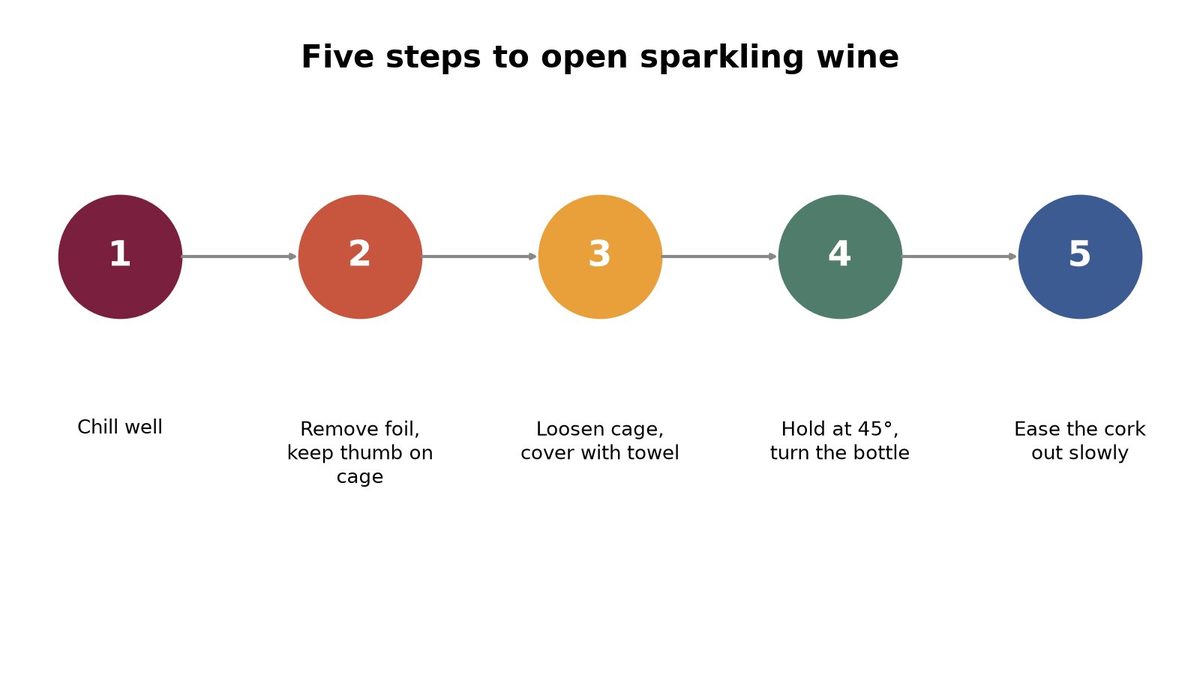
- Dry the bottle, especially if it came from an ice bucket, so you have a secure grip.
- Remove the foil using the tab or a knife below the cage.
- Put your thumb on top of the cork. From this point, keep a hand on the cork until it is out.
- Loosen the cage by untwisting the wire loop, usually six half-turns. You can leave the loosened cage on the cork for extra grip, or remove it while your thumb stays on the cork.
- Cover the cork with a clean towel or napkin.
- Tilt the bottle to about 45°, pointing away from people, windows, lights and anything breakable.
- Hold the cork firmly and turn the bottle, not the cork, with your other hand on the base.
- Let the cork ease out slowly. Resist it as it starts to move. Aim for a quiet hiss rather than a pop.
- Keep the bottle at an angle for a few seconds after the cork is out; this helps prevent foaming over.
Angle and thumb pressure
The 45° angle increases the surface area of wine in the neck, which helps the gas escape gradually. Thumb pressure, through the towel, controls the cork's speed. If the cork is stuck, run the neck under warm water for a few seconds or wrap it in a warm towel, then try again. Never use a corkscrew on a sparkling wine cork, and never point the bottle at anyone, including yourself.
Why not to saber
Sabering means striking the bottle's neck with a blade so the top breaks off. It is a display technique, not a practical opening method. It involves glass breaking under pressure, flying glass and a blade near guests, and it is unsuitable at home, especially when people have been drinking. We do not recommend it. A towel and a slow twist are safer and keep more wine in the bottle.
Pouring in two stages
Sparkling wine foams on contact with the glass, so pour in two stages:
- Hold the glass at a slight angle and pour a small amount down the side, about a third of the glass.
- Wait for the foam to settle, a few seconds.
- Top up to about two-thirds full.
Clean, dry glasses foam less unpredictably than glasses with detergent residue or dust. Rinse glasses with hot water and let them air dry.
Glassware: flute, coupe, wine glass
| Glass type | Typical capacity | Typical pour | Notes |
|---|---|---|---|
| Flute | 150–250 ml | About 150 ml (5 oz) | Tall and narrow; keeps bubbles visible |
| Coupe | 150–250 ml | About 150 ml (5 oz) | Wide and shallow; easier to spill |
| Tulip or white wine glass | 300–450 ml | About 150 ml (5 oz) | Many producers now suggest a wine glass |
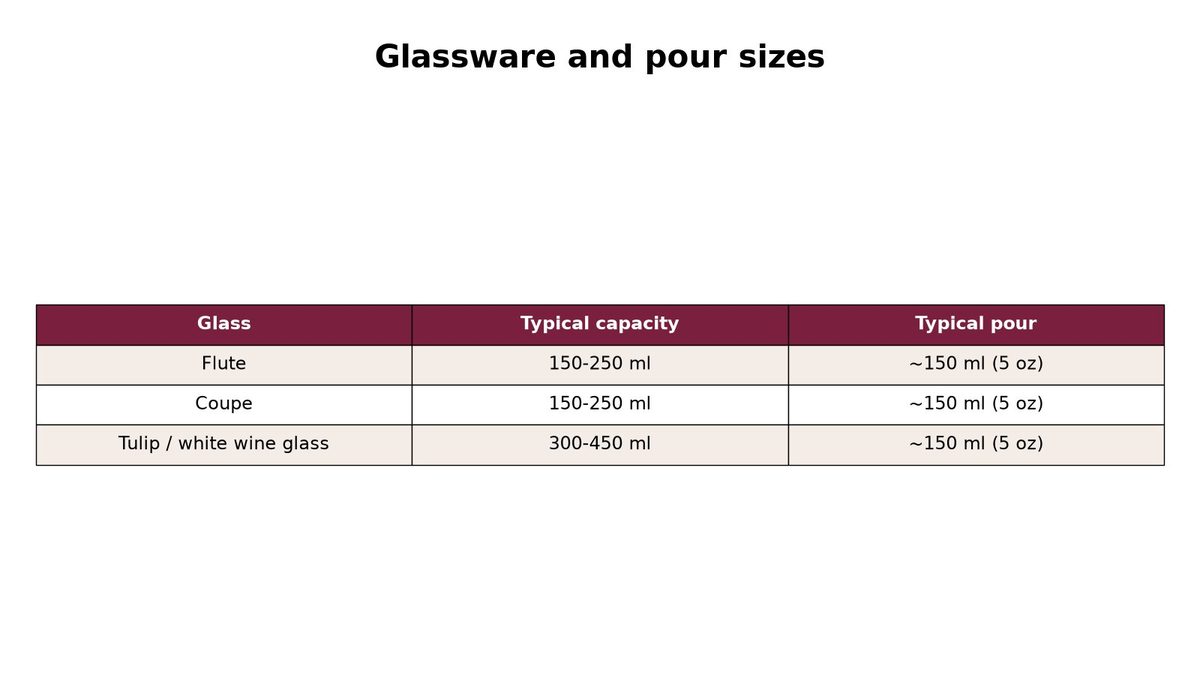
A 750 ml bottle at 150 ml per glass serves five glasses. A standard drink of 12% wine is about 142 ml (5 oz), so one standard pour is close to one standard drink.
Resealing and stoppers
Once opened, sparkling wine loses carbonation. To keep it:
- Use a sparkling-wine stopper with clamps that grip the bottle's lip. Ordinary corks or wine stoppers are not designed for the pressure.
- Refrigerate immediately, standing upright.
- Finish within a day or two. The bubbles fade even with a good stopper.
The old idea of putting a spoon in the neck is not a reliable way to preserve bubbles.
Practice bottles in our catalogue
Any sparkling wine uses the same technique. Examples in our sparkling wine category include Moët & Chandon Brut Impérial from Moët & Chandon, Veuve Clicquot Brut, La Marca Prosecco and Freixenet Prosecco DOC. Half bottles such as Moët & Chandon Brut Impérial 375 ml are useful for smaller toasts. Browse the full wine range and seasonal ideas on occasions.
Moet & Chandon Brut Imperial
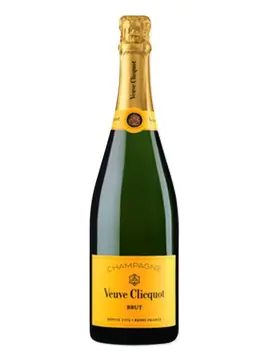
Veuve Clicquot Brut
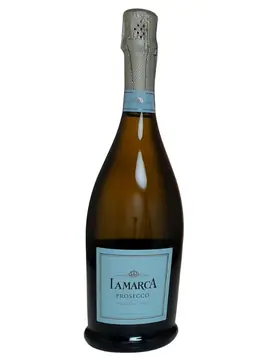
La Marca Prosecco
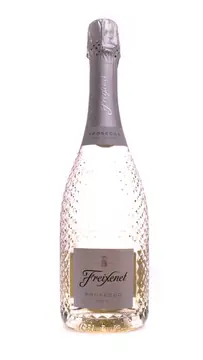
Freixenet Prosecco DOC
Safety checklist for a toast
- Chill fully.
- Open in the kitchen or a clear space, not over a crowd.
- Point the bottle away from people and faces.
- Keep a hand on the cork from the moment the cage is loosened.
- Have a towel and glasses ready.
- Offer a non-alcoholic sparkling option for the toast; see non-alcoholic holiday drinks.
Opening larger and smaller bottles
The method is the same for every size, but the feel changes:
- Half bottles (375 ml) chill faster and are easier to hold; the cork is the same size, so keep the same care.
- Magnums (1.5 L) are heavier and take longer to chill. Rest the base on your hip or a counter while you turn it, and pour with two hands.
- Screw-top or crown-cap sparkling (some proseccos and pétillant-naturel wines) open like a soft drink; still point them away from people and open slowly.
Frequently asked questions
How do you open champagne safely?
Chill it, remove the foil, keep your thumb on the cork while loosening the cage, cover with a towel, tilt to 45° away from people and turn the bottle slowly until the cork eases out.
Why does sparkling wine foam over?
Usually because it is too warm, was shaken, or was poured too fast into a dry, dusty or detergent-coated glass. Chill it well, let it rest and pour in two stages.
How long does opened sparkling last with a stopper?
Usually a day or two in the fridge with a clamp-style sparkling stopper.
Is it safe to saber champagne at home?
We do not recommend it. It involves breaking glass under pressure and a blade near people.
Is opening prosecco different from champagne?
The technique is the same. Some proseccos have a lower pressure, but treat every sparkling bottle with the same care.
Related reading
- New Year's Eve Champagne and Sparkling Wine by the Case
- Champagne vs Prosecco vs Cava vs Crémant
- Wine Serving Temperatures by Category
- Hugo, Aperol and Campari Spritz Recipes
- How Much Wine and Liquor for a Wedding
You must be of legal drinking age in your province. ID and adult signature required at delivery.