Corporate and Client Liquor Gifts: Budgets, Policies and Delivery

You must be of legal drinking age in your province. ID and adult signature required at delivery.
Year-end business gifting is in full swing. Google Trends search interest for "corporate gifts" has risen several times over since late summer and is still climbing in mid-November. A bottle remains one of the most common choices for clients, vendors and staff, because it is easy to scale to a list, it suits a range of budgets and it can be delivered sealed. This guide walks through the policy checks, budget tiers, how many cases you need, presentation and delivery, so the gift reflects well on your company.
Step one: check gift policies before choosing
Many organisations limit what their people can accept. Before you build a list:
- Ask about gift limits. Some companies cap the value of a gift an employee can accept, often expressed as a dollar figure per year.
- Public-sector and regulated recipients frequently can't accept gifts at all, or must declare them. Government staff, healthcare workers and some financial roles fall into this group. When in doubt, send a card instead.
- Alcohol-specific rules. Some workplaces, and some recipients for personal or religious reasons, don't accept alcohol. A short email to your contact ("We'd like to send a small year-end gift. Is a bottle of wine or spirits appropriate?") avoids an awkward return.
Keep a note on each contact record of what you sent and when. It helps next year and shows the gift was within policy if anyone asks.
Step two: set budget tiers
Most companies use two or three tiers so they can match the gift to the relationship without overspending. Every product on our site shows the per-bottle price first and the case total below, which makes it simple to price a tier.
| Tier | Typical recipients | Format to consider | Example listings | Bottles per case on the listing |
|---|---|---|---|---|
| Team tier | Staff, wider team, small vendors | Standard 750 ml spirit or sparkling wine | Crown Royal Gift Carton 750 ml, Maker's Mark Holiday 750 ml | 12 |
| Client tier | Key clients and partners | Gift edition with glassware or accessory | Woodford Reserve with Rocks Glasses, Hennessy Very Special with Glasses | 6 |
| Gift pack tier | Senior clients, board, long-standing partners | Multi-bottle gift pack or VSOP and older | Old Forester Whiskey Row Gift Pack, Hennessy VSOP Jigger, Patrón Holiday Gift Pack | 4–6 |
| Top tier | A very small number of recipients | Prestige sparkling in a presentation tin | Laurent-Perrier Grand Siècle Gift Tin | 3 |
Case sizes come from each product page and vary from 3 to 12 bottles. Prices change daily and sale prices end on the date shown, so price the tiers on the day you order. The sale page and biggest sales page list current offers with their end dates.
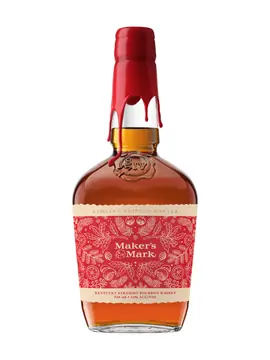
Maker's Mark Holiday
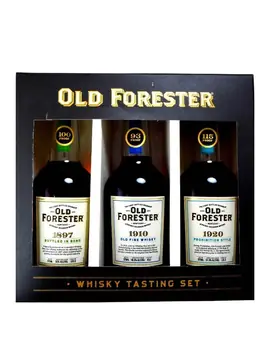
Old Forester Whiskey Row Gift Pack
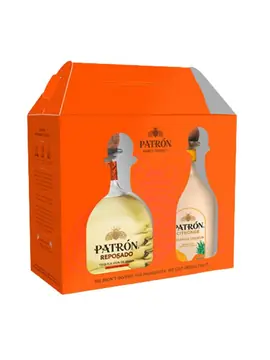
Patron Holiday Gift Pack
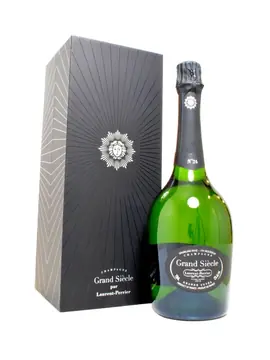
Laurent-Perrier Grand Siecle Gift Tin
Step three: work out how many cases you need
Every product is sold by the case, and each case holds one product. That suits corporate gifting well: one case of a 12-bottle listing covers twelve identical gifts.
To calculate cases, divide the number of recipients in a tier by the bottles per case and round up. Twenty-five team gifts from a 12-bottle case is 25 ÷ 12 = 2.08, so three cases, with 11 bottles left over. Those spares are useful: late additions to the list, a replacement if a bottle is damaged, or the bottle for your own office party.
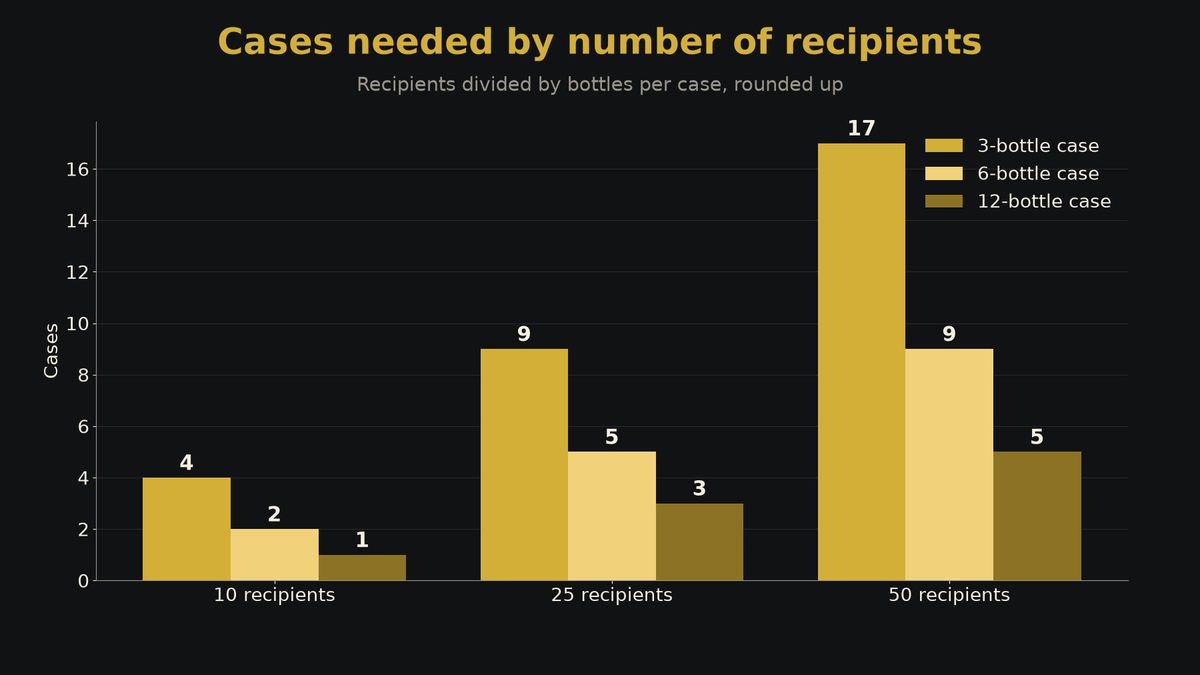
If a tier needs a number that leaves too many spares, consider a product with a different case size for that tier. Our multi-case ordering guide and how case pricing works explain the maths.
Choosing the product without taste claims
A corporate gift is chosen for recognition and presentation, not for one person's palate. Use facts you can check on the listing:
- Category. Whisky, cognac and sparkling wine are the most widely given business gifts. Tequila and rum gift packs suit a younger or more mixed list.
- Age statement or grade. VSOP and XO cognac, or a whisky with an age statement, signal a step up. See VS vs VSOP vs XO and single malt vs blended Scotch.
- Packaging. Gift cartons, tins and editions with glasses arrive ready to hand over. Standard bottles need a box or bag.
- ABV. Printed on every listing. A 12% sparkling wine and a 51% whiskey are very different gifts.
- Mixed list. If you don't know what each recipient drinks, sparkling wine is the most widely accepted choice. Browse sparkling wine or our guide to Champagne vs Prosecco vs Cava.
Presentation and card messages
A short handwritten or printed card does more than an expensive bottle. Keep it simple, specific and without sales language:
- "Thank you for a great year working together. Wishing you and your team a happy holiday season."
- "With thanks for your partnership in 2026. We look forward to the year ahead."
Add your name and title, and avoid putting pricing or product claims in the card. If the gift goes to a shared office, address it to a named person.
Delivery: ID, signatures and business hours
- Deliver to your own office first and hand gifts out yourself, or courier them on. This is the simplest option for a large list.
- Avoid the last week before a holiday shutdown, when offices empty out.
The delivery page and FAQ have the full details.
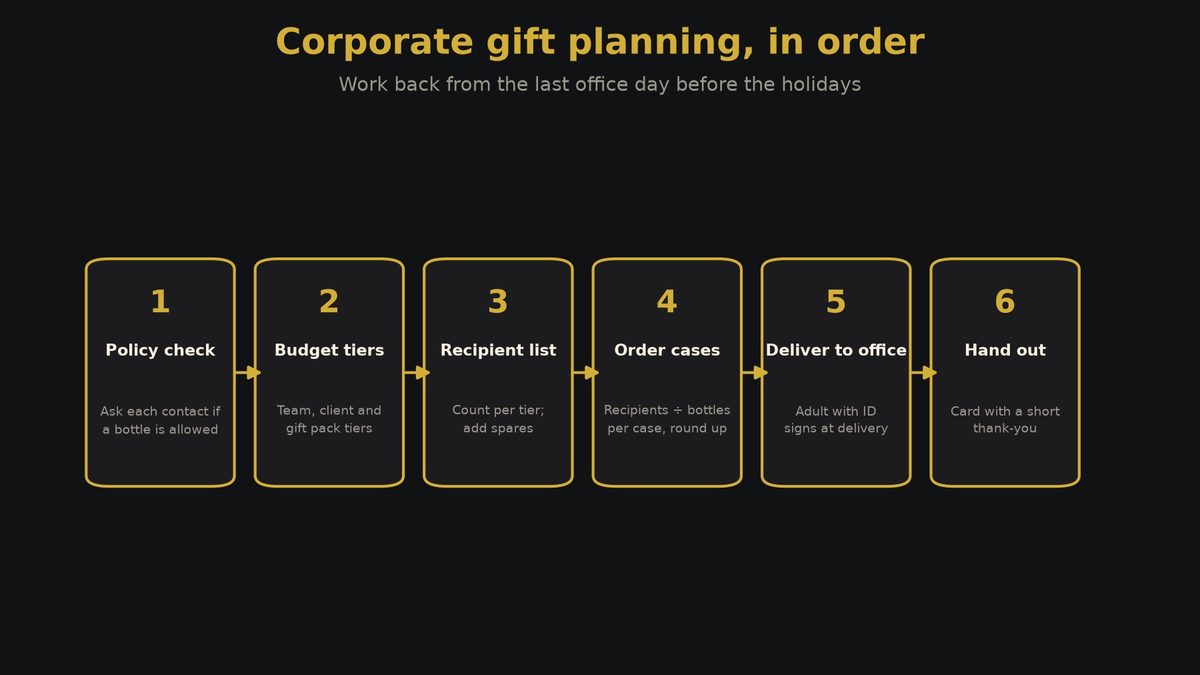
A simple planning timeline
Corporate gifting goes smoothly when it runs on a calendar instead of a scramble. A timeline that works for most teams looks like this:
- Six weeks out: confirm the gift policy check from step one, agree on budget tiers, and pull together the recipient list with names, titles and delivery addresses.
- Four weeks out: pick the products for each tier, write the card messages, and get sign-off from whoever approves spending.
- Three weeks out: place the order. This leaves room to swap an item if something on the list changes, and it keeps delivery away from the busiest week of the season.
- Two weeks out: confirm delivery windows with each recipient's office, including who will be there to show ID and sign.
- Delivery week: track each drop-off and note any that need a second attempt.
Keeping records for the finance team
Gifts to clients and staff often have accounting and tax rules attached, so keep a clean record as you go. A shared spreadsheet with one row per recipient is enough. Include the recipient's name and company, the tier, the product, the order number, the delivery date and who signed for it.
Keep the order confirmation and receipt for each purchase together with that sheet. If your company asks for a business purpose for each gift, add a short note, such as "year-end client thank you" or "staff recognition". Doing this while you order takes a few minutes. Rebuilding it from memory in tax season takes hours.
Finally, save the list for next year. Knowing who received what makes it easy to vary the gift, add new clients and drop contacts who have moved on.
Gifting responsibly
For office gift exchanges, see our white elephant gift bottle guide.
Frequently asked questions
Is it appropriate to give alcohol as a corporate gift?
Often yes, but check the recipient's gift and alcohol policy first. Public-sector and some regulated roles can't accept gifts.
How much should a corporate gift cost?
Set two or three tiers based on the relationship and any recipient gift limits. Price each tier on the day you order.
How do I order identical gifts for a large list?
Choose one product per tier and order by the case. Divide recipients by bottles per case and round up.
What is a safe choice if I don't know what clients drink?
Sparkling wine is the most widely accepted. Gift editions with glassware also work well across a mixed list.
What should the card say?
A short thank-you and a seasonal wish, with your name and title. Keep pricing and product claims out of it.