Ready-to-Drink Cocktails vs Mixing at Home: Label and Price-per-Serving Facts
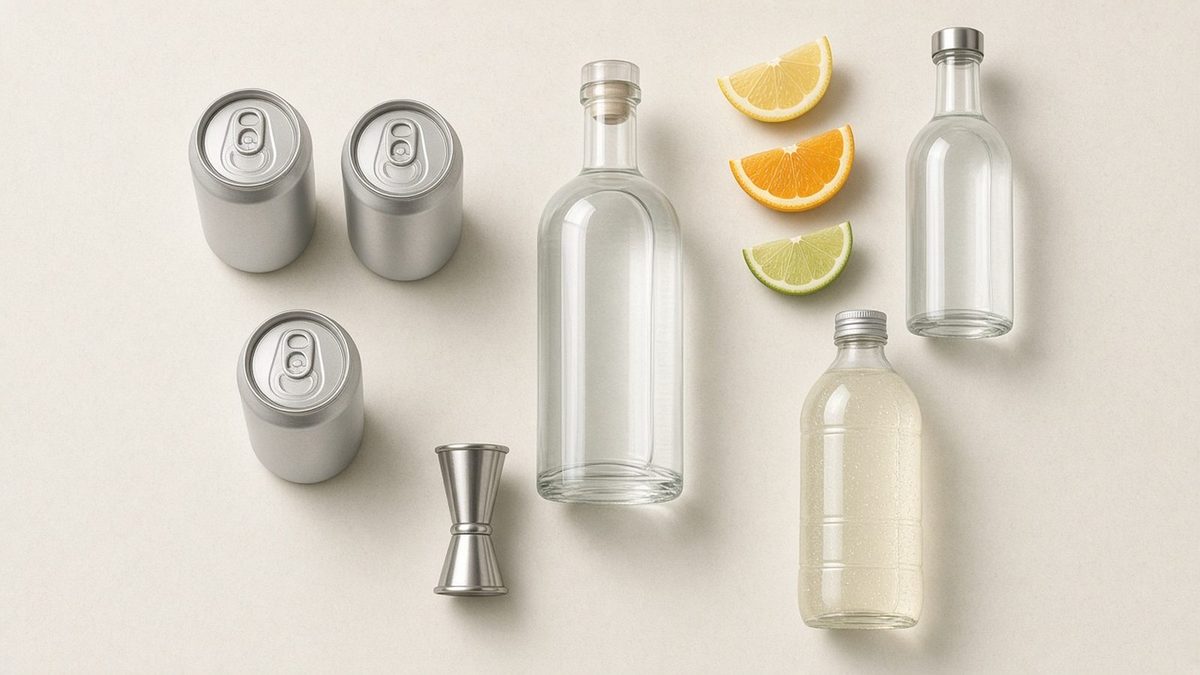
Ready-to-drink cocktails (RTDs) are pre-mixed drinks in cans or bottles. Some are made with real spirits; others use a malt or fermented base, so read the label. To compare them with mixing at home, work out the alcohol per serving and the price per serving using the same pour strength for both.
Retail reporting has noted ready-to-drink products taking a growing share of sales, and canned cocktails are an easy choice for hosting. Mixing your own from a bottle of spirits is the other option. Neither is right for every occasion. This guide sets out the label facts and a method for comparing cost and strength, without inventing any prices.
What "RTD" means
RTD stands for ready to drink: a beverage that is mixed and packaged so it can be served straight from the can or bottle, usually chilled. The category includes canned cocktails (gin and tonic, vodka soda, margaritas) and bottled cocktails such as pre-batched negronis.
Spirit-based vs malt-based on the label
RTDs that look similar can be built on different bases:
- Spirit-based: made with a distilled spirit such as vodka, gin, rum or tequila. The label usually names the spirit.
- Malt-based: made from a fermented malt base, brewed rather than distilled, then flavoured.
- Wine-based: made from wine or fermented fruit.
- Sugar-fermented: fermented sugar base, filtered and flavoured.
Where the drink is sold sets the labelling rules, so the wording differs. Look at the ingredient list and the product description. If the label says "vodka soda", it typically contains vodka; if it says "vodka-flavoured" or a similar phrase, it may not.
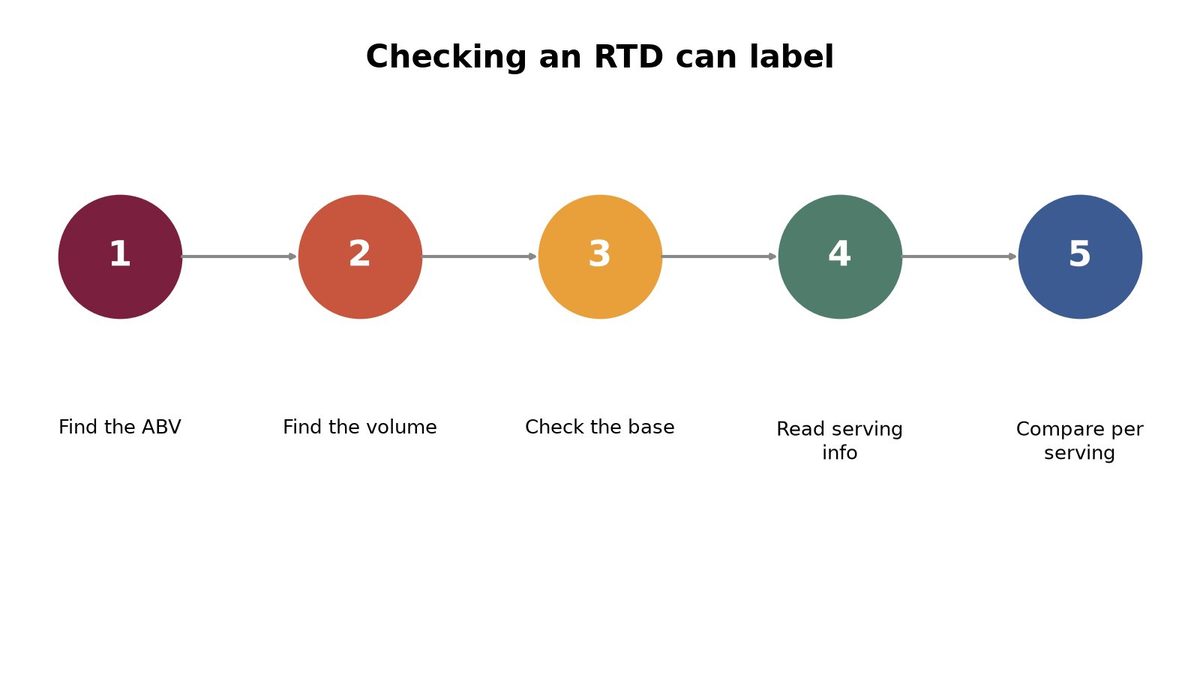
ABV ranges as printed
Canned and bottled cocktails vary widely in strength. Many are labelled at around 4–7% ABV, but some are considerably stronger, especially full-strength bottled cocktails. Never assume; read the printed ABV on the specific product.
Serving size: standard drink maths
The useful number is not the ABV alone but the amount of alcohol per serving: volume × ABV.
- A 355 ml can at 5% contains about 17.75 ml of pure alcohol.
- A 473 ml can at 7% contains about 33 ml of pure alcohol.
- A 45 ml pour of 40% spirit contains 18 ml of pure alcohol.
So a large, stronger can may contain close to two standard drinks. Under commonly used guidance, one standard drink is about 17.05 ml (13.45 g) of pure alcohol. Our low-alcohol guide explains standard drinks in more detail.
Price per serving: can vs case of spirits
| Format | Base | ABV (read label) | Serving size | Price-per-serving method |
|---|---|---|---|---|
| Canned cocktail | Spirit, malt, wine or sugar base | Often 4–7%, can be higher | 1 can (e.g. 355 or 473 ml) | Pack price ÷ number of cans |
| Bottled cocktail | Usually spirit | Varies widely | Pour as labelled | Bottle price ÷ servings on label |
| Mixed at home | Spirit you choose | Spirit ABV (often 40%) | Your pour (e.g. 45 ml) + mixer | (Bottle price ÷ pours) + mixer cost per drink + garnish |
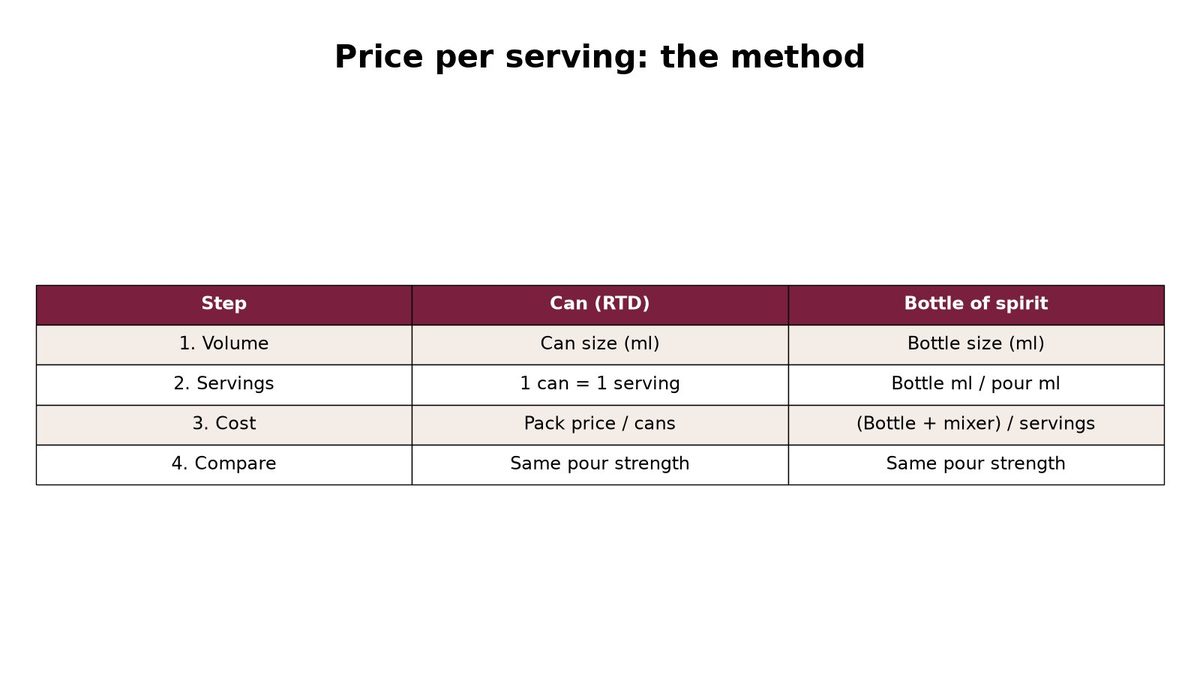
Step by step: compare the two fairly
- Pick the pour strength. Decide how much alcohol per drink, for example 18 ml of pure alcohol (one 45 ml pour of 40% spirit).
- Work out cans per equivalent serving. Divide that by the alcohol per can (volume × ABV).
- Calculate pours per bottle. A 750 ml bottle gives 16 pours of 45 ml; a 1.75 L bottle gives about 38.
- Add mixer and garnish cost per drink to the spirit cost per pour.
- Compare cost per equivalent serving, not cost per container.
- Use per-litre prices when comparing bottle sizes. Our price-per-litre calculator and how case pricing works show the method.
This post does not state prices; use the prices on the listings when you order. Check current sale items for offers.
Shelf life
- Unopened RTDs: many carry a best-before date, often within a year or so, because flavour and carbonation fade. Check the can.
- Opened RTDs: treat like a soft drink; carbonation is lost quickly.
- Spirits: unopened bottles are stable for years; opened bottles keep well when sealed. See our storage guide.
- Mixers: opened tonic and soda lose carbonation within a day or two.
When each makes sense for hosting
RTDs suit: outdoor or casual gatherings, situations without a bar setup, guests who want a known single serving and venues where glass is not allowed.
Mixing at home suits: larger groups, a wider range of drinks from a few bottles, control over strength and sweetness, and occasions where you already have a bar setup.
Many hosts do both: an ice bucket of single-serve cans and a small bar with one or two spirits. For the spirits side, browse vodka, rum, gin and tequila. Examples include Smirnoff Vodka 1.75 L, Cruzan 2 Year Old Light Rum and Don Julio Blanco. Simple mixed-drink recipes are in 10 classic cocktail recipes and holiday batch cocktails.
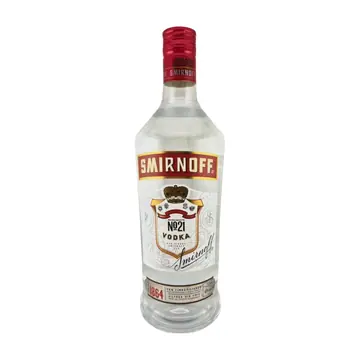
Smirnoff
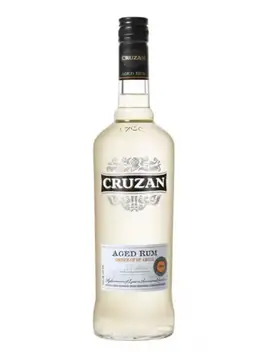
Cruzan 2 Yr Old Light Rum
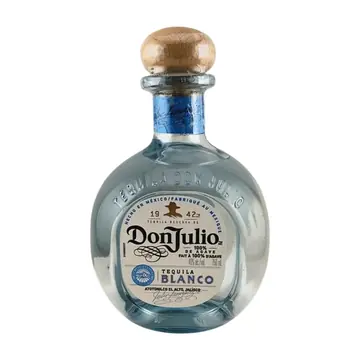
Don Julio Blanco
What's in our list
Our catalogue focuses on wine and spirits by the bottle and case. At the time of writing we do not list canned cocktails, so this post does not link to any RTD products. The comparison method works for any RTD you see elsewhere.
Responsible hosting with RTDs
Cans are easy to drink quickly and their strength is easy to underestimate. Keep non-alcoholic options alongside them; see non-alcoholic holiday drinks. Serve food, keep water out and help guests plan a safe ride home.
Worked example (illustrative numbers only)
To show the method without quoting real prices, use round illustrative numbers. Suppose a pack of six 355 ml cans at 5% ABV, and a 750 ml bottle of 40% spirit served in 45 ml pours with a mixer.
- Alcohol per can: 355 × 0.05 = 17.75 ml. That is close to one 45 ml pour of 40% spirit (18 ml), so one can ≈ one mixed drink.
- Pours per bottle: 750 ÷ 45 ≈ 16 pours.
- Cost per can: pack price ÷ 6.
- Cost per mixed drink: bottle price ÷ 16, plus the cost of the mixer used in one drink.
- Compare the two figures directly, because the alcohol per serving is roughly equal.
If the cans were 473 ml at 7%, each would hold about 33 ml of alcohol, nearly two pours, so you would compare one can with two mixed drinks.
Frequently asked questions
What is an RTD cocktail?
A pre-mixed drink in a can or bottle, ready to serve. It may be based on a spirit, malt, wine or fermented sugar.
Are canned cocktails made with real spirits?
Some are; some are not. Read the ingredient list and product description: spirit-based products usually name the spirit.
How do I work out price per serving?
Divide the pack price by the number of servings, then adjust for alcohol per serving so you compare equal strengths. For spirits, divide the bottle price by the number of pours and add mixer cost.
Is one can one standard drink?
Not always. Multiply volume by ABV. A 473 ml can at 7% is close to two standard drinks.
Do RTDs go off?
They do not usually become unsafe, but flavour and carbonation fade. Follow the best-before date.
Related reading
- Liquor Price-per-Litre Calculator
- Liquor by the Case: How Case Pricing Works
- Liquor Bottle Sizes: 375 ml to 1.75 L
- 10 Classic Cocktail Recipes
- Types of Rum
You must be of legal drinking age in your province. ID and adult signature required at delivery.