Oaked vs Unoaked Chardonnay: Barrel, Steel and the Label Terms
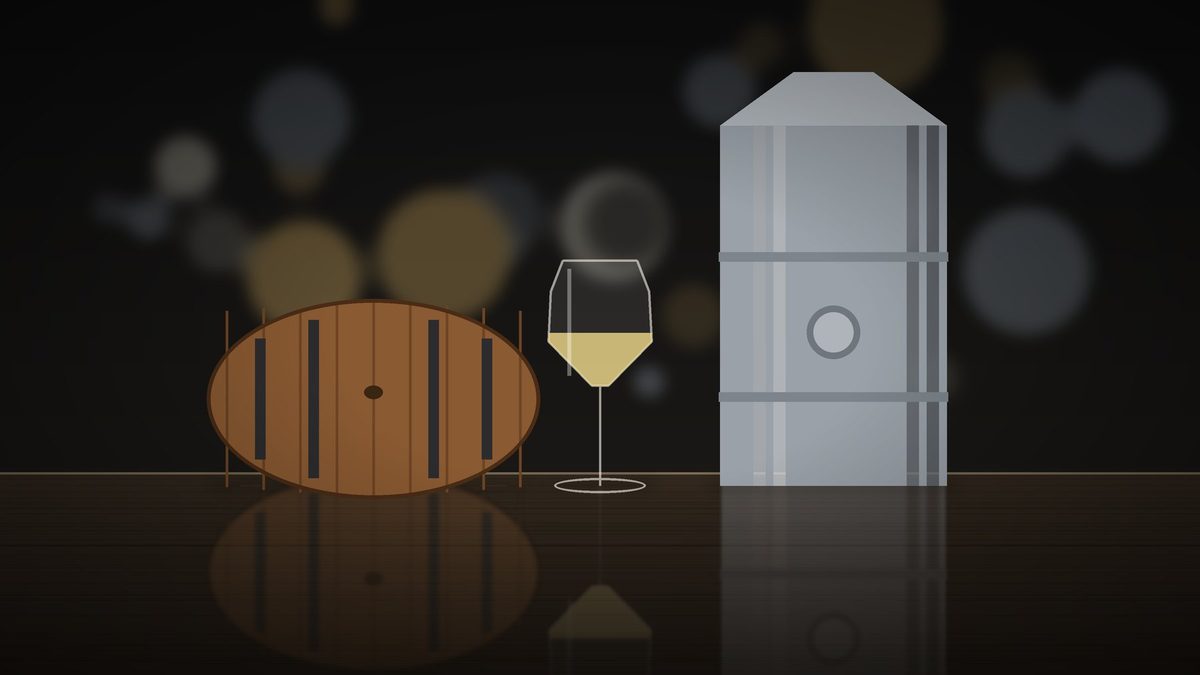
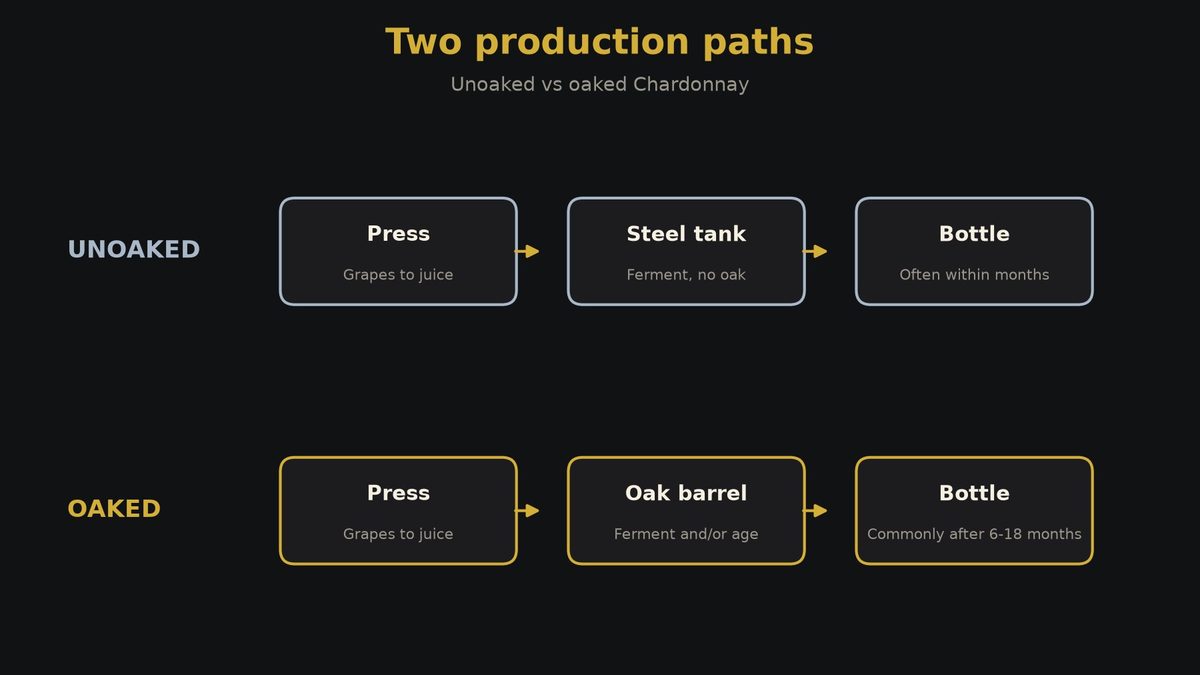
Oaked Chardonnay is fermented or aged in oak barrels, while unoaked Chardonnay is made in stainless steel or concrete with no oak contact. Labels use terms such as "unoaked", "unwooded" or "stainless steel" for the second style and "barrel fermented" or "barrel aged" for the first. Many labels say neither, so check the producer's notes.
Chardonnay is one of the most searched white grapes, and in this morning's Google Trends pull it again sits clearly ahead of Riesling and Moscato within its comparison group. Its interest has held steady since late summer rather than spiking, so this is an evergreen explainer rather than a seasonal one. It is still timely, though: holiday tables mean more white wine bought for guests, and "oaked or unoaked?" is the question that comes up most when people choose a Chardonnay. Our types of white wine guide gives Chardonnay a short overview alongside the other main grapes. This post goes deeper into winemaking choices and label terms only. It explains what each process is and what the words on the bottle mean, without claims about flavour.
Comparison table: oaked vs unoaked Chardonnay
| Style | Vessel | Typical time (varies by producer) | Label words to look for | Example from our catalogue |
|---|---|---|---|---|
| Unoaked | Stainless steel tank or concrete; no oak contact | Usually bottled within months of harvest | "Unoaked", "unwooded", "stainless steel", "no oak" | Levorato Unoaked Chardonnay, Banrock Station Unwooded Chardonnay |
| Barrel fermented | Juice ferments inside oak barrels | Fermentation takes weeks; often followed by barrel ageing | "Barrel fermented", "fermented in oak" | Check the producer's notes |
| Barrel aged | Ferments in tank or barrel, then rests in oak | Commonly 6 to 18 months | "Barrel aged", "aged in oak", "oak matured" | Check the producer's notes |
| Partly oaked | A blend of tank-made and barrel-made wine | Varies | Sometimes a percentage, such as "30% barrel fermented" | Check the producer's notes |
Only the first row has named examples, because those two bottles state their style in the product name. For the others, the label or the producer's technical sheet is the only reliable guide.
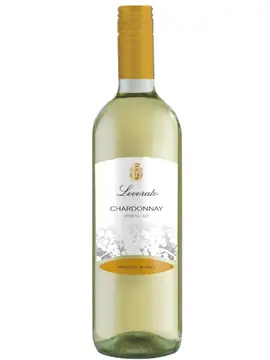
Levorato Unoaked Chardonnay
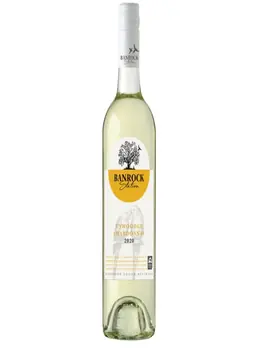
Banrock Station Unwooded Chardonnay
What "oak" means in winemaking
"Oaked" covers several separate decisions, and producers combine them in different ways.
New or used barrels. A new barrel gives the most oak influence to the wine. Each time a barrel is reused, it gives less. After several fills, a barrel is often described as "neutral": it still lets a little oxygen through the wood, but it adds very little of the wood's own compounds. A winery might use 100% new barrels, a mix, or only neutral ones.
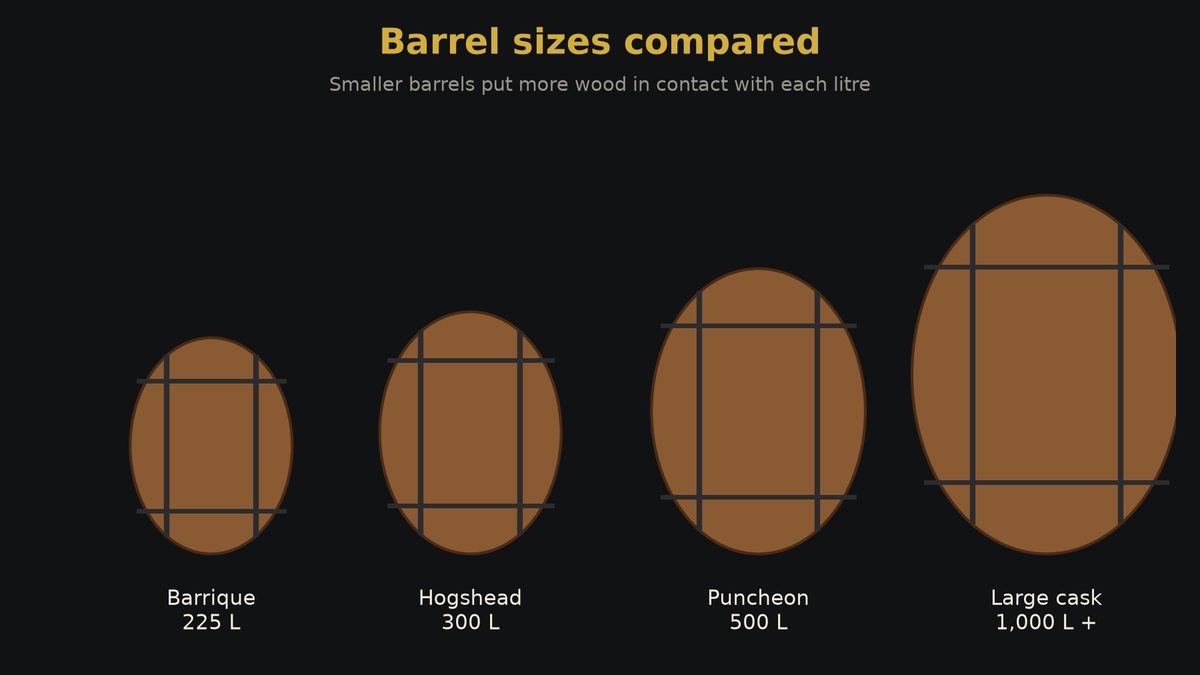
Barrel size. The standard small barrel, often called a barrique, holds 225 litres. A hogshead holds about 300 litres and a puncheon about 500 litres. Large casks hold 1,000 litres or more. The smaller the barrel, the more wood surface touches each litre of wine, so a small barrel has more effect than a large one over the same time.
Toast level. Barrel makers heat the inside of each barrel over a fire as they bend the staves. The degree of heating is called the toast, usually described as light, medium or heavy. It changes which compounds the wood passes to the wine.
Time in barrel. Some wines spend a few months in oak, others well over a year.
Oak alternatives. Some wineries add oak staves, chips or powder to a steel tank instead of using barrels. This is a legitimate and common practice, especially for wines at lower prices, and labels rarely mention it.
Unoaked Chardonnay: steel and concrete
Unoaked Chardonnay is fermented and kept in stainless steel tanks or concrete vessels. Steel tanks are sealed and usually temperature-controlled, so the winemaker can keep fermentation cool and slow and limit contact with oxygen. Concrete tanks, including egg-shaped ones, are also oak-free, and they hold temperature steadily. Unoaked wines are usually bottled sooner than barrel-aged ones, often within months of harvest, and they are sold for drinking young. Look at the vintage on the label to see how old a bottle is.
Malolactic fermentation and lees ageing are separate choices
Two other winemaking steps are often confused with oak, but they are independent decisions. A wine can have either one with or without oak.
Malolactic fermentation. After the main fermentation, many winemakers let lactic acid bacteria convert the wine's malic acid into lactic acid. This lowers the total acidity and produces a compound called diacetyl. It is very common in red wine and optional in Chardonnay. A winemaker can allow it fully, partly or not at all, and it can happen in steel or in barrel. Labels rarely mention it, but technical sheets often say "full", "partial" or "no" malolactic fermentation.
Lees ageing. Lees are the spent yeast cells that settle after fermentation. Leaving the wine in contact with them for weeks or months is called lees ageing, or "sur lie". Stirring the lees back into the wine is called bâtonnage. Lees ageing is used in both oaked and unoaked Chardonnay, so an unoaked wine can still have spent months on its lees.
Why style varies so much from bottle to bottle
Chardonnay is grown in a very wide range of climates, from cool sites where grapes ripen slowly to warm ones where they ripen fast, and winemakers make different choices in each. Some traditions favour little or no new oak, others favour plenty. The same producer may also make both an unoaked wine and a barrel-aged reserve. That is why the grape name alone tells you very little about how a Chardonnay was made. The label words and the producer's notes tell you much more.
Steps: reading a Chardonnay label for oak clues
- Look for "unoaked", "unwooded" or "stainless steel". If any of these appears, the wine was made without oak contact.
- Look for "barrel fermented", "barrel aged" or "reserve". The first two are direct statements. "Reserve" is often used for a producer's barrel-aged wine, but in most places the word is not regulated, so it is a clue, not a rule.
- Check the appellation. Some wine areas have rules or strong customs on how their Chardonnay is made, and the producer's notes usually explain them.
- Check the producer's technical sheet. Most producers publish one online, listing the vessel, the share of new oak, the time in barrel and whether malolactic fermentation happened.
- Check the ABV and vintage. Neither tells you about oak directly, but the vintage tells you how long the wine has been in bottle, and the ABV is useful for counting standard drinks.
Our guide to how to read a wine label explains the rest of the label, from the vintage to the bottling statement.
Catalogue examples
Two bottles in our catalogue state their style in the name: Levorato Unoaked Chardonnay and Banrock Station Unwooded Chardonnay. For other Chardonnays, including Kendall-Jackson Vintner's Reserve Chardonnay, Bogle Chardonnay, Josh Cellars Chardonnay and Bodegas Esmeralda Catena Chardonnay, the product name doesn't say how the wine was made, so check the producer's notes before choosing. The white wine category lists every Chardonnay we carry, and the wine sale page shows what is currently reduced.
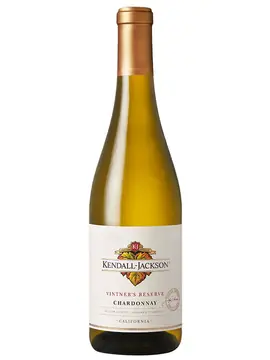
Kendall-Jackson Chardonnay Vintner Resrv
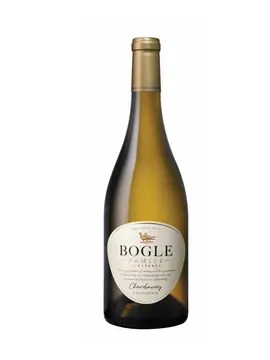
Bogle Chardonnay
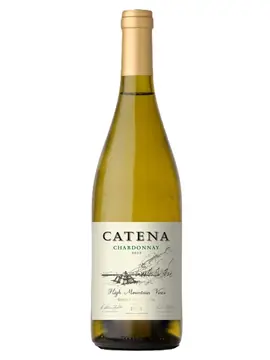
Bodegas Esmeralda Catena Chardonnay
Serving and storage
Oaked and unoaked Chardonnay are served at similar temperatures. Our wine serving temperature chart gives the ranges for full-bodied and light white wines. Once opened, recork the bottle and keep it in the fridge. Oak doesn't make an opened bottle last noticeably longer.
Standard drinks. One standard drink contains 17.05 ml of pure ethanol. A 150 ml glass of a 13.5% Chardonnay holds about 20 ml of ethanol, roughly 1.2 standard drinks. Barrel-aged Chardonnays from warm climates are often higher in ABV, so check the label.
For sparkling wine made from Chardonnay, see our blanc de blancs vs blanc de noirs vs rosé guide.
Frequently asked questions
What does unoaked Chardonnay mean?
It means the wine was fermented and kept in stainless steel, concrete or another non-wood vessel, with no contact with oak barrels or oak alternatives.
Is unwooded the same as unoaked?
Yes. "Unwooded" and "unoaked" mean the same thing. Different producers simply prefer different words.
Are all unoaked Chardonnays made in steel?
No. Concrete tanks, including egg-shaped ones, and other neutral vessels are also used. The label or technical sheet usually says which.
What does "barrel fermented" mean?
The juice was fermented into wine inside oak barrels rather than in a tank. Barrel-fermented wines are often aged in the same barrels afterwards.
Does oak change how long Chardonnay keeps?
Not in a simple way. How long a wine keeps depends on its acidity, alcohol, storage and how it was made overall. Once a bottle is opened, both styles should be recorked, refrigerated and finished within a few days.
Is malolactic fermentation the same as oak ageing?
No. Malolactic fermentation is a bacterial conversion of malic acid to lactic acid. It can happen in steel or in oak, and a wine can have one without the other.
Related reading
You must be of legal drinking age in your province. ID and adult signature required at delivery.