Blanc de Blancs vs Blanc de Noirs vs Rosé Sparkling Wine: What the Label Means
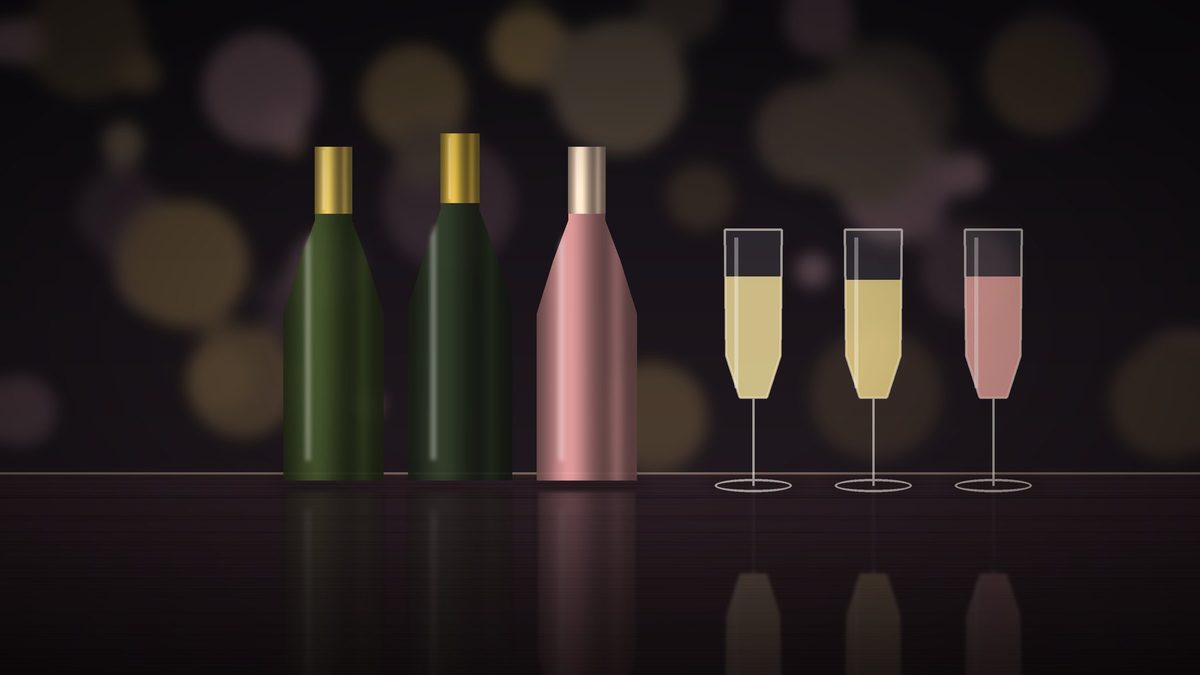
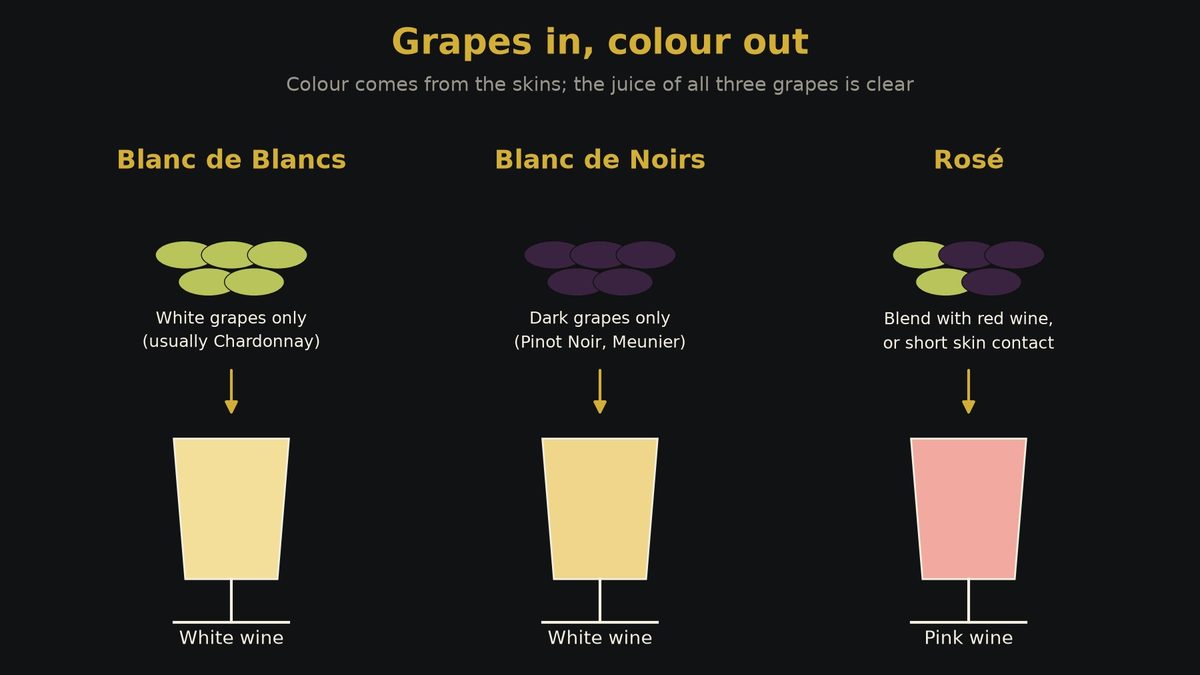
Blanc de Blancs and Blanc de Noirs describe grapes, and rosé describes colour. Blanc de Blancs is a white sparkling wine made only from white grapes, usually Chardonnay. Blanc de Noirs is a white sparkling wine made from dark-skinned grapes, usually Pinot Noir and Meunier. A rosé sparkling wine is pink, made by blending or short skin contact. None of these words describes sweetness.
Interest in Blanc de Blancs and in rosé sparkling wine has been rising this autumn, as people plan holiday toasts and New Year's Eve. These are the label terms that most often sit next to the brand name on a traditional-method bottle, and they are easy to mix up because two of them are written in another language and look almost identical. This guide explains what each one tells you, what it does not, and where to look on the bottle.
The three grapes behind most traditional-method sparkling wine
The classic traditional-method blend uses three grapes:
- Chardonnay, a white (green-skinned) grape.
- Pinot Noir, a dark-skinned grape.
- Meunier (often written Pinot Meunier), another dark-skinned grape.
The juice of all three grapes is clear. Colour in wine comes from the skins, so a dark-skinned grape can make a white wine if it is pressed gently and the juice is separated from the skins quickly. That simple fact is the key to all three terms in this guide.
Many sparkling wines are a blend of all three grapes, and those bottles usually carry none of these terms. The words below appear when a producer wants to tell you that the wine comes from one side of the grape family, or that it is pink.
Blanc de Blancs: white from white
Blanc de Blancs means "white from whites". The wine is white, and every grape in it has white skins. In the traditional blend that almost always means 100 percent Chardonnay. Other sparkling styles can use the term with other white grapes, so the back label is the place to confirm the variety.
What the term tells you:
- The grapes were all white-skinned.
- The wine is white, not pink.
What it does not tell you:
- The sweetness. That is a separate word, such as Brut, Extra Brut or Demi-Sec, printed elsewhere on the label.
- Whether the wine is vintage or non-vintage.
At the time of writing, four bottles in our sparkling wine category carry the term in their product name: Charles Heidsieck Blanc de Blancs, Louis Roederer Brut Blanc de Blancs, Piper-Heidsieck Essentiel Blanc de Blanc and Pol Roger Vintage Blanc de Blanc 2016. Some producers write "Blanc de Blanc" without the final s; it means the same thing.
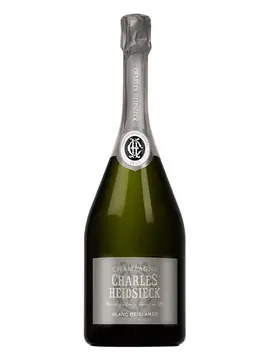
Charles Heidsieck Blanc De Blancs
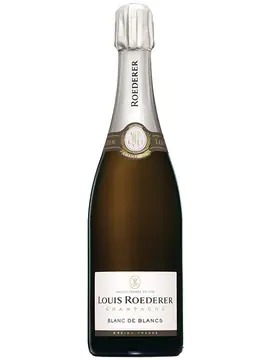
Louis Roederer Brut Blanc De Blancs
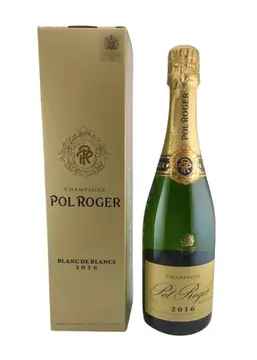
Pol Roger Vintage Blanc De Blanc 2016
Blanc de Noirs: white from black
Blanc de Noirs means "white from blacks". The wine is white, or very pale gold, but it is made entirely from dark-skinned grapes: Pinot Noir, Meunier or both. The grapes are pressed carefully so that very little colour moves from the skins into the juice.
What the term tells you:
- The grapes were all dark-skinned.
- The wine is still white, not pink.
What it does not tell you:
- How much of each dark grape is in the blend. Some bottles are 100 percent Pinot Noir, some 100 percent Meunier and some a mix. Check the back label.
- The sweetness or the vintage.
Catalogue note: no product currently in our list carries the words Blanc de Noirs in its name. Some sparkling wines are made mainly or entirely from Pinot Noir without using the term on the label, and we only describe a bottle as Blanc de Noirs when those words appear on it.
Rosé sparkling wine: the pink one
Rosé is a colour term. A rosé sparkling wine is pink, from pale salmon to deeper pink, and it can be made in one of two ways:
- Blending. A small amount of still red wine is blended into white base wine before the second fermentation. This method is permitted for traditional-method rosé.
- Skin contact. The juice of dark-skinned grapes is left on the skins for a short time so that some colour moves into it, then drained off. This is sometimes called the saignée or maceration method.
Producers do not always say which method they used. If the back label or the producer's notes state it, that is the only reliable answer.
Rosé sparkling wines in our list at the time of writing include Henriot Brut Rosé, Laurent-Perrier Cuvée Rosé Brut, Moët & Chandon Rosé Impérial, Veuve Clicquot Rosé, Segura Viudas Brut Rosé and Anna de Codorníu Rosé Cava.
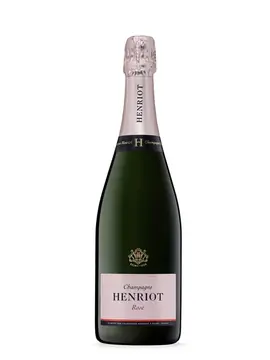
Henriot Brut Rose
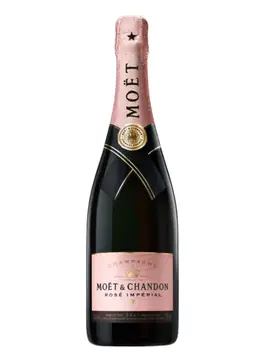
Moet & Chandon Rose Imperial
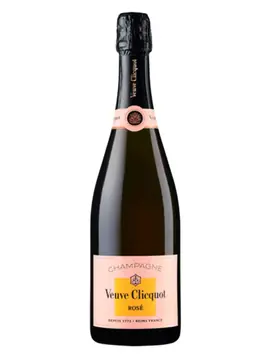
Veuve Clicquot Rose
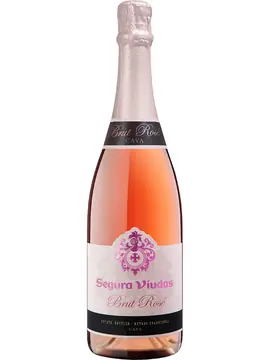
Segura Viudas Brut Rose
Comparison: the three terms side by side
| Label term | Grape rule | Colour of the wine | What to look for on the label | In-stock example |
|---|---|---|---|---|
| Blanc de Blancs | White-skinned grapes only, usually Chardonnay | White | "Blanc de Blancs" or "Blanc de Blanc" near the brand name; variety on the back label | Louis Roederer Brut Blanc de Blancs |
| Blanc de Noirs | Dark-skinned grapes only, usually Pinot Noir and/or Meunier | White or pale gold | "Blanc de Noirs" near the brand name; grape split on the back label | None labelled this way in the current list |
| Rosé | Any permitted grapes; colour from blending red wine or from skin contact | Pink | "Rosé" in the name, a pink wine visible in clear glass | Veuve Clicquot Rosé |
| No term (blend) | Usually a mix of white and dark grapes | White | Brand name and sweetness term only | Taittinger Brut Réserve |
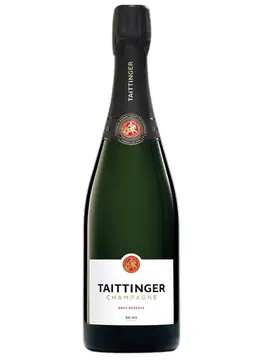
Taittinger Brut Reserve
How to tell them apart from the label alone
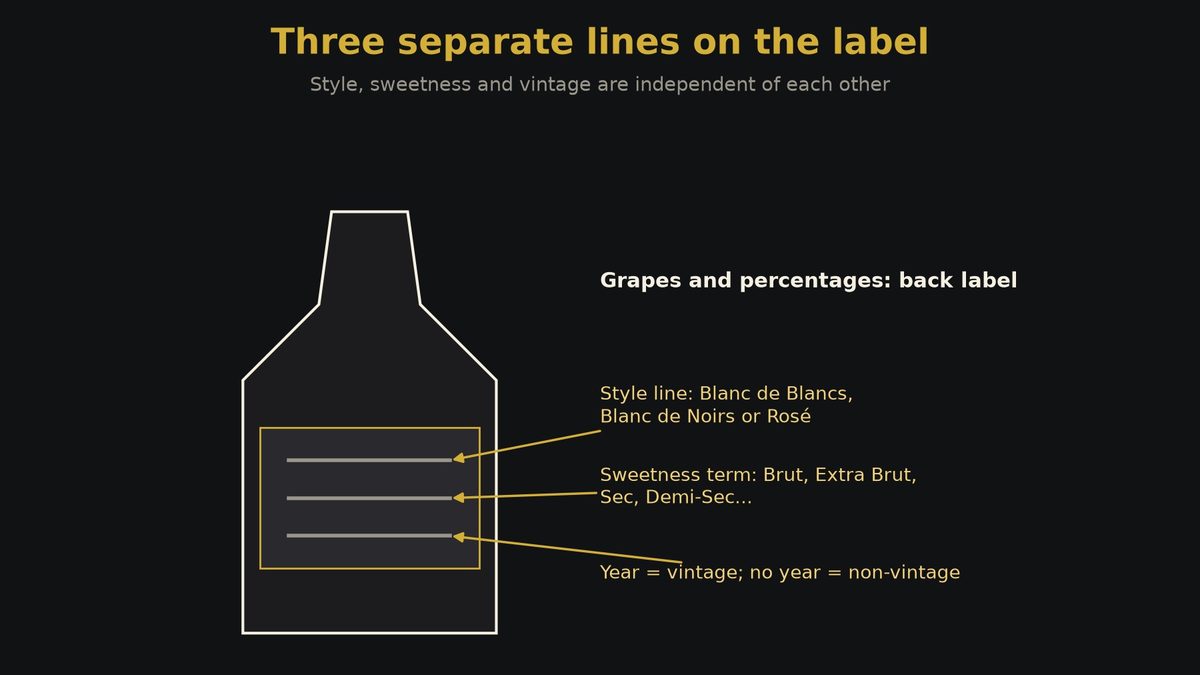
- Read the style line on the front label. It sits close to the brand name or just below it. Look for Blanc de Blancs, Blanc de Noirs or Rosé.
- Check which of the three words you see. Blancs (whites) means white grapes; Noirs (blacks) means dark grapes. If neither appears and the label does not say Rosé, the wine is most likely a blend.
- Confirm the grapes on the back label. Many producers list the varieties and percentages. If the back label is silent, do not guess the blend.
- Treat sweetness as a separate line. Brut, Extra Brut, Sec and the other sweetness terms can appear with any of the three style words. A Blanc de Blancs can be Brut; a rosé can be Demi-Sec.
- Match the bottle to the live product page. Before you describe a specific wine to guests, open its page and check that the name carries the term you expect.
Vintage and non-vintage next to these terms
You will often see a year next to Blanc de Blancs or Rosé. A year on the label means the wine is vintage: the grapes all come from that single harvest. No year means non-vintage, a blend of wines from several harvests, which producers use to keep their house style consistent from bottling to bottling.
Vintage and style are independent. The Pol Roger Vintage Blanc de Blanc 2016 is both vintage and Blanc de Blancs, while the Charles Heidsieck Blanc de Blancs listing does not print a year in the product name. Check each bottle's label rather than assuming.
Planning a toast with more than one style
If you want to offer guests a choice, the three styles make a clear lineup because they differ in a way people can see: two white wines from different grape families and one pink. A few practical notes:
- Keep each style in its own ice bucket and tell guests which is which, since the bottles can look alike once foils are removed.
- Count servings by the bottle. A 750 ml bottle pours six 125 ml flutes. For 30 guests having one flute of each of three styles, you need 90 flutes, which is 15 bottles: five of each style.
- Mind the case size. Most sparkling wines on our site are sold in cases of 6. The case pricing guide explains how the per-bottle figure is calculated, and the multi-case ordering guide covers mixing several wines in one order.
- Serve them cold. The serving temperature chart gives the range for sparkling wine.
The New Year's Eve collection groups the bottles people usually buy for the night, and the brand pages for Louis Roederer, Laurent-Perrier, Veuve Clicquot and Pol Roger list every format we carry.
Frequently asked questions
What does Blanc de Blancs mean?
It means "white from whites": a white sparkling wine made only from white-skinned grapes. In traditional-method sparkling wine that is usually 100 percent Chardonnay.
What does Blanc de Noirs mean?
It means "white from blacks": a white sparkling wine made only from dark-skinned grapes, usually Pinot Noir, Meunier or both, pressed gently so the juice stays pale.
Can Blanc de Noirs be a white wine?
Yes, it always is. Grape juice is clear, and colour comes from the skins. Gentle pressing keeps the skins' colour out, so dark grapes produce a white or pale gold wine.
Is rosé sparkling wine sweeter than Blanc de Blancs?
Not necessarily. Rosé and Blanc de Blancs describe colour and grapes, not sugar. Sweetness is shown by a separate term such as Brut or Demi-Sec, and both styles can carry any of those terms.
Do these terms appear on Cava and other sparkling wines?
Yes. Rosé is common across all sparkling styles, and Blanc de Blancs and Blanc de Noirs appear on some Cava, Crémant and other sparkling wines. The grapes may differ from the classic three, so check the back label.
Is "Blanc de Blanc" without the s a different style?
No. Some producers drop the final s. It still means a white wine made only from white grapes.
Related reading
You must be of legal drinking age in your province. ID and adult signature required at delivery.