What Is Coconut Rum? Flavoured Rum Labels, ABV and Mixed Drinks

Coconut rum is rum flavoured with coconut, usually sweetened and often bottled below the 40% ABV typical of unflavoured rum. Depending on its strength and sugar, a coconut-flavoured product may be labelled as flavoured rum or as a rum liqueur, so check the label for the ABV. It is mostly used in mixed drinks and highballs.
Coconut spirits are showing up in search right now. "Coconut liqueur" was among the rising related searches for liqueur in a Google Trends check on 21 November, and in this morning's pull "coconut rum" moved up from a flat zero in late summer to a small but measurable level. Coconut drinks also tend to appear on holiday party menus as a contrast to the warm, spiced drinks of the season. This guide explains what coconut rum is, how it is made, how to read its label, and how it compares with white rum, spiced rum and coconut-flavoured tequila. It also gives three measured mixed drinks, the standard-drink maths and a non-alcoholic version, without any claims about flavour.
Comparison table: coconut rum and its relatives
| Type | Base | Typical ABV band (general; check the label) | Sweetened? | Common use |
|---|---|---|---|---|
| White rum | Rum, usually filtered | Around 40% | No (or very little) | Highballs and shaken drinks |
| Spiced rum | Rum with spices and often caramel | Around 35 to 47% | Often | Highballs with cola or ginger soda |
| Coconut rum (flavoured rum) | Rum with coconut flavouring | Around 21 to 35% | Usually | Highballs with juice, blended drinks |
| Coconut rum liqueur | Rum with coconut flavouring and more sugar | Often around 20 to 25% | Yes, more than flavoured rum | Mixed drinks, small pours over ice |
| Coconut-flavoured tequila | Tequila with coconut flavouring | Often around 35% or more | Usually lightly | Highballs and shaken drinks |
The bands above are general ranges found across the category, not figures for any named bottle. Our spiced rum guide covers that category in more detail, and our types of rum guide explains white, gold, dark and aged rum.
How flavoured rum is made
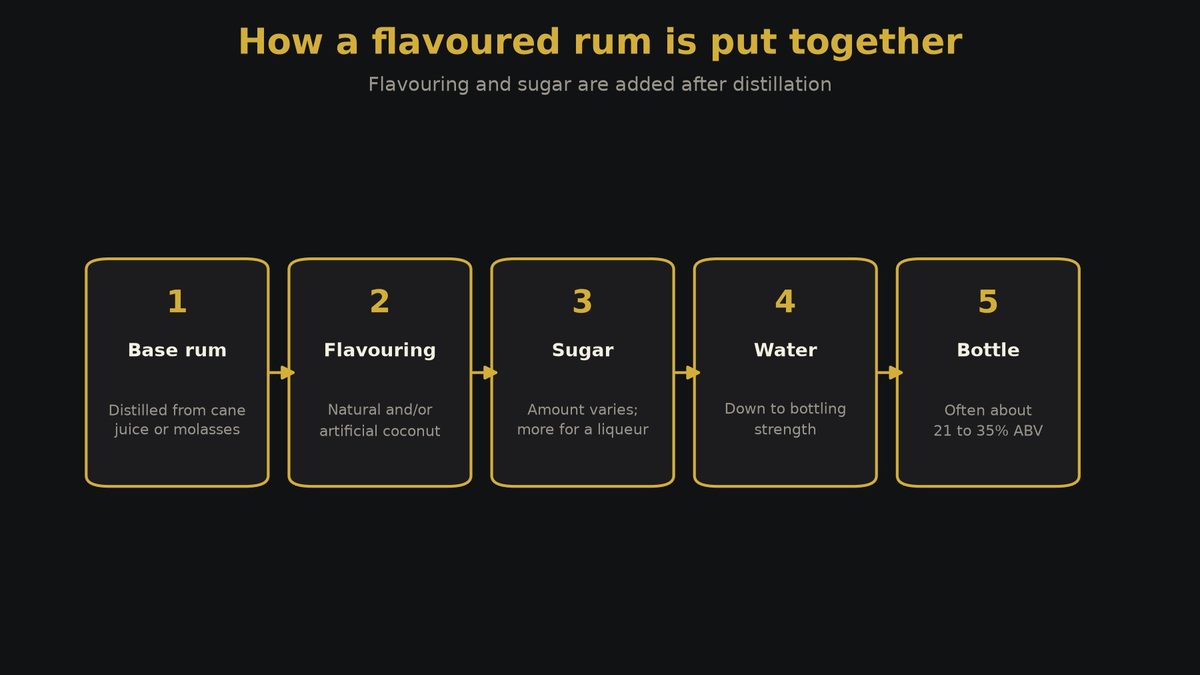
Flavoured rum starts as ordinary rum, made by fermenting and distilling sugar cane juice or molasses. Then three things are added:
- Flavouring. Producers use natural coconut extracts, natural flavourings, artificial flavourings or a combination. Some steep coconut in the spirit; most large brands use prepared flavourings for consistency.
- Sugar. Most coconut rums are sweetened. The amount varies widely.
- Water. The blend is diluted to its bottling strength, which is often well below 40%.
The result is filtered and bottled. Because the flavouring and sugar are added after distillation, the base rum itself is the same kind of spirit as an unflavoured white rum.
Reading the label: flavoured rum, rum liqueur, ABV and sugar
Two products that look alike on the shelf can be in different legal categories.
- "Flavoured rum" or "coconut flavoured rum" usually means a rum with added flavouring and, often, some sugar. Bottling strengths commonly start around 21% and go up to about 35%.
- "Rum liqueur" or "coconut liqueur" means a product with enough added sugar to meet the rules for a liqueur. Liqueurs are often bottled at a lower strength, around 20 to 25%, though some are stronger.
- ABV is always printed on the label. It is the single most useful number, because it decides how much alcohol is in each pour.
- Sugar is rarely printed, but the word "liqueur" tells you there is a substantial amount.
Examples in our catalogue include Bacardi Coconut and Captain Morgan Coconut Flavoured Rum. For a different fruit in the same style, see Captain Morgan Pineapple Flavoured Rum. Coconut flavour also appears outside rum, as in 1800 Coconut Tequila, which is listed in the tequila category. Check each label for its category and ABV. The rum category and the liqueur category list the full range, and the rum sale page shows what is currently reduced.
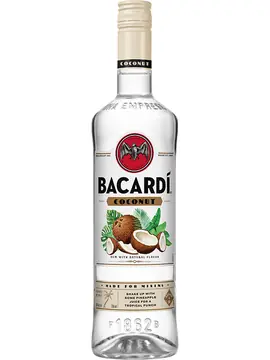
Bacardi Coconut
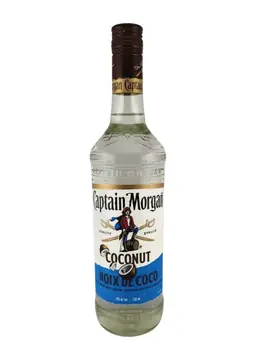
Captain Morgan Coconut Flavoured Rum
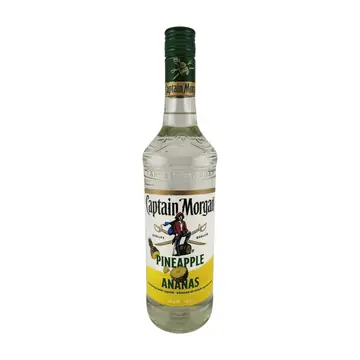
Captain Morgan Pineapple Flavoured Rum
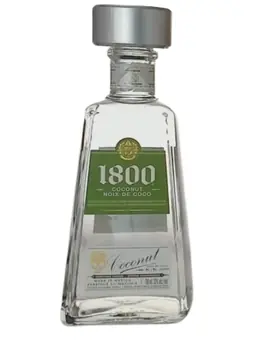
1800 Coconut Tequila
Three measured coconut rum drinks
Each recipe uses 45 ml of coconut rum measured with a jigger.
Coconut rum and pineapple highball
- Fill a highball glass with ice.
- Add 45 ml of coconut rum with a jigger.
- Add 120 ml of pineapple juice.
- Stir once.
- Garnish with a pineapple wedge.
Blended piña colada-style drink
- Put 45 ml of coconut rum, 90 ml of pineapple juice and 30 ml of coconut cream in a blender.
- Add about one cup of ice.
- Blend until even.
- Pour into a tall glass and garnish with pineapple.
The classic version uses white rum with coconut cream. Using coconut rum adds coconut twice and usually lowers the alcohol, because coconut rum is often below 40%. For a stronger build closer to the original, use 30 ml of white rum such as Bacardi Superior and 15 ml of coconut rum instead.
Coconut rum and soda
- Fill a highball glass with ice.
- Add 45 ml of coconut rum.
- Top with 120 ml of soda water.
- Squeeze in a lime wedge and stir once.
This is the lightest in sugar of the three, because the only sweetness comes from the rum itself. For more rum highballs, see our rum and cola ratio guide. For a tiki classic that uses aged rum, see our mai tai recipe.
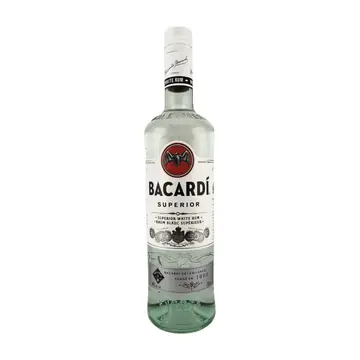
Bacardi Superior
Standard-drink maths
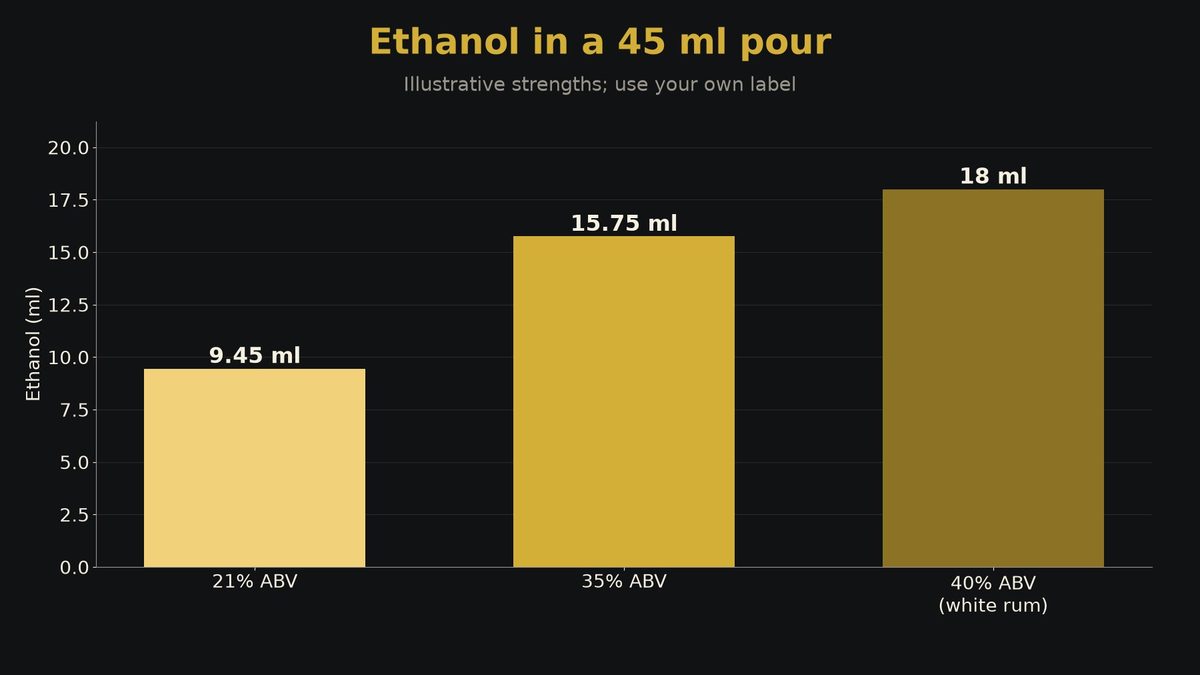
One standard drink contains 17.05 ml (13.45 g) of pure ethanol. Coconut rums vary in strength, so here are illustrative examples for a 45 ml pour:
- At 21% ABV: 45 × 0.21 = 9.45 ml of ethanol, about 0.55 standard drinks.
- At 35% ABV: 45 × 0.35 = 15.75 ml of ethanol, about 0.92 standard drinks.
- At 40% ABV (white rum, for comparison): 45 × 0.40 = 18 ml, about 1.06 standard drinks.
These ABVs are illustrations only. Use the number on your own bottle. The juice, cream and soda add volume but no alcohol, and a blended drink can be finished quickly. A lower-strength rum is not a reason to pour more, so keep the 45 ml measure and count each glass. For a small bottle to try a recipe, Captain Morgan White Rum in a 375 ml size is one example.
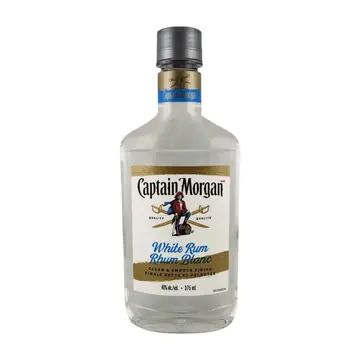
Captain Morgan White
Non-alcoholic version
For an alcohol-free version of the highball, mix 60 ml of coconut water with 120 ml of pineapple juice and a squeeze of lime over ice. For the blended drink, blend 30 ml of coconut cream, 120 ml of pineapple juice, a squeeze of lime and a cup of ice. Serve both in the same glasses as the alcoholic versions, so nobody at the party feels left out. Our non-alcoholic holiday drinks guide has more ideas.
Storage once opened
Sealed, flavoured spirits keep for a long time when stored upright, away from heat and sunlight. Once opened, they last well too, but flavoured and sweetened products change more over time than unflavoured spirits. Many producers suggest using an opened bottle within a year or so. Follow any guidance on the label, keep the cap tight, and store upright so the spirit doesn't sit against the closure. Products made with dairy or cream are different and usually need refrigeration after opening; standard coconut rum does not, unless the label says so. Our guide to how to store wine and spirits has general advice.
Frequently asked questions
What is coconut rum made of?
Rum, coconut flavouring (natural, artificial or both), sugar and water. The flavouring and sugar are added after distillation.
How strong is coconut rum?
Most coconut rums are bottled between about 21% and 35% ABV, below the 40% typical of unflavoured rum. The exact figure is on the label.
Is coconut rum a liqueur?
Some are. Products with enough added sugar are labelled as rum liqueurs. Others are labelled flavoured rum. The label tells you which category a bottle is in.
What mixes with coconut rum?
Pineapple juice, soda water, orange juice, cola and coconut cream are common mixers. A 45 ml measure with 120 ml of mixer is a typical highball.
Does coconut rum go bad once opened?
It doesn't spoil the way food does, but the flavour can change over time. Many producers suggest finishing an opened bottle within about a year. Keep the cap tight and store it upright.
Can you use coconut rum in a piña colada?
Yes. It is often used in piña colada-style drinks. Because it is usually below 40%, a mix of white rum and coconut rum keeps the alcohol closer to the classic version.
Related reading
You must be of legal drinking age in your province. ID and adult signature required at delivery.