What Is Brandy? Grape Brandy, Fruit Brandy and Brandy Liqueurs Compared
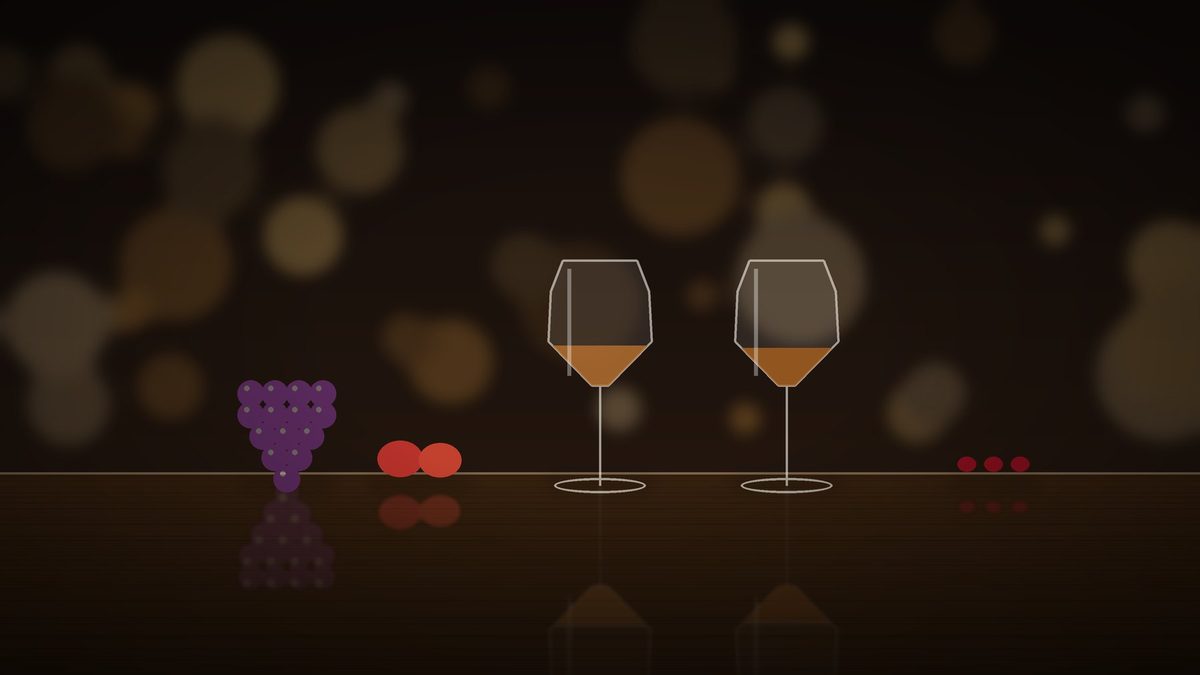
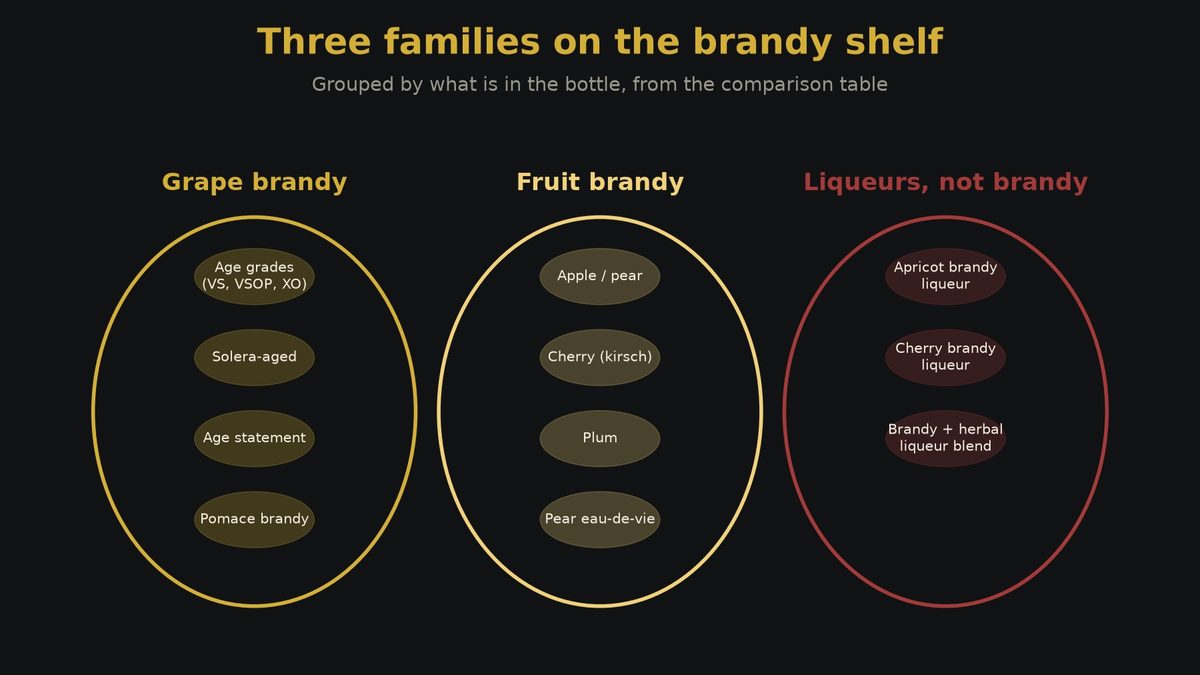
Brandy is a spirit distilled from wine or from another fermented fruit juice, and it is usually aged in wooden casks. Grape brandy is made from wine; fruit brandies use apples, pears, cherries or plums. Bottles labelled "apricot brandy" or "cherry brandy" are often sweetened liqueurs, not brandy, so read the label before you buy or mix.
"Brandy" is one of the most searched spirit words in Google Trends, holding steady at the top of its comparison group through the autumn as the after-dinner season starts. That steady interest makes sense: brandy appears in holiday recipes, in warm drinks and in classic cocktails, and the bottle shelf can be confusing. This guide explains how brandy is made, the main styles, how to read a label and where the liqueur trap lies. It is a category guide only and makes no claims about how any brandy tastes.
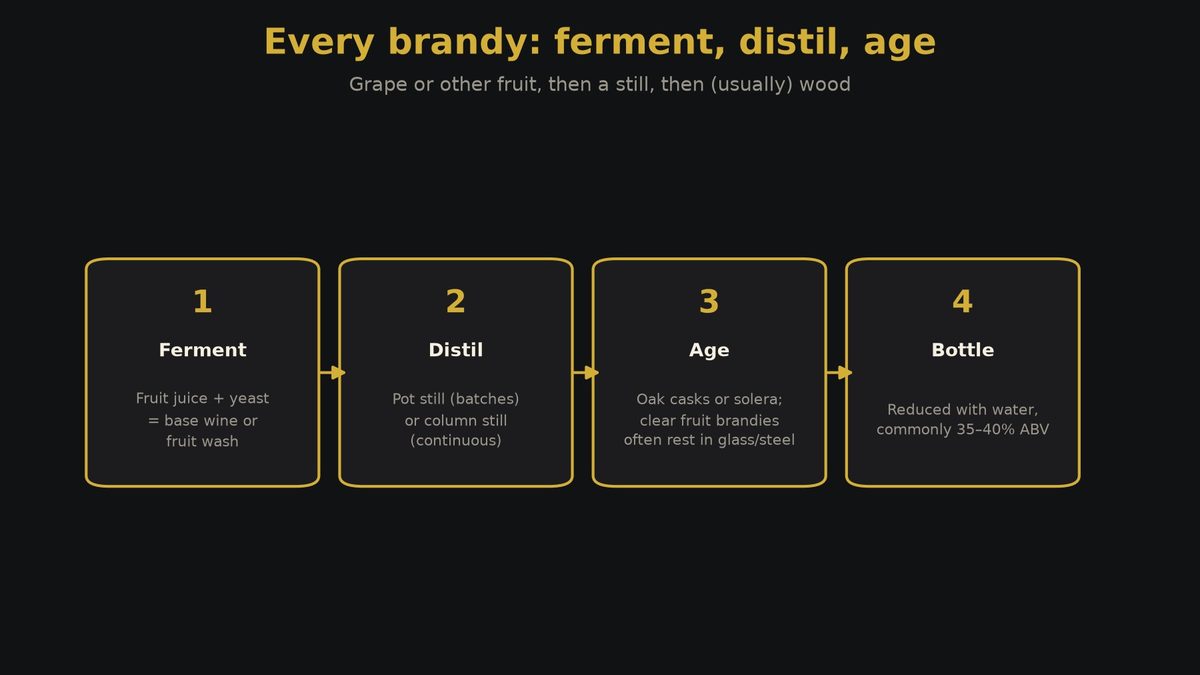
How brandy is made: ferment, distil, age
Every brandy follows the same three stages.
1. Ferment. Fruit juice is fermented with yeast until the sugar becomes alcohol. For grape brandy the result is a plain, low-alcohol base wine. For apple brandy it is a fermented apple juice; for cherry or plum brandy, a fermented fruit mash.
2. Distil. The fermented liquid is heated in a still. Alcohol boils at a lower temperature than water, so the vapour that rises is richer in alcohol and is condensed back into liquid. Two still types are used:
- A pot still works in batches. Many traditional grape brandies are distilled twice in copper pot stills.
- A column still (also called a continuous still) runs without stopping and can produce a lighter, higher-strength spirit. Some protected styles require a column still, others forbid it.
3. Age. Most grape brandy is aged in oak casks, which add colour and change the spirit over time. Some styles are aged in a solera, a stacked system of casks where a little of the oldest spirit is drawn off and topped up from the next-oldest row. Many clear fruit brandies, often called eaux-de-vie, are rested in glass or steel instead, so they stay colourless.
After ageing, brandy is usually reduced with water to bottling strength, commonly 35–40% ABV or a little higher. Some producers may adjust colour with caramel, depending on the rules that apply to that style.
Comparison table: brandy styles
| Style | Base fruit | Still type | Ageing | Typical ABV (check label) | Catalogue example |
|---|---|---|---|---|---|
| Aged grape brandy with age grades | Grapes (wine) | Pot still, usually double distilled | Oak casks; age grades on the label | 40% | Brandy category |
| Solera-aged grape brandy | Grapes (wine) | Pot or column | Solera system of stacked casks | 36–40% | Fundador Brandy |
| Aged grape brandy with an age statement | Grapes (wine) | Pot or column | Oak, with a number of years on the label | 38–40% | Torres 10 Year |
| Apple or pear brandy | Apples or pears | Pot or column | Often oak-aged | 40% | Style described only |
| Cherry or plum eau-de-vie | Cherries or plums | Usually pot | Usually unaged | 40–45% | Style described only |
| Pomace brandy | Grape skins and seeds left after pressing | Pot or column | Unaged or aged | 37.5–50% | Style described only |
| "Apricot brandy" or "cherry brandy" liqueur | Fruit flavour on a spirit base, sweetened | Not a brandy | Not aged as brandy | 20–30% | Bols Apricot Brandy liqueur |
| Brandy blended with an herbal liqueur | Brandy plus herbal liqueur | Blend | Blend | about 40% | B&B |
Ageing and still rules differ by style and by the law where a brandy is made. This table summarises common practice; the label and the producer's own information are the final word.
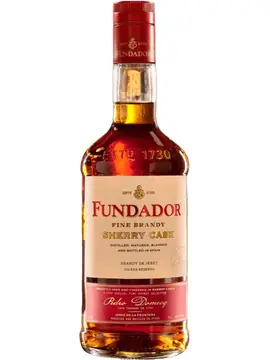
Fundador Brandy
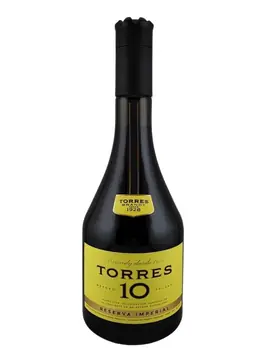
Torres 10Yr Brandy
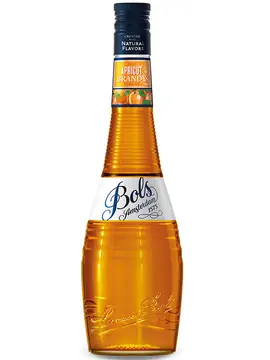
Bols Apricot Brandy
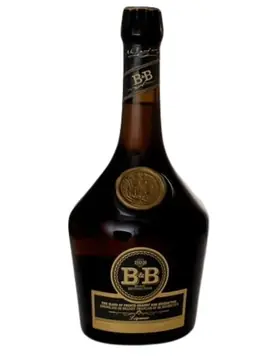
B&B (Benedictine & Brandy)
Grape brandy
Grape brandy is the largest family. It starts as wine, made from grapes chosen for distilling rather than for drinking as table wine, and is then distilled and aged.
Age grades. Some protected grape brandies use letter grades instead of a number of years. Under the rules of the best-known of these, VS means the youngest spirit in the blend has spent at least two years in oak, VSOP at least four years and XO at least ten years. Other brandies use their own words, such as "Reserva", "Solera Gran Reserva" or a plain age statement like "10 years". Each producer's region sets what its terms mean, so a grade word on one bottle does not always match the same word on another.
Solera ageing. In a solera, casks are stacked in tiers. Spirit for bottling is drawn from the bottom tier, which holds the oldest blend, and that cask is topped up from the tier above, and so on to the top, where new spirit goes in. Because the casks are never fully emptied, a solera brandy is a blend of many ages. A solera label may name a style grade rather than a single age. Fundador and the Torres range are examples of grape brandies in our list; Torres 20 Year is a longer-aged option.
Other grape brandies. Grape brandy is made in many wine-producing countries, in pot or column stills, at many price points. Titul Brandy is another bottle in the brandy category, and current offers are grouped on the brandy sale page.
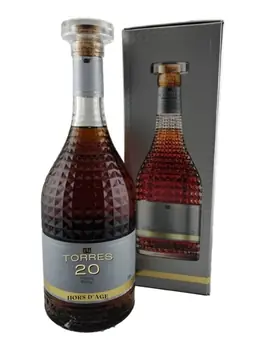
Torres 20Yr Brandy
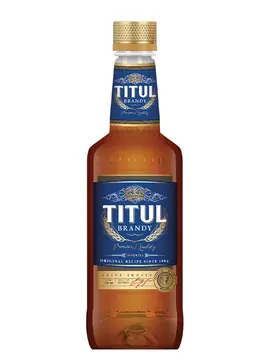
Titul Brandy 700 ml
Fruit brandy
Fruit brandy is brandy made from fruit other than grapes.
- Apple and pear brandy. Made from fermented apple or pear juice. Some protected apple brandies must be aged in oak for a minimum period, and some allow pears in the blend. We do not currently list an apple brandy, so this style is described only.
- Cherry brandy (kirsch). Kirsch, also called kirschwasser, is a clear brandy distilled from fermented cherries, including the stones. It is usually unaged.
- Plum brandy. Made from fermented plums, clear or aged, depending on the producer.
- Pear eau-de-vie. A clear brandy from pears. Some bottles have a whole pear inside, grown in the bottle on the tree.
Clear fruit brandies are usually served chilled in small glasses, in pours of about 30 ml.
The fruit-brandy liqueur trap
This is the most common shopping mistake. A bottle labelled "apricot brandy", "cherry brandy" or "peach brandy" is often a liqueur: a neutral or brandy spirit with fruit flavour and added sugar, at a lower ABV than true brandy. Bols Apricot Brandy and Bols Cherry Brandy are both liqueurs. They are useful in many classic cocktail recipes that call for them by name, but they are not substitutes for an aged grape brandy, and the reverse is also true.
To tell them apart, look for the word "liqueur" on the label and check the ABV. A true brandy is usually 35% or more; most fruit-brandy liqueurs are well below that.
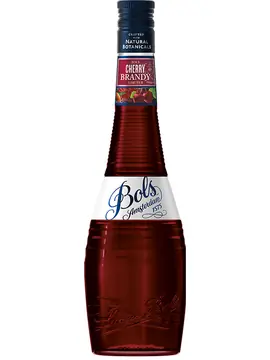
Bols Cherry Brandy
Steps: how to read a brandy label
- Find the category word. "Brandy", a protected style name, "eau-de-vie" or "kirsch" tells you it is a distilled spirit. "Liqueur" means sugar has been added.
- Check the base fruit. No fruit named usually means grapes. Fruit brandies name the fruit.
- Look for an age statement or grade. A number of years, a letter grade or a solera term tells you how the spirit was aged.
- Check whether the word "liqueur" appears. If it does, treat the bottle as a liqueur in recipes.
- Confirm the ABV. Use it to work out standard drinks: pour (ml) × ABV ÷ 17.05 = standard drinks. A 45 ml pour at 40% is 18 ml of alcohol, or about 1.06 standard drinks.
How brandy is served
- Neat, in a small glass. A 30–45 ml pour in a tulip glass or snifter at room temperature is the traditional after-dinner serve.
- With ice or a splash of water. Adding water changes the strength in the glass, not the amount of alcohol.
- In cocktails. Brandy is the base of the Sidecar, which pairs it with orange liqueur and lemon, and it is one of the spirits used in a hot toddy.
- In cooking. Brandy appears in many holiday recipes. Never pour from the bottle near an open flame.
Storing an opened bottle
Brandy does not age further once bottled. Keep it upright, closed and away from heat and sunlight. An opened bottle keeps for a long time if sealed, though a nearly empty bottle with a lot of air in it can change over months. Our storage guide covers the details.
Frequently asked questions
What do VS, VSOP and XO mean on a brandy label?
They are age grades used by some protected grape brandies. Under the best-known rules, VS means at least two years in oak, VSOP at least four and XO at least ten, counted from the youngest spirit in the blend. Other brandies may use the same letters with their own rules, so check the producer's information.
What is the difference between brandy and a fruit brandy liqueur?
Brandy is a distilled spirit, usually 35–40% ABV or more, with no sugar added for sweetness. A fruit brandy liqueur, such as "apricot brandy", is a sweetened, flavoured product at a lower ABV, and the label will usually say "liqueur".
Is apricot brandy actually brandy?
Usually not. Most bottles sold as apricot brandy are liqueurs. Check the label for the word "liqueur" and the ABV.
What does "solera" mean on a brandy label?
It means the brandy was aged in a solera: tiers of casks where spirit is drawn from the oldest row and each row is topped up from the next-youngest. The result is a blend of many ages.
What is kirsch?
Kirsch is a clear brandy distilled from fermented cherries. It is usually unaged and bottled at around 40% ABV or higher.
How much brandy is a standard drink?
At 40% ABV, about 43 ml is one standard drink (17.05 ml of pure alcohol). A 30 ml pour is about 0.7 of a standard drink.
Related reading
- Sidecar Cocktail Recipe
- Hot Toddy Recipe
- Triple Sec vs Cointreau vs Grand Marnier
- How to Store Wine and Spirits
You must be of legal drinking age in your province. ID and adult signature required at delivery.