Japanese Whisky Label Rules: What 'Japanese Whisky' Means Now
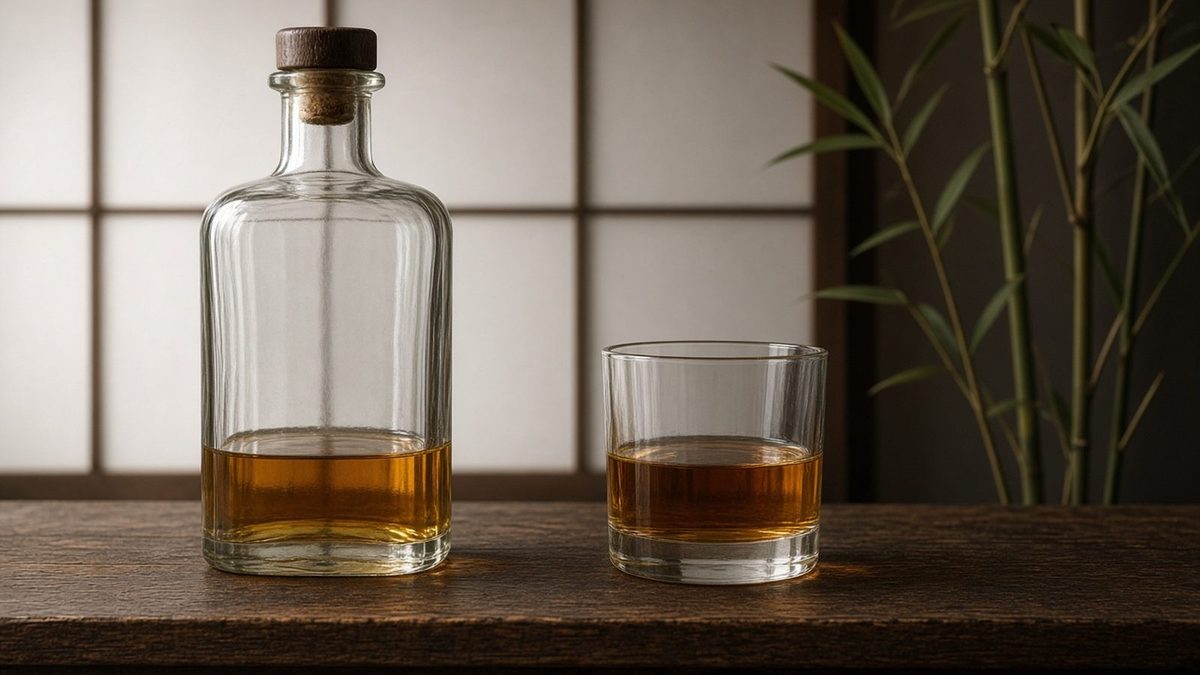
Under the industry labelling standard adopted by Japan's spirits makers' association, "Japanese whisky" must be fermented, distilled, aged at least three years in wooden casks and bottled in Japan, using malted grain and Japanese water, at 40% ABV or more. Whiskies blended with imported spirit cannot use the term under that standard.
For years "Japanese whisky" had no strict definition, and some bottles labelled that way contained whisky distilled elsewhere. A voluntary industry standard changed that. This guide explains what the standard requires, what categories you will see on labels, how age statements work and how the rules compare with Scotch and bourbon.
The industry standard on Japanese whisky labelling
The Japan Spirits & Liqueurs Makers Association published labelling standards for Japanese whisky that took effect in April 2021, with a transition period for existing products that ended in March 2024. The main requirements:
- Raw materials: malted grain must be used; other cereal grains may be added. Water must be extracted in Japan.
- Production: saccharification, fermentation and distillation must take place at a distillery in Japan. Distillate must be below 95% ABV.
- Ageing: in wooden casks of 700 litres or less, for at least three years, in Japan.
- Bottling: in Japan, at 40% ABV or higher.
- Colour: plain caramel colouring is permitted.
The standard also restricts labels for products that do not comply from using names, imagery or wording that suggest they are Japanese whisky.
It is an industry standard, not a national law, although member companies follow it. Some products sold internationally are labelled "whisky" or "blended whisky" from a Japanese company without claiming to be Japanese whisky. That is why the exact wording on the label matters.
Single malt, blended, grain
- Single malt Japanese whisky: malted barley whisky from one distillery.
- Blended Japanese whisky: a blend of malt and grain whiskies.
- Grain whisky: made from other cereals, often in continuous stills. Coffey stills (continuous column stills named after their inventor) are one example.
- Pure malt / blended malt: malt whiskies from more than one distillery.
Examples in our catalogue: Nikka Yoichi Single Malt, Nikka Miyagikyo Single Malt, Nikka Coffey Grain, Nikka Coffey Malt, Nikka Days and Hibiki Japanese Harmony, all from producers based in Japan, plus Suntory Whisky AO. We do not state whether a specific bottle meets the standard; read the label wording, which tells you which category the producer claims. Browse the Nikka brand page and whisky.
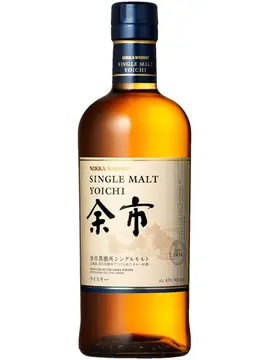
Nikka Yoichi Single Malt Japanese Whisky
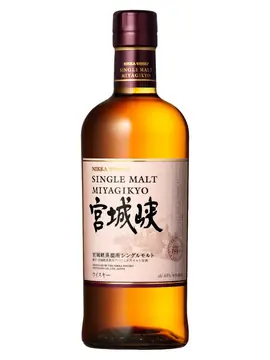
Nikka Miyagikyo Single Malt
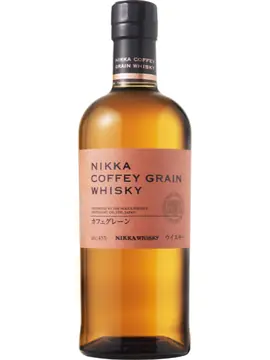
Nikka Coffey Grain Japanese Whisky
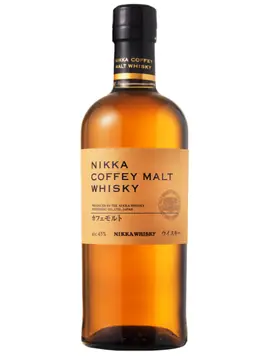
Nikka Coffey Malt
Age statements and NAS
- Age statement: the number on the label (for example 12 or 18 years) is the age of the youngest whisky in the bottle, a convention shared with Scotch. Yamazaki 18 Year Old carries an age statement.
- NAS (no age statement): the label gives no age. Under the standard, Japanese whisky must still be at least three years old.
- Vintage or distillation year: some bottles state the year of distillation.
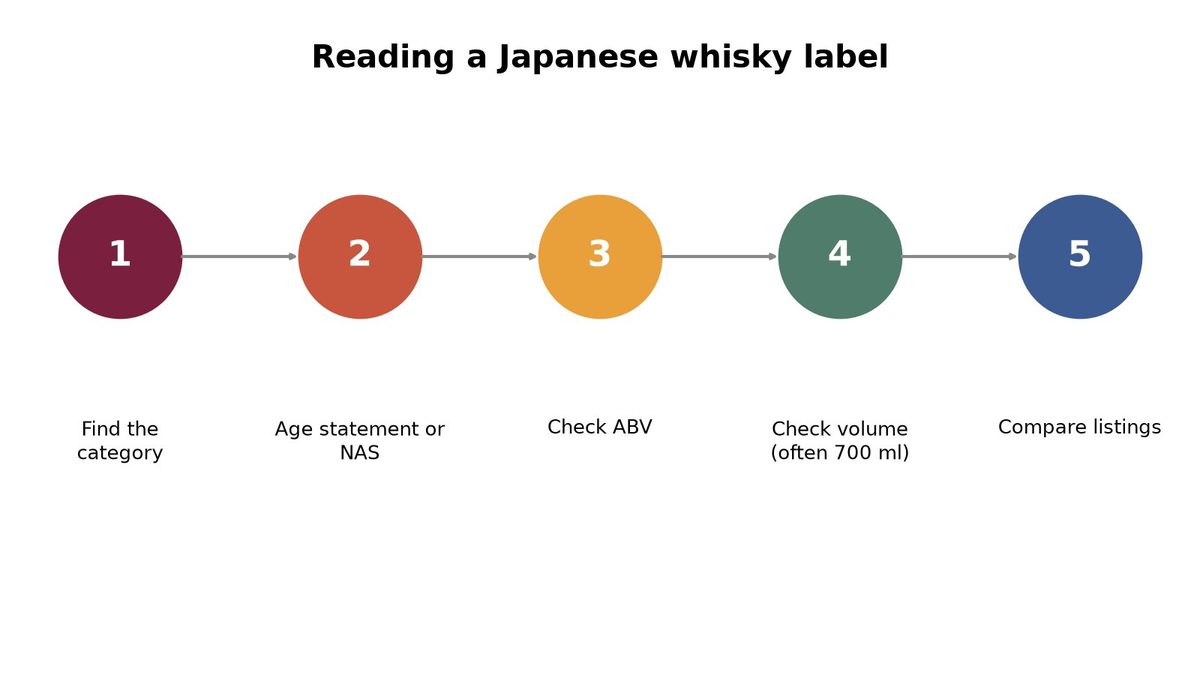
Step by step: reading a Japanese whisky label
- Find the category wording: "Japanese whisky", "single malt Japanese whisky", "blended whisky" or other terms.
- Check for an age statement or note that it is NAS.
- Read the ABV: at least 40% under the standard.
- Check the volume: often 700 ml, sometimes 750 ml.
- Compare listings using price per litre; see the price-per-litre calculator.
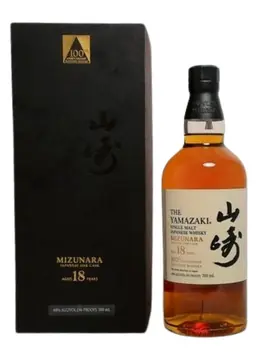
Yamazaki 18 Year Old 100Th Repack
Japanese vs Scotch production rules
| Rule | Japanese whisky (industry standard) | Scotch (legal definition) | Bourbon (legal definition) |
|---|---|---|---|
| Where made | Fermented, distilled, aged and bottled in Japan | Distilled and matured in Scotland | Made in the United States |
| Grain | Must include malted grain | Cereals; single malt must be 100% malted barley | At least 51% corn |
| Cask | Wooden casks of 700 L or less | Oak casks of 700 L or less | New charred oak containers |
| Minimum ageing | 3 years | 3 years | No minimum for "bourbon"; 2 years for "straight bourbon" |
| Minimum bottling ABV | 40% | 40% | 40% |
| Caramel colour | Permitted | Permitted (E150a) | Not permitted |
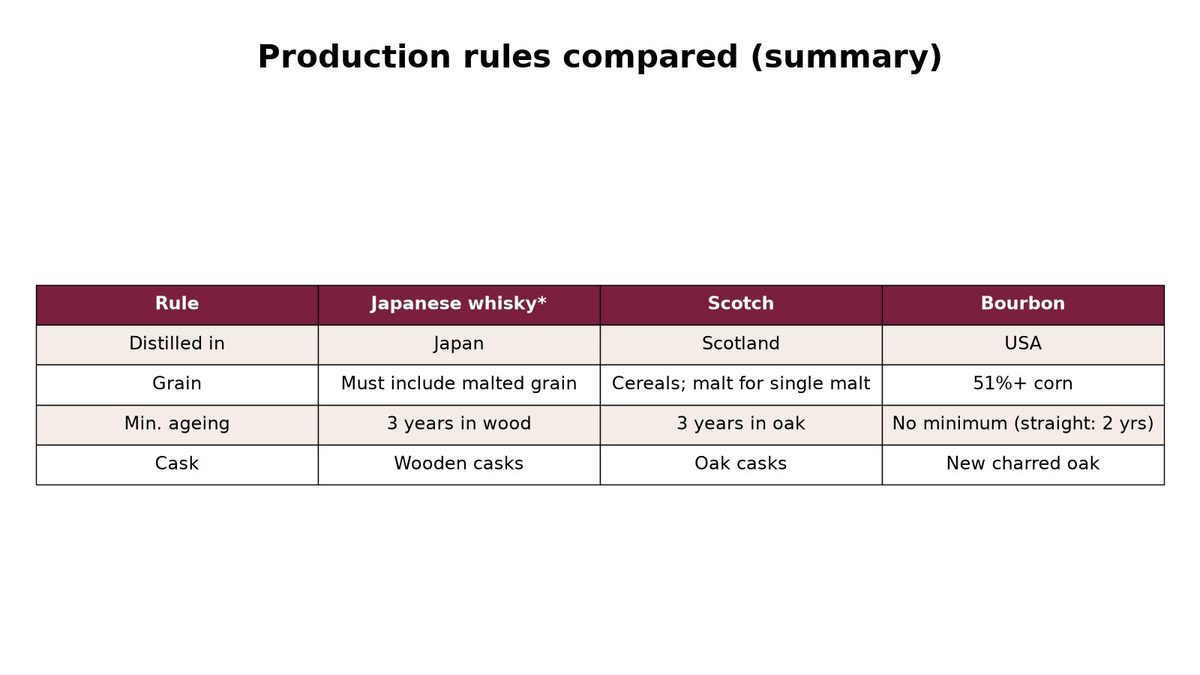
Japanese whisky production has historically drawn on Scotch methods, which is why the categories look similar. The differences are mainly where it is made and the rules around grain and casks. Our whisky vs whiskey vs bourbon vs Scotch and single malt vs blended Scotch posts explain the other side of the table. Browse Scotch and bourbon, or Jack Daniel's for Tennessee whiskey, a related American category.
Bottle sizes (700 ml) and case counts
Many Japanese whiskies are sold in 700 ml bottles, the standard spirits size in Japan and in European markets, rather than the 750 ml used in some other markets. Some listings, such as Hibiki Japanese Harmony in our catalogue, are 750 ml. When comparing, use price per litre rather than price per bottle. Our bottle sizes guide explains formats, and how case pricing works covers case counts. Bottles per case vary by product, so check each listing.
What's in our list
Whiskies from producers based in Japan currently in our catalogue include the Nikka, Hibiki, Yamazaki and Suntory listings linked above, plus Nikka From the Barrel in a 500 ml bottle. Stock changes; see what sold out by the case means for how we show availability.
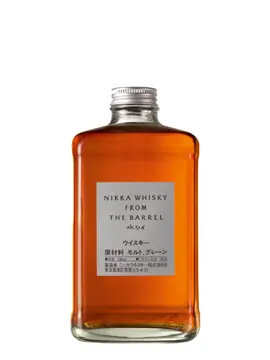
Nikka From The Barrel
Common label phrases and what they tell you
- "Japanese whisky": the producer is claiming the product meets the category; under the standard, that means the production requirements above.
- "Single malt": one distillery, malted barley.
- "Blended whisky" or "whisky" without "Japanese": the product may not be claiming the Japanese whisky category. Check the back label for more detail.
- "Distilled at" / "Bottled by": tells you where production steps happened, which helps confirm the category.
- Cask names (for example sherry cask, mizunara oak): describe the casks used for maturation; they are production facts, not quality grades.
Reading these phrases together tells you far more than the front-label design, which can look similar across categories.
World blends and whisky from a Japanese producer
A producer based in Japan can bottle more than one kind of whisky. Under the industry standard, only a product that meets the production rules — fermented, distilled, aged and bottled in Japan, with malted grain and Japanese water, at 40% ABV or more — may be labelled "Japanese whisky". A bottle that includes whisky distilled in other countries, or that was aged or bottled outside Japan, should not use that term.
Those products are often labelled "whisky", "blended whisky" or "world whisky". The front label may still carry a Japanese company name or a design that looks similar to a Japanese whisky. The category wording is the fact to trust. Check whether the label says "Japanese whisky" or only "whisky", and read any statement about where the whisky was distilled, aged and bottled. A phrase such as "blended and bottled in Japan" describes those two steps; it does not, on its own, mean the spirit was distilled and aged in Japan.
Two bottles can share a brand page and still belong to different categories. Use the label wording, then compare size and price per litre, as in the steps above.
Frequently asked questions
What makes a whisky Japanese whisky?
Under the industry standard: malted grain, Japanese water, fermentation, distillation, at least three years' ageing in wooden casks and bottling all in Japan, at 40% ABV or more.
Is Japanese whisky like Scotch?
The production methods and categories are similar, and the minimum age and ABV are the same. The rules differ on where it is made, grain and some details.
Why are Japanese whiskies often 700 ml?
700 ml is a standard spirits bottle size in Japan and many other markets. Some bottles are 750 ml. Compare by price per litre.
Is the Japanese whisky standard a law?
It is a voluntary industry standard followed by member producers, not a statute.
What does NAS mean?
No age statement. The label does not state an age, but the whisky must still meet the minimum ageing of its category.
Related reading
- Whisky vs Whiskey vs Bourbon vs Scotch: The Label Rules
- Single Malt vs Blended Scotch
- Burns Night Scotch by the Case
- Liquor Bottle Sizes: 375 ml to 1.75 L
- Spirits Gift Sets and Gift Boxes
You must be of legal drinking age in your province. ID and adult signature required at delivery.