How Many Millilitres in a Shot? Shot Glass, Jigger and Pour Sizes
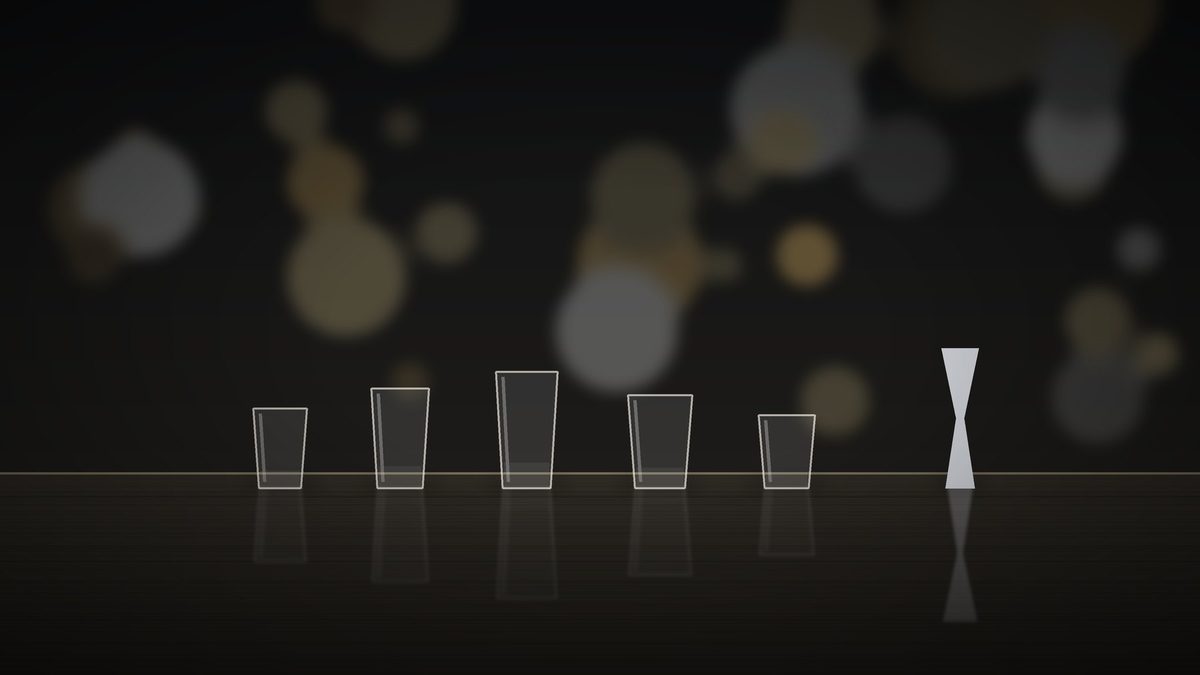
There is no single legal shot size. A standard drink of spirits is 43 ml (1.5 oz) at 40% ABV. Many bar jiggers measure 30 ml and 45 ml, and decorative shot glasses range from about 30 to 60 ml. One fluid ounce is about 28.4 ml (imperial) or 29.6 ml (customary), and it is usually rounded to 30 ml.
"How many ml is a shot of vodka" is one of the fastest-rising vodka searches in this morning's Google Trends check, and interest in "shot glass" has climbed several times over since late summer. Both make sense for this time of year. People are buying shot glasses as gifts, setting up home bars for holiday parties and following recipes that give measures in ounces when their kitchen tools are in millilitres. The confusing part is that "a shot" isn't a fixed measure: it depends on the glass, the jigger and which fluid ounce a recipe means. This guide gives the common measure sizes in one table, explains the two kinds of fluid ounce, shows how to check what your own shot glass holds and turns each pour into standard drinks.
Comparison table: measure names and volumes
One standard drink contains 17.05 ml (13.45 g) of pure ethanol. The ethanol and standard-drink columns assume a 40% ABV spirit.
| Measure | Volume (ml) | Imperial fl oz | Customary fl oz | Ethanol at 40% | Standard drinks |
|---|---|---|---|---|---|
| Pony | 30 | 1.06 | 1.01 | 12 ml | about 0.70 |
| Standard drink pour | 43 | 1.51 | 1.45 | 17.2 ml | about 1.0 |
| Common large jigger side | 45 | 1.58 | 1.52 | 18 ml | about 1.06 |
| Double | 60 | 2.11 | 2.03 | 24 ml | about 1.41 |
"Jigger" can mean the tool or a measure. As a measure, it usually means about 1.5 oz, which is 43 to 45 ml depending on which ounce is used. As a tool, most jiggers have two ends, such as 30 ml and 45 ml, or 1 oz and 1.5 oz.
Shot glass vs jigger: why a decorative glass is not a measure
A shot glass is a small drinking glass. A jigger is a measuring tool. They are often treated as the same thing, but they are not.
- Shot glasses vary widely. Common sizes run from about 30 ml to 60 ml, and novelty or "shooter" glasses can be bigger. Two glasses that look alike can hold quite different amounts.
- Fill lines aren't consistent. Some shot glasses have a line marked partway up; many don't. Where there is a line, it may not match any standard measure, and a glass filled to the brim always holds more than one filled to the line.
- Thick bases fool the eye. Heavy-bottomed glasses look bigger than they are, while thin, tall ones can hold more than they seem to.
A jigger is made to a stated size, so it gives the same pour every time. For any recipe, and for counting standard drinks, use a jigger or a measuring cup, then pour into the shot glass. Our guide to cocktail shaker types covers jiggers alongside other bar tools.
Imperial vs customary fluid ounces
Recipes give measures in fluid ounces, but there are two different ounces in common use:
- Imperial fluid ounce: about 28.41 ml.
- Customary fluid ounce: about 29.57 ml, used in many online recipes and on many bar tools.
The difference is about 4%. For one ounce, that is barely more than a millilitre, and both are usually rounded to 30 ml. For a 1.5 oz pour it is 42.6 ml versus 44.4 ml, which is why you'll see both 43 ml and 44 or 45 ml called a "1.5 oz shot". For a whole batch it adds up, so if a large recipe is in ounces, convert every ingredient with the same factor.
| Ounces | Imperial (ml) | Customary (ml) | Common rounding (ml) |
|---|---|---|---|
| 0.5 oz | 14.2 | 14.8 | 15 |
| 1 oz | 28.4 | 29.6 | 30 |
| 1.5 oz | 42.6 | 44.4 | 43 to 45 |
| 2 oz | 56.8 | 59.1 | 60 |
Steps: checking a shot glass's real volume at home
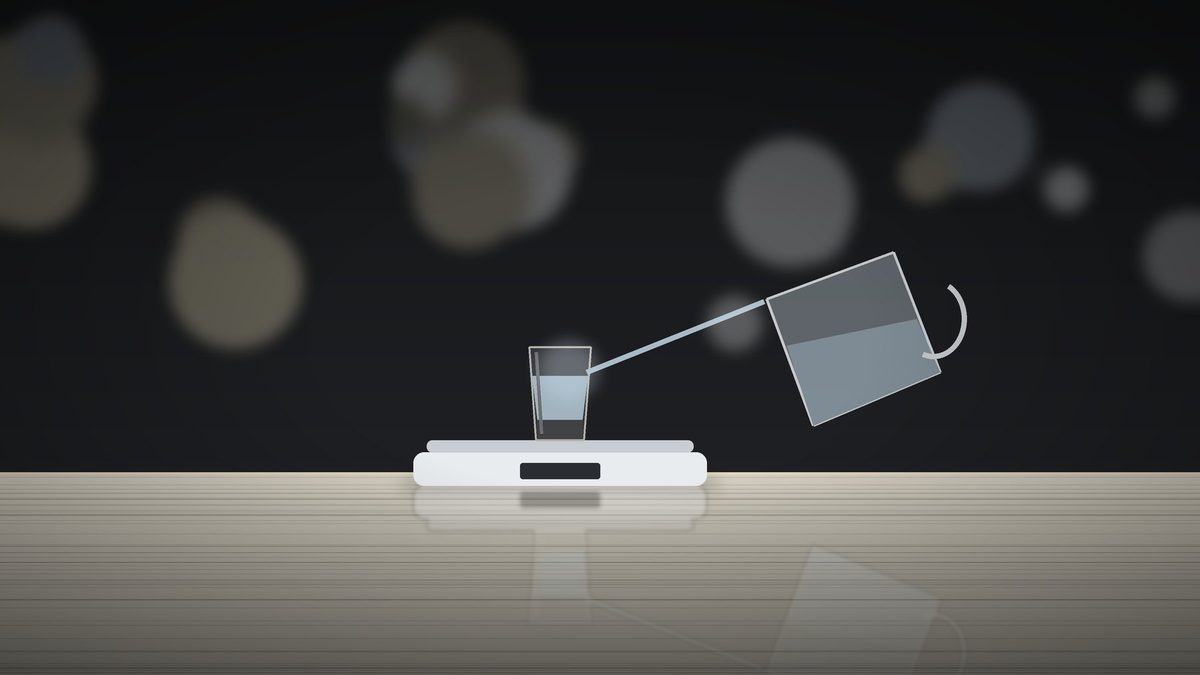
Water has a useful property: 1 ml of water weighs about 1 g. That means a kitchen scale can measure volume.
- Put the empty glass on a kitchen scale and zero it. Use the tare button so the scale reads 0 g with the glass on it.
- Fill with water to where you'd normally pour. That might be the brim, a fill line, or a few millimetres below the top.
- Read grams as millilitres. If the scale says 52 g, the glass holds about 52 ml at that fill level.
- Compare with 43 ml. If your normal fill is well above 43 ml, every "shot" from that glass is more than one standard drink of a 40% spirit.
- Use a jigger for spirits from then on. Measure the spirit and pour it into the glass, rather than filling the glass by eye.
A measuring jug with millilitre markings works too, but small amounts are hard to read on a large jug, so the scale method is usually more accurate.
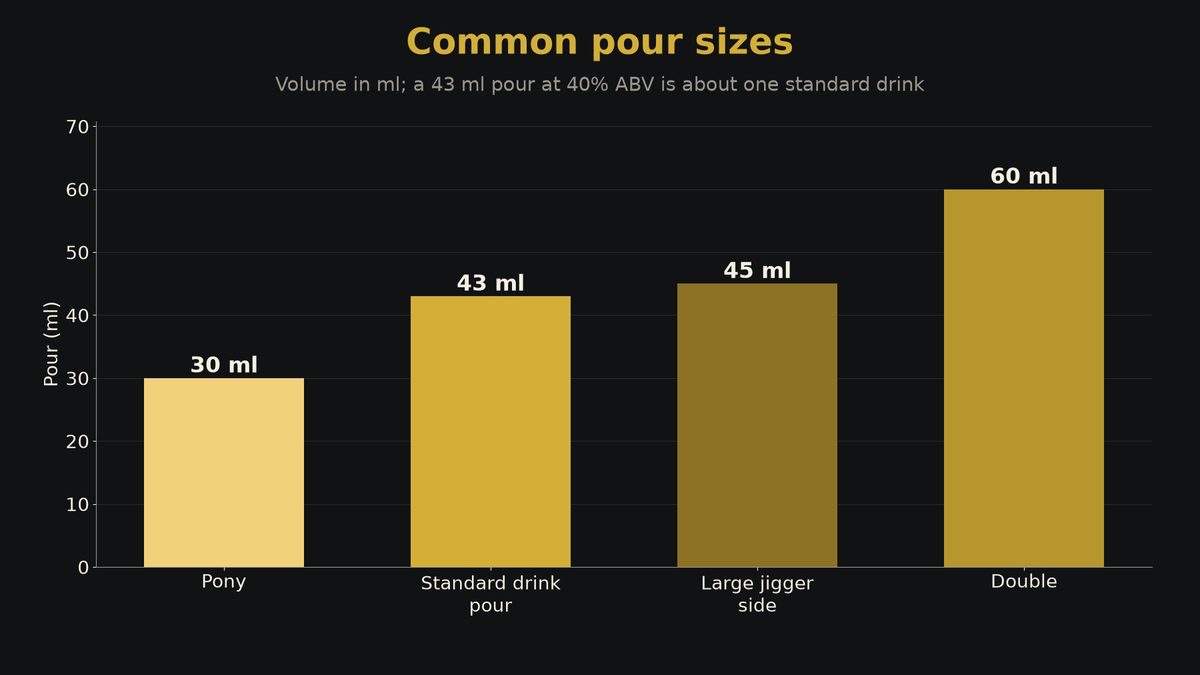
Standard drinks per pour at different ABVs
Spirits aren't all 40%. Liqueurs are often lower and some spirits are higher. Here is what a 43 ml pour contains at different strengths:
| ABV | Ethanol in 43 ml | Standard drinks |
|---|---|---|
| 20% (many cream and fruit liqueurs) | 8.6 ml | about 0.50 |
| 35% (many herbal liqueurs, some flavoured spirits) | 15.1 ml | about 0.88 |
| 40% (most vodka, gin, rum, whisky and tequila) | 17.2 ml | about 1.0 |
| 50% (some higher-strength bottlings) | 21.5 ml | about 1.26 |
The formula is simple: pour in ml × ABV ÷ 17.05 = standard drinks. A 30 ml pour at 40% is about 0.70 standard drinks, and a 60 ml double at 40% is about 1.41. Always use the ABV printed on your own bottle. For example, Smirnoff Vodka and Absolut Vodka list their ABV on the label, as does a herbal liqueur like Jägermeister, which is bottled below 40%.
Smirnoff
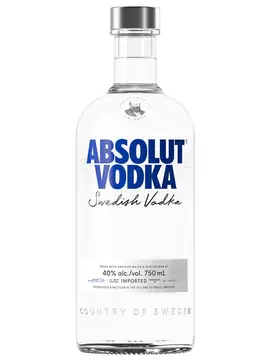
Absolut
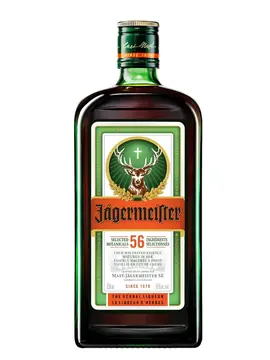
Jagermeister Herbal Liqueur
Shots per bottle
The number of pours in a bottle is the bottle size divided by the pour size. A 750 ml bottle gives about 17 pours of 43 ml, or 25 pours of 30 ml. A 375 ml bottle, such as Smirnoff Vodka 375 ml, gives about half that. For comparing value across sizes, our price per litre calculator shows how to work it out, and for wine, our guide to how many glasses are in a bottle of wine covers pours of 150 ml and more. The spirits category, the vodka category and the gin category list every size we carry.
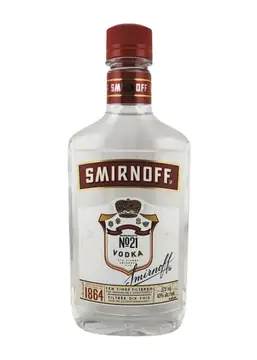
Smirnoff
Responsible hosting: measure pours, count standard drinks
Measured pours are the easiest way to keep a party on track. A few habits help:
- Keep a jigger at the bar. Make it the only way spirits get poured.
- Choose one standard pour. Pick 30 ml or 43 ml and stick to it for every drink, including mixed drinks.
- Count standard drinks, not glasses. A double in a highball and a shot from a large glass can each be well over one standard drink.
- Offer alternatives. Keep water and non-alcoholic options at the bar, and plan safe rides home.
Our holiday party bar set-up guide covers how much to buy and how to lay out a home bar for a group.
Frequently asked questions
How many ml is a standard shot?
There isn't one legal shot size. A standard drink of a 40% spirit is 43 ml (1.5 oz). Many bars and jiggers use 30 ml or 45 ml.
Is a shot 1 oz or 1.5 oz?
Both are used. A 1 oz pour (about 30 ml) is sometimes called a pony. A 1.5 oz pour (43 to 45 ml) matches a standard drink at 40% ABV.
What size is a jigger?
As a measure, a jigger usually means about 1.5 oz (43 to 45 ml). As a tool, most jiggers have two cups, commonly 30 ml and 45 ml, or 1 oz and 1.5 oz.
How many standard drinks are in a shot?
A 43 ml pour of a 40% spirit is about one standard drink. A 30 ml pour is about 0.70, and a 60 ml double is about 1.41. Lower- or higher-ABV bottles change these numbers.
How big is a double?
A double is usually about 60 ml (2 oz). At 40% ABV, it contains about 24 ml of ethanol, or about 1.41 standard drinks.
How can I tell how much my shot glass holds?
Zero a kitchen scale with the glass on it, fill the glass with water to your usual level and read the grams. One gram of water is about one millilitre.
Related reading
You must be of legal drinking age in your province. ID and adult signature required at delivery.