How Many Glasses of Wine Are in a Bottle? Ounces, Pours and Servings per Case
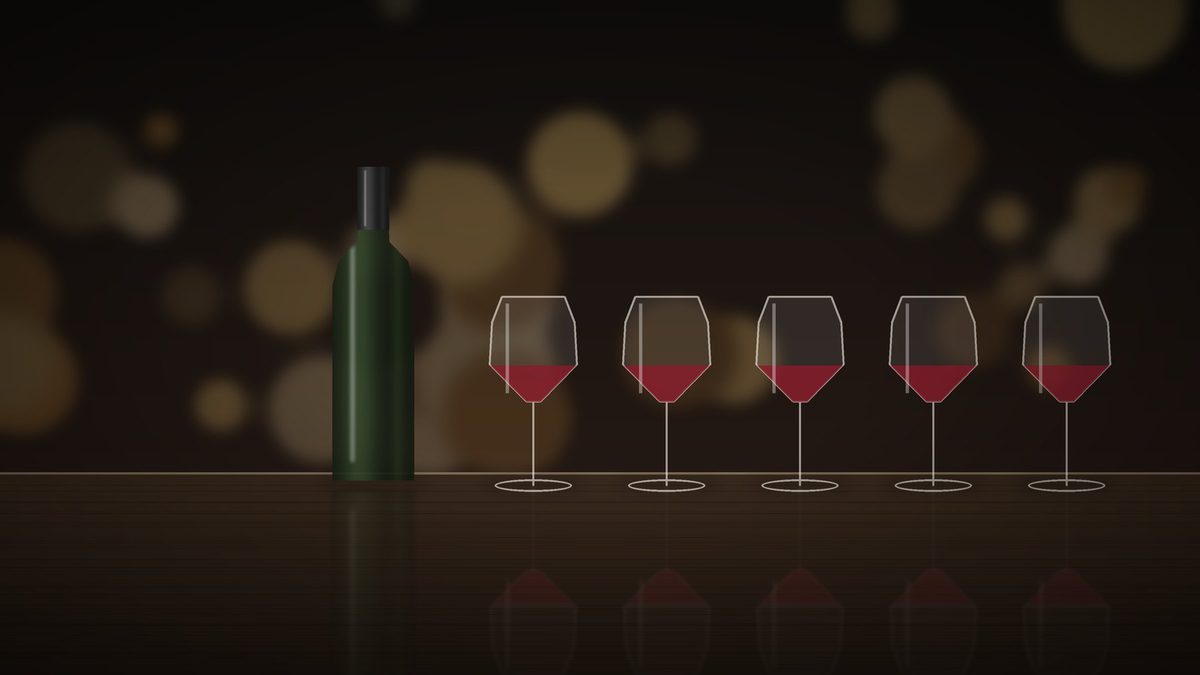
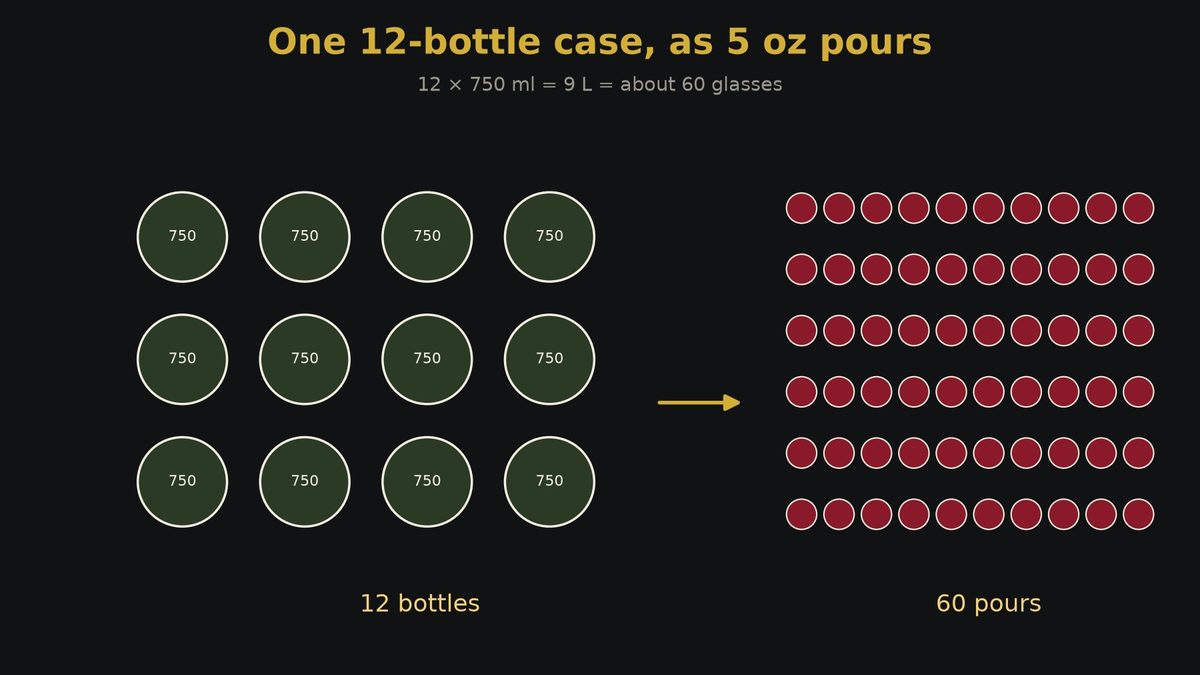
A standard 750 ml bottle holds about 25.4 fluid ounces. At a common 5 oz (150 ml) pour, that is five glasses, and a 12-bottle case gives about 60 pours. A 150 ml glass at 12% ABV contains about one standard drink, and stronger wines contain more, so check the label.
Wine remains one of the most searched drinks in Google Trends, and it has held steady near the top of its group all autumn. A rising related search in a Google Trends check on 20 November asked a practical question about quantity: how many ounces are in a bottle of wine, and how many glasses does that make? It is an October-to-January question, because it is what a host asks before a dinner, a gift exchange or a holiday party. This guide gives the arithmetic, a table by bottle size, the standard-drink maths and a step-by-step method for deciding how many bottles to buy. Every figure is calculated from millilitres, not estimated, and the post makes no claims about taste.
The short answer in numbers
- 1 bottle = 750 ml = about 25.4 fl oz.
- A 5 oz pour is about 150 ml, so one bottle gives 5 glasses.
- A 6 oz pour is about 180 ml, so one bottle gives about 4 glasses.
- A 12-bottle case = 9 litres = about 60 pours at 5 oz, or about 50 at 6 oz.
The ounce figures here use 1 fluid ounce = 29.57 ml. If your glasses are labelled in ml, work in ml and ignore the ounce conversion.
Comparison table: pours by bottle size
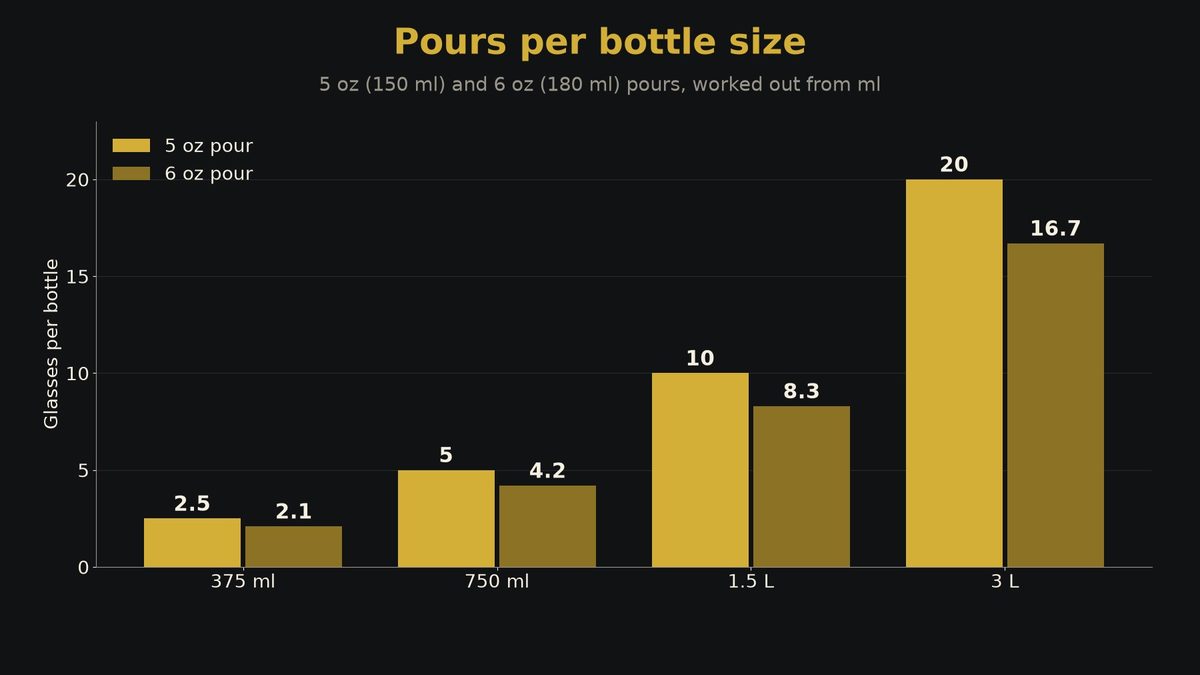
| Bottle size | Fluid ounces | 5 oz (150 ml) pours | 6 oz (180 ml) pours | Notes |
|---|---|---|---|---|
| 375 ml (half bottle) | 12.7 | about 2.5 | about 2 | A good size for one or two people |
| 750 ml (standard) | 25.4 | 5 | about 4 | The usual bottle size |
| 1.5 L (double bottle) | 50.7 | 10 | about 8 | Equal to two standard bottles |
| 3 L (four bottles) | 101.4 | 20 | about 17 | Equal to four standard bottles |
| 12 × 750 ml case | 304 | 60 | about 50 | Plan for a large party |
Examples from the catalogue: a half bottle of sparkling wine, a 1.5 L bottle of red wine and a 3 L bottle of sparkling wine. Sizes marked on a label are what to trust, because makers print the exact volume on the bottle.
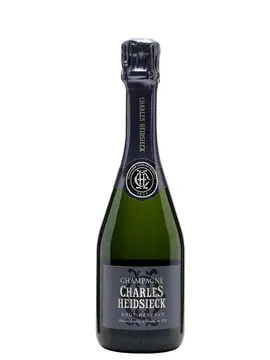
Charles Heidsieck Brut
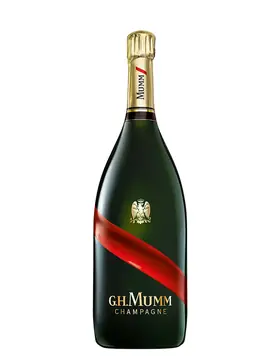
Gh Mumm Grand Cordon
Pour sizes by type of wine
Not every wine is poured the same way. The right pour depends on the wine and the occasion.
- Table wine (red, white, rosé). A pour of 150 ml (5 oz) is the usual figure, and it is the one a bar or restaurant will normally quote. Some restaurants pour 175 or 200 ml, so a "glass" at a restaurant can be a larger pour than at home. Browse red, white and rosé wines by category.
- Sparkling wine for a toast. A flute pour is usually 100 to 125 ml. A 750 ml bottle then gives six or seven glasses. See sparkling wine.
- Dessert and fortified wine. These are higher in sugar and often in alcohol, and a pour is typically 60 to 90 ml. A 750 ml bottle then gives eight to twelve small pours.
The type of glass you use changes how a pour looks. A large red wine glass looks almost empty with 150 ml in it. Measure once with a jug so you know what 150 ml looks like in your own glasses.
Standard-drink maths
One standard drink contains 17.05 ml of pure ethanol (13.45 g). To work out how many a glass contains, multiply its volume by its ABV.
- A 150 ml glass at 12% ABV: 150 × 0.12 = 18 ml of ethanol, which is about 1.06 standard drinks.
- The same glass at 14.5% ABV: 150 × 0.145 = 21.75 ml of ethanol, which is about 1.28 standard drinks.
- A whole 750 ml bottle at 12% ABV: 90 ml of ethanol, which is about 5.3 standard drinks.
- A whole 750 ml bottle at 14.5% ABV: about 108.8 ml of ethanol, which is about 6.4 standard drinks.
ABV varies from about 9% for some light wines to more than 15% for some reds and fortified wines, and the number on the label is the one to use. A bigger pour contains more alcohol in direct proportion, so pouring heavier means each guest drinks more without realising it. Keep to a measured pour, offer water with every round and plan for guests who are not drinking.
Steps: estimating bottles for a dinner
Use this method to work out how many bottles to buy.
- Count the adult guests who will be drinking wine. Leave out anyone who is driving, pregnant or not drinking.
- Estimate pours per guest at a moderate pace. A common planning figure is two to three 150 ml pours per person over a long dinner, and about one pour for each additional hour. This is a planning guide, not a target to push on anyone.
- Multiply guests by pours per guest to get the total number of pours.
- Divide by 5 to get the number of 750 ml bottles. If you are serving 6 oz pours, divide by 4.
- Round up to whole bottles, or to whole cases if you are buying that way, and add one bottle as a buffer for unexpected guests.
- Add water and non-alcoholic options to the order. Plan for at least one non-alcoholic choice per guest.
Worked example. Ten guests, three pours each: 10 × 3 = 30 pours, 30 ÷ 5 = 6 bottles. Round up to 7. If half the table drinks red and half drinks white, buy 3 or 4 bottles of each. For rosé, a bottle such as Bonterra Organic Rosé is one option.
For a larger event, our how much alcohol for a wedding guide scales these numbers up, and the Christmas wine and spirits planning guide covers a whole holiday season. If you are buying by the case, see how case pricing works and the multi-case ordering guide.
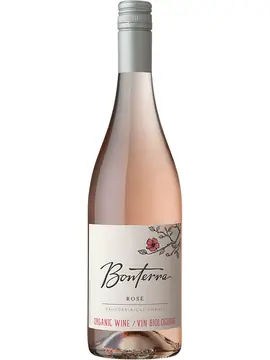
Bonterra Rose (Organic)
What happens to leftovers
An open bottle does not last forever. Re-cork it and keep it in the refrigerator, and see how long opened wine lasts for the usual windows for red, white and sparkling wine. If you expect leftovers, a half bottle is a sensible choice for a small table.
Frequently asked questions
How many ounces are in a bottle of wine?
A standard 750 ml bottle holds about 25.4 fluid ounces. A half bottle (375 ml) holds about 12.7 oz, a 1.5 L bottle holds about 50.7 oz and a 3 L bottle holds about 101.4 oz.
How many glasses are in a magnum?
A magnum is 1.5 L, which is two standard bottles. At a 5 oz (150 ml) pour, that is 10 glasses. At a 6 oz pour it is about 8.
Is a glass of wine one standard drink?
A 150 ml glass of 12% wine contains about 1.06 standard drinks. A stronger wine at 14.5% contains about 1.28 in the same glass. Check the ABV on the label.
How many bottles of wine for 10 guests?
If each guest has three 150 ml pours, that is 30 pours, or 6 bottles. Round up to 7 for a buffer. Plan fewer if guests are driving or not drinking, and always include non-alcoholic choices.
How many glasses of sparkling wine per bottle?
About six to seven flutes at a 100 to 125 ml toast pour, or five at a standard 150 ml pour.
How many glasses of wine are in a case?
A 12 × 750 ml case holds 9 litres, which is about 60 pours at 5 oz or about 50 at 6 oz.
Related reading
You must be of legal drinking age in your province. ID and adult signature required at delivery.