Eggnog Recipe With Alcohol: A Cooked Base, Measured Pours and Safety Notes
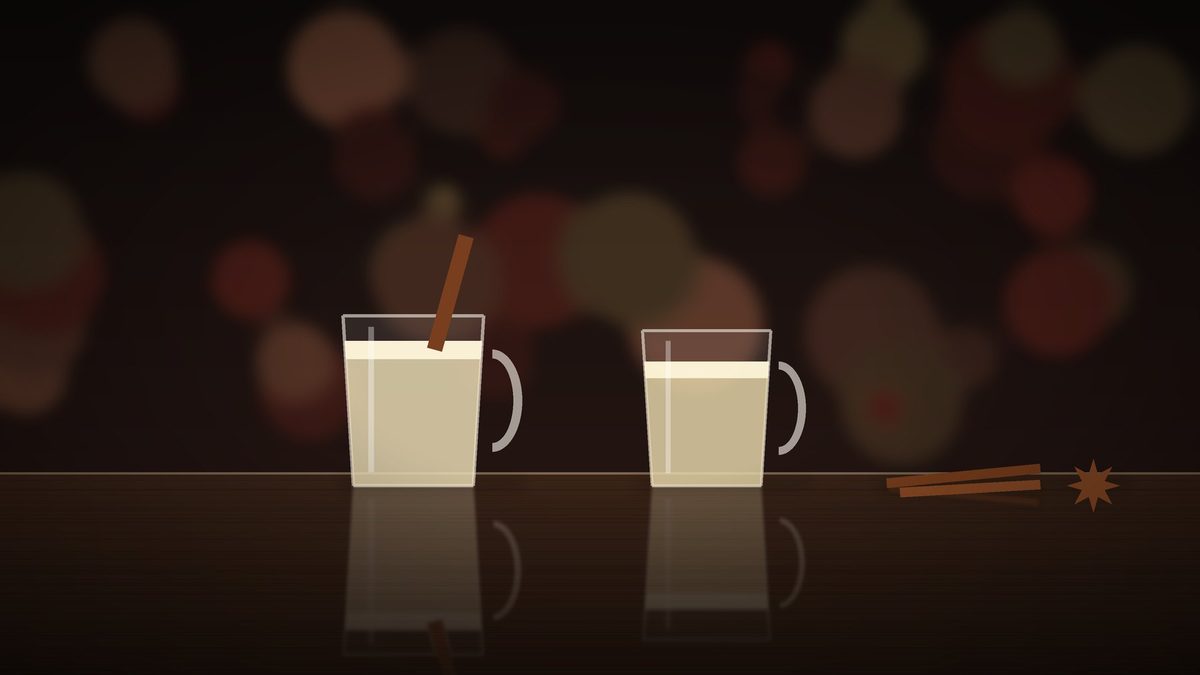
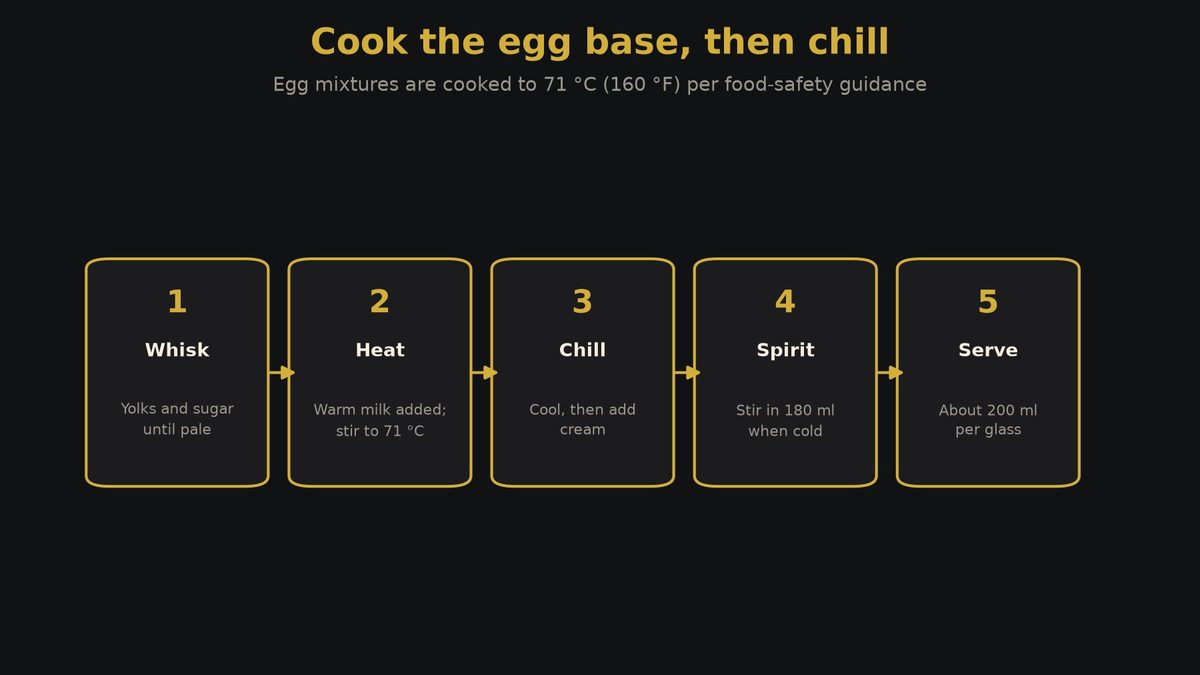
Spiked eggnog is a chilled mix of milk, cream, egg yolks and sugar with a measured pour of rum, brandy or whisky. For six 200 ml glasses, cook the egg base to 71 °C (160 °F), chill it, then stir in about 180 ml of spirit. That works out to about 30 ml of spirit per glass, or roughly 0.7 of a standard drink.
Eggnog has gone from almost no searches in late summer to one of the strongest seasonal signals in Google Trends this month, and the questions people are typing in are practical ones. The rising related searches include "eggnog recipe alcohol", "does eggnog have alcohol", "spiked eggnog", "eggnog cocktail" and "what is eggnog made of". This guide answers all five. It gives a stovetop recipe with measured volumes, explains the food-safety reasons for cooking the base, shows the standard-drink maths and includes a version for guests who are not drinking. It describes ingredients and amounts only and makes no claims about flavour.
What is eggnog made of?
Eggnog has five core ingredients.
- Milk and cream. Together they make up most of the volume. The ratio of milk to cream sets how thick the drink is.
- Egg yolks. They thicken the mixture and give it its pale yellow colour. Some recipes also use the whites, folded in whipped at the end.
- Sugar. It sweetens the base and helps the yolks blend.
- Spice. Ground nutmeg is the classic one. Cinnamon and vanilla are common additions.
- Spirit (optional). Traditionally rum, brandy, whisky or a mix of them. A drink with no spirit is simply a custard drink.
Does eggnog have alcohol? Not unless someone adds it. Shop-bought eggnog is usually non-alcoholic, and most homemade versions add the spirit at the end, so you control the amount and can keep a jug without it for guests who prefer none.
Comparison table: choosing a spirit for eggnog
Each of the three common spirits works at the same volume. Use whichever you already have, and check the label for ABV, because the amount of alcohol per glass depends on it.
| Spirit | Typical ABV band (check label) | Amount for a 6-glass batch | Per 200 ml glass | Catalogue example |
|---|---|---|---|---|
| Rum | 37.5–40% | 180 ml | 30 ml | Appleton Estate Signature Blend |
| Brandy | 35–40% | 180 ml | 30 ml | Fundador Brandy |
| Whisky | 40–50% | 180 ml | 30 ml | Evan Williams 1783 Bourbon |
| A split of two spirits | Varies | 90 ml of each | 15 ml of each | Browse the rum, brandy and whisky categories |
A 750 ml bottle holds enough for more than four batches at this volume. For help comparing rum styles, see our types of rum guide, and for the background on grape brandy, see what is brandy.

Appleton Estate Signature Blend
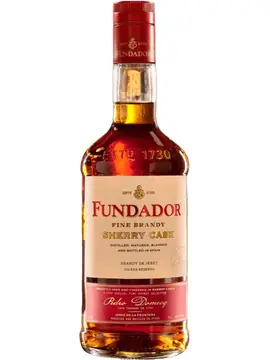
Fundador Brandy
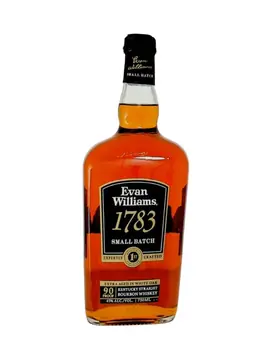
Evan Williams 1783 Bourbon
Why cook the base?
Many old recipes use raw eggs. Food-safety agencies advise that egg mixtures be heated to 71 °C (160 °F), because raw eggs can carry bacteria. Some people believe the alcohol in eggnog makes raw eggs safe, but you should not rely on it. The amount of alcohol in a finished glass is much lower than in the bottle, and it does not guarantee that the mixture is safe. Pregnant women, young children, older adults and anyone with a weakened immune system are advised to avoid raw egg drinks entirely.
A cooked base is a stovetop custard. It is more work than blending raw eggs, but it removes the question, and it has a second benefit: it thickens the drink without extra cream.
If you prefer to use eggs without cooking, pasteurized liquid eggs are one option. Read the carton to see what the maker says about drinks that are not cooked.
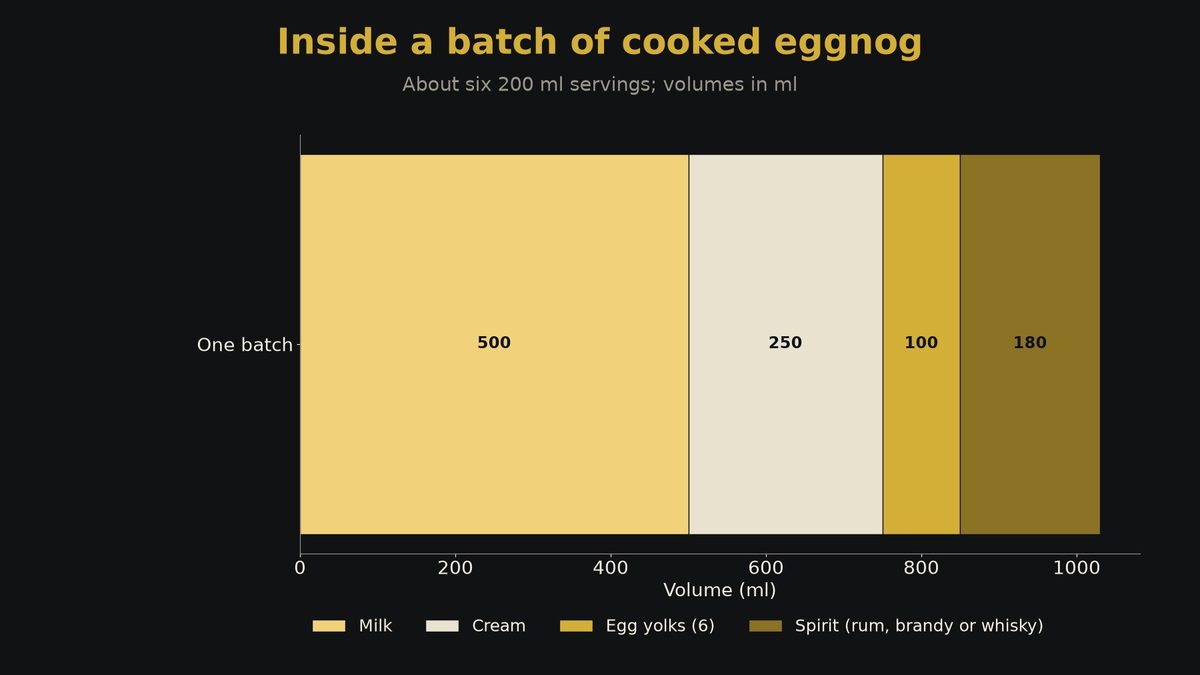
Cooked eggnog recipe (about six 200 ml glasses)
Ingredients
- 6 egg yolks (about 100 ml)
- 100 g sugar
- 500 ml milk
- 250 ml cream (35%)
- 2 ml ground nutmeg, plus a little extra for serving
- 5 ml vanilla extract
- 180 ml rum, brandy or whisky (or a mix)
Steps
- Whisk the yolks and sugar. Beat them in a heatproof bowl until pale and slightly thickened, about 2 minutes.
- Warm the milk. Heat the milk with the nutmeg in a saucepan until steaming but not boiling.
- Temper the yolks. Pour a ladle of hot milk into the yolks while whisking, then pour the mixture back into the pan. Tempering stops the yolks from scrambling.
- Cook to 71 °C (160 °F). Stir over low heat until the mixture coats the back of a spoon and a thermometer reads 71 °C. Do not let it boil.
- Strain and chill. Pour through a fine strainer into a jug, stir in the vanilla and cool the jug in a bowl of ice water. Chill it in the refrigerator until completely cold.
- Add the cream and spirit. Stir in the cream, then the spirit. Adding the spirit cold means none of it is lost to heat, and you know exactly how much each glass contains.
- Serve. Pour 200 ml into each glass and grate a little nutmeg on top.
Standard-drink maths
One standard drink contains 17.05 ml of pure ethanol (13.45 g). The maths for this batch:
- 180 ml of a 40% spirit contains 180 × 0.40 = 72 ml of ethanol.
- Divided across six glasses, each glass contains 12 ml of ethanol.
- 12 ml ÷ 17.05 ml = about 0.7 of a standard drink per glass.
A guest who has two glasses has had about 1.4 standard drinks. A spirit at 45% ABV raises each glass to about 0.8. The cold, creamy drink does not feel as strong as it is, and that is a reason to measure rather than pour freehand. A jigger is the best tool. Pace the evening, offer water and keep a non-alcoholic jug on the table. Anyone driving should skip the spirit. For a bigger party, see our holiday batch cocktails guide.
Non-alcoholic eggnog
Leave the spirit out and replace it with 90 ml of extra milk and a few drops of vanilla. The cooked base stays the same, and you have a drink for everyone. Label each jug clearly, particularly at a party with children. For more ideas that do not contain alcohol, see our non-alcoholic holiday drinks guide.
How long does eggnog keep?
A cooked egg-and-dairy base should be kept cold, covered and in the refrigerator. Many food-safety guides give two to three days for homemade egg-and-dairy drinks, and the added spirit does not change that rule. Keep the jug at the back of the refrigerator, not in the door, and do not leave it out on the table for more than a couple of hours. Shake or stir it before pouring, because the cream can separate.
Serving ideas for the holidays
Eggnog is a make-ahead drink, which is why it fits holiday hosting so well. Cook the base the day before, keep the spirit in a separate bottle with a jigger and let each guest add a measured pour. That keeps a non-alcoholic option on the table at all times. If you are planning a wider drinks menu, our Christmas cocktails guide has other winter recipes, and the holiday party gift edit collects bottles for the season. For the evenings themselves, see the pages for Christmas Eve and Christmas Day.
Frequently asked questions
Does eggnog have alcohol?
Not by itself. Store-bought eggnog is usually non-alcoholic, and homemade eggnog only contains alcohol if you add spirit. The usual choices are rum, brandy or whisky.
How much alcohol goes in eggnog?
A common amount is 30 ml of spirit per 200 ml glass, which is about 0.7 of a standard drink at 40% ABV. The batch above uses 180 ml of spirit for six glasses. Check your bottle's ABV and measure with a jigger.
Is it safe to make eggnog with raw eggs?
Food-safety agencies advise cooking egg mixtures to 71 °C (160 °F). Alcohol should not be relied on to make raw eggs safe. The cooked recipe above avoids the question, and pregnant women, children, older adults and people with weakened immune systems are advised to avoid raw egg drinks.
How long does homemade eggnog last?
Many guides suggest two to three days in the refrigerator for homemade egg-and-dairy drinks. Keep it cold and covered, and discard it if you are unsure.
Can you make eggnog ahead of a party?
Yes. Cook and chill the base up to a day ahead. Add the cream and spirit shortly before serving, or let guests add their own measured pour.
What is a non-alcoholic eggnog?
The same cooked base with the spirit replaced by milk and a little vanilla. It is a good option for children and for anyone not drinking alcohol.
Related reading
You must be of legal drinking age in your province. ID and adult signature required at delivery.