Rye Whiskey vs Bourbon: Mash Bill and Label Rules
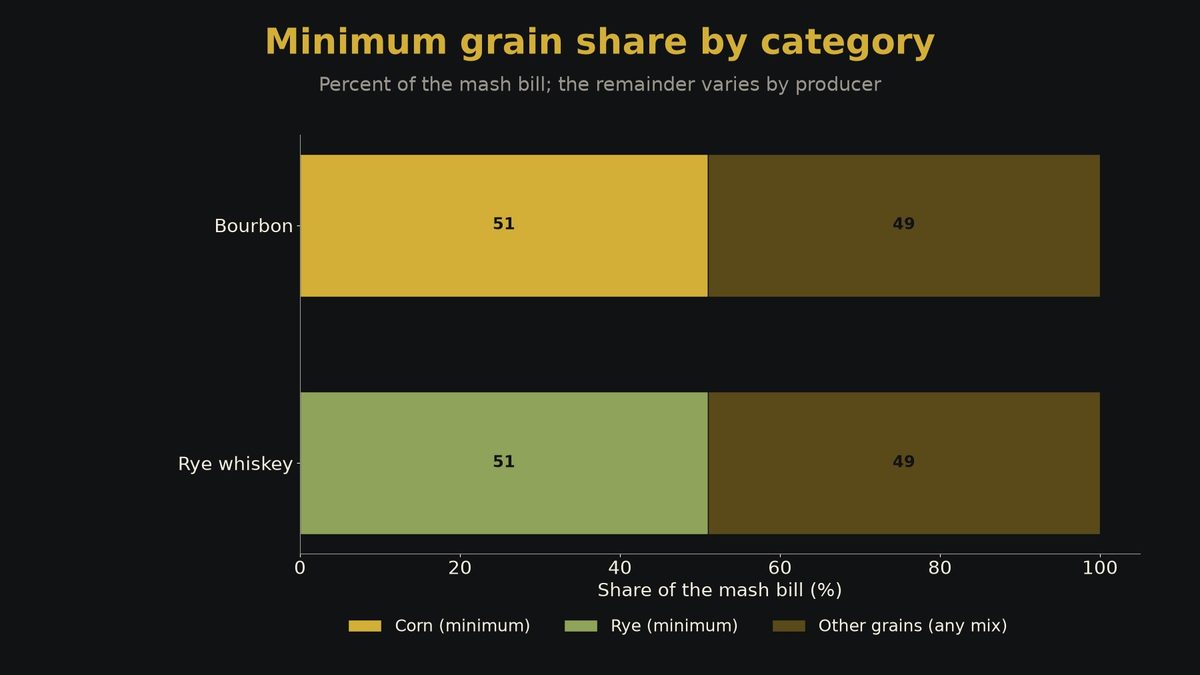
The difference between rye whiskey and bourbon is the main grain. Bourbon's mash bill must be at least 51 percent corn; rye whiskey's must be at least 51 percent rye. Otherwise the rules match: both are distilled to no more than 80 percent ABV, aged in new charred oak containers, and bottled at 40 percent ABV or more. "Straight" and "bottled-in-bond" add further age rules.
Searches for rye whiskey have climbed steadily this autumn. That fits the season: stirred whiskey drinks come back as the weather turns colder, and whiskey is one of the most common holiday gifts. This guide sets out what the two label terms legally mean and how to read them on a bottle. It describes grain rules, not flavour, and it does not rank one category above the other.
Mash bill: 51 percent corn vs 51 percent rye
A mash bill is the recipe of grains that goes into the fermenter. Whiskey makers usually combine three or four grains: corn, rye, wheat and malted barley. The legal name on the label depends on which grain makes up the majority.
- Bourbon must contain at least 51 percent corn. The rest is usually some mix of rye or wheat plus malted barley.
- Rye whiskey must contain at least 51 percent rye. The rest is usually corn and malted barley.
The 51 percent rule is a minimum, not a target. A rye whiskey can be 51 percent rye or close to 100 percent. A bourbon can be just over half corn or much higher. That is why two bottles with the same category name can have very different recipes, and why many producers publish their mash bill.
Bourbon is also a protected product of its country of origin, so a bottle labelled bourbon must be made there.
Rules the two categories share
Apart from the grain, bourbon and rye whiskey follow the same production rules:
| Rule | Bourbon | Rye whiskey |
|---|---|---|
| Main grain | At least 51% corn | At least 51% rye |
| Distillation strength | No more than 80% ABV (160 proof) | No more than 80% ABV (160 proof) |
| Barrel | New charred oak containers | New charred oak containers |
| Strength going into the barrel | No more than 62.5% ABV (125 proof) | No more than 62.5% ABV (125 proof) |
| Bottling strength | At least 40% ABV (80 proof) | At least 40% ABV (80 proof) |
| "Straight" | At least 2 years in new charred oak; age stated if under 4 years | Same rule |
| In-stock example | Evan Williams Bottled in Bond Bourbon | Michter's Single Barrel Straight Rye |
Note the barrel rule: new charred oak. A barrel can be used only once for bourbon or rye whiskey under these definitions. Used barrels then often go on to age other spirits.
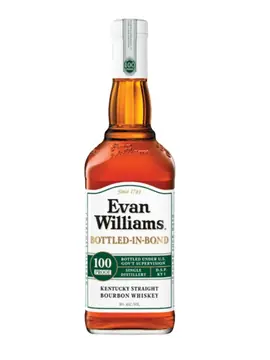
Evan Williams Bottled In Bond Bourbon
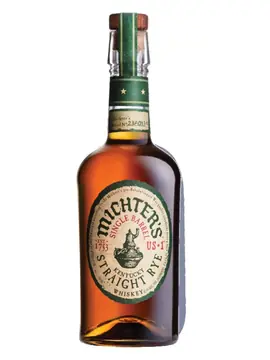
Michter's Us1 Single Barrel Straight Rye
Straight, bottled-in-bond and other label words
Several extra words can appear on either kind of bottle. Each has a defined meaning.
- Straight. Straight bourbon or straight rye whiskey has been aged at least two years in new charred oak and contains no added colouring or flavouring. If it is younger than four years, the label must state the age.
- Bottled-in-bond. The whiskey was made by one distillery in one distilling season, aged at least four years in a government-supervised bonded warehouse, and bottled at exactly 50 percent ABV (100 proof). The label identifies the distillery. The Evan Williams Bottled in Bond Bourbon is an example in our list.
- Single barrel. Every bottle in the release comes from one barrel. It is a description, not a legal age class.
- Small batch. A producer term for a blend of a smaller number of barrels. There is no legal definition of how small.
- Wheated bourbon. A bourbon that uses wheat instead of rye as its second grain. The producer chooses whether to say so on the label or in published notes.
- High-rye bourbon. A bourbon with a larger than usual share of rye as its second grain. It is still bourbon, because corn is still the majority.
- Sour mash. A process term: some spent mash from one batch is added to the next fermentation. Most bourbon and rye producers use this method whether or not the label says it.
Steps: how to tell rye from bourbon on the label
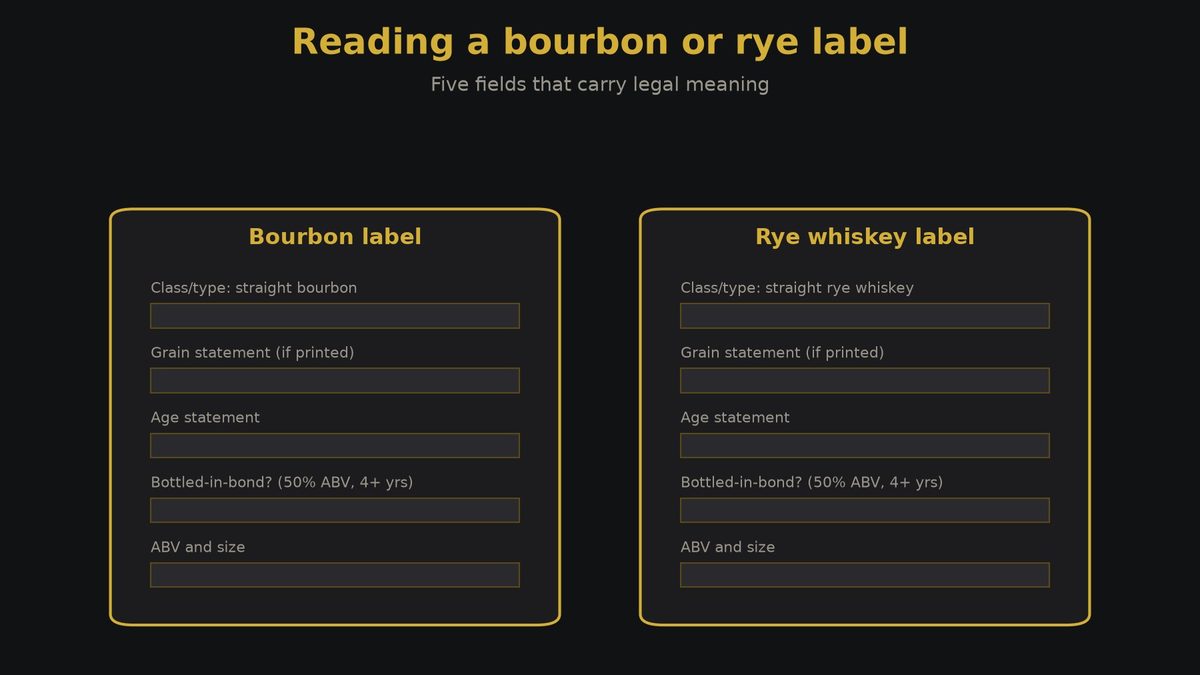
- Read the class and type line. It will say bourbon, straight bourbon, rye whiskey or straight rye whiskey. This line is the legal identity of the spirit.
- Look for a mash-bill or grain statement. Some labels or producer pages print the percentages. If not, the class line still tells you which grain is the majority.
- Note the age, bonded status and ABV. "Straight" means at least two years. "Bottled-in-bond" means at least four years and 50 percent ABV. The ABV appears on every label.
- Note the bottle size. Most whiskey is sold in 750 ml bottles, with some 375 ml and larger formats. The size changes the number of pours, not the category.
- Match the live product page. Before you describe a specific bottle, open its page and check the name and format.
Where the difference matters in mixed drinks
Recipes often name one or the other. The Old Fashioned in our classic cocktail recipes can be made with either, and many stirred whiskey drinks list rye first with bourbon as the alternative, or the other way round. If a recipe names one, use that one or write down the substitution so guests know what they are drinking.
Measure every pour. A 60 ml pour of a 45 percent whiskey contains 27 ml of pure alcohol, about 1.6 standard drinks of 17.05 ml. A bottled-in-bond whiskey at 50 percent ABV puts 30 ml of pure alcohol into the same 60 ml pour, about 1.8 standard drinks. Higher-strength bottles mean smaller pours, not more drinks.
Catalogue examples
At the time of writing, our whisky category and bourbon category include these bottles.
Rye whiskey
- Woodford Reserve Rye from Woodford
- Jim Beam Rye from Jim Beam
- Michter's Single Barrel Straight Rye from Michter's
Bourbon
- Evan Williams Bottled in Bond Bourbon from Evan Williams
- Woodford Reserve Double Oaked Bourbon
- Michter's Small Batch Bourbon
- Maker's Mark from Maker's Mark
- Knob Creek from Knob Creek
Whiskey is listed by the case; the bottle count is on each product page and the case pricing guide explains how the per-bottle figure works. The whisky gift edit and the whisky sale page are useful for holiday orders.
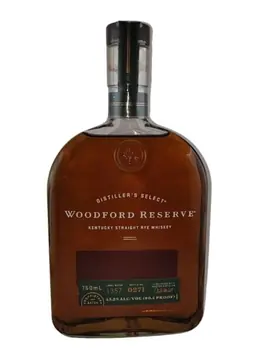
Woodford Reserve- Rye
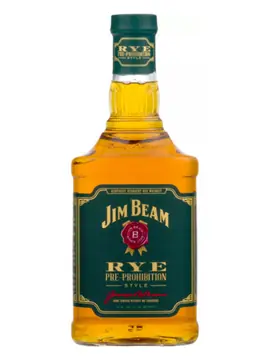
Jim Beam Rye
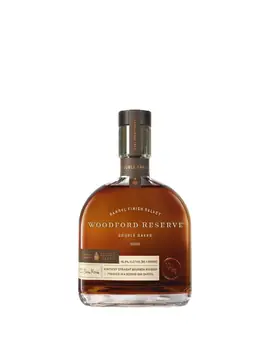
Woodford Reserve Double Oaked Bourbon
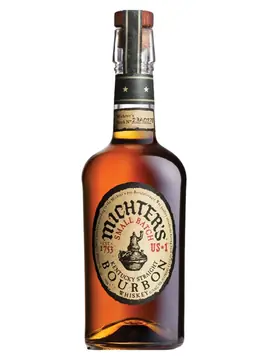
Michter's Us 1 Small Batch Bourbon
Frequently asked questions
What is the difference between rye whiskey and bourbon?
The majority grain. Bourbon is at least 51 percent corn; rye whiskey is at least 51 percent rye. Both are aged in new charred oak and follow the same strength rules.
Does rye whiskey have to be 100 percent rye?
No. It must be at least 51 percent rye. The remainder is usually corn and malted barley. Some producers make rye whiskey with a much higher share of rye and say so on the label.
What does straight rye mean?
Straight rye whiskey has been aged at least two years in new charred oak and has no added colouring or flavouring. If it is under four years old, the age must be stated.
What does bottled-in-bond mean?
The whiskey comes from one distillery and one distilling season, was aged at least four years in a supervised bonded warehouse, and is bottled at 50 percent ABV.
Is every whisky called "rye" made under these rules?
No. The 51 percent rule applies to whiskey labelled rye whiskey or straight rye under these standards. In some other countries, "rye" on a label is a traditional style name and does not guarantee a majority of rye grain. Read the class line and any grain statement.
Is bourbon sweeter than rye?
That is a taste question, and the label does not answer it. The label tells you the majority grain, the age and the strength. Those are the facts you can compare.
Related reading
You must be of legal drinking age in your province. ID and adult signature required at delivery.