Mezcal vs Tequila: Agave, Production and Label Terms
Tequila and mezcal are both agave spirits, but they are separate legal categories. Tequila must be made from one plant, blue Weber agave, and is labelled by ageing class such as blanco or reposado. Mezcal may be made from many agave species, such as espadín or tobalá, must be 100 percent agave, and is labelled by production category: mezcal, artesanal or ancestral.
Mezcal has been one of the strongest-performing spirit searches this autumn, ahead of most of the other spirit terms we track, and holiday cocktail season keeps both spirits in the conversation. The two words are often used as if they were interchangeable. They are not. This guide explains the legal difference, the production difference and the label terms, so you can compare two bottles on the shelf or on a product page without guessing. It describes rules and labels only; it does not rank bottles or describe flavour.
Shared starting point: the agave plant
Both spirits begin with the heart of the agave plant, called the piña because the trimmed core resembles a large pineapple. The agave takes several years to mature. At harvest the leaves are cut away, and the piña is cooked to turn its stored carbohydrates into fermentable sugars. It is then crushed, the juice is fermented, and the result is distilled.
Because the plant species matters so much to the legal definitions, labels often state it. Tequila labels may say "100% agave" or "100% blue agave". Mezcal labels often name the species directly: espadín, tobalá, tepeztate, arroqueño and others. Espadín is the most widely planted mezcal agave.
Tequila: one agave, strict ageing classes
Tequila has its own designation of origin and must be produced in its designated production area. The key rules for a label reader:
- One species. Only blue Weber agave (Agave tequilana Weber, blue variety) may be used.
- 100 percent agave or not. A bottle labelled "100% agave" is made only from blue agave sugars. A bottle that does not say so may be a mixto: at least 51 percent agave sugars, with the rest from other sugars.
- A NOM number. Every bottle carries a NOM number that identifies the registered distillery.
- Ageing classes. Blanco (also called plata or silver), joven (gold), reposado (aged at least two months in wood), añejo (at least one year in barrels of up to 600 litres) and extra añejo (at least three years).
Our blanco vs reposado vs añejo guide covers those classes in detail, so this post does not repeat them. One note: cristalino is a commercial term for aged tequila that has been filtered to remove colour. It is not one of the official ageing classes, so check the class word that also appears on the label.
Mezcal: many agaves, three production categories
Mezcal also has its own designation of origin, covering a larger production area. The rules differ from tequila in three important ways.
- Many species are allowed. Any agave permitted under the mezcal standard may be used, alone or in a blend. Labels state the species.
- Always 100 percent agave. There is no mixto mezcal. Every certified mezcal is made only from agave sugars.
- Production categories. The label carries one of three category words, defined by how the spirit was made:
- Mezcal. Modern equipment is allowed, such as autoclaves for cooking, diffusers and continuous stills.
- Mezcal Artesanal. The agave is cooked in pit or raised ovens, crushed with a mallet, a stone wheel (tahona) or a mechanical shredder, fermented in vessels such as wood or stone, and distilled in copper pot stills or clay pots.
- Mezcal Ancestral. The agave is cooked in earthen pits, crushed by hand with a mallet or by stone wheel, and distilled in clay pots over direct fire.
Mezcal also has ageing classes: blanco or joven, reposado, añejo, and madurado en vidrio (rested in glass). Some labels also show the batch, the year of distillation and the village where it was made, which is why you will see terms like "single village".
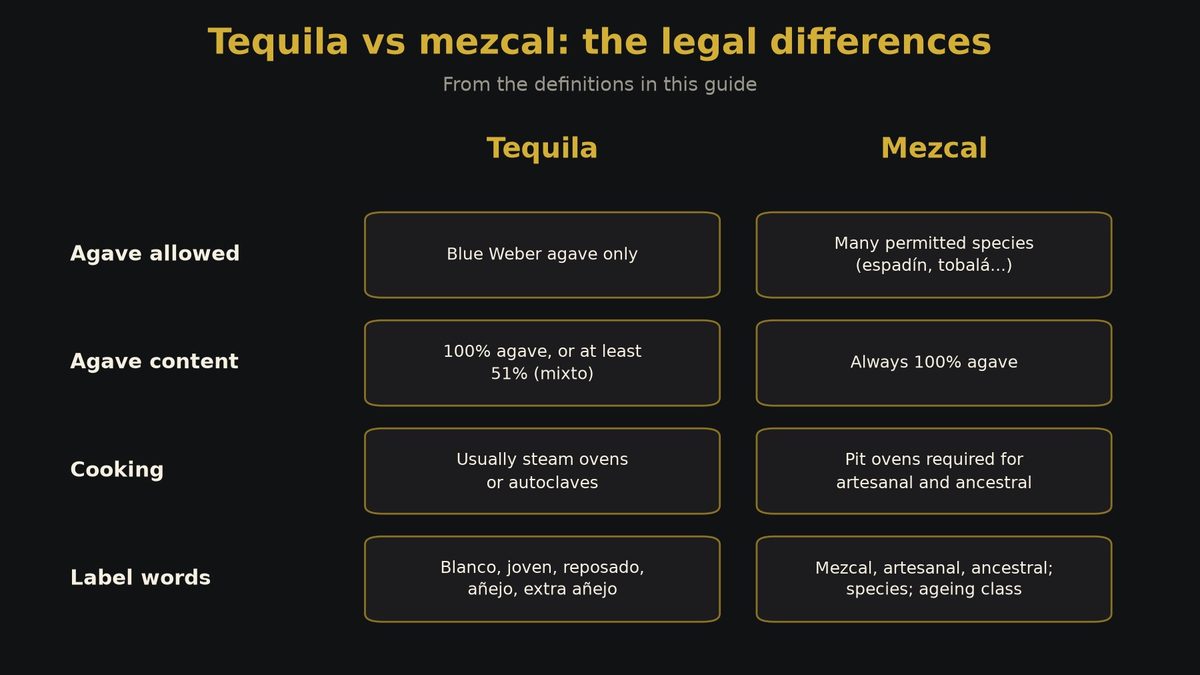
Comparison: tequila and mezcal on the label
| Spirit | Agave rule | Agave content | Cooking method | Main label terms | In-stock example |
|---|---|---|---|---|---|
| Tequila | Blue Weber agave only | 100% agave, or at least 51% (mixto) | Usually steam ovens or autoclaves; rarely stated on the label | Blanco, joven, reposado, añejo, extra añejo; NOM number | Casamigos Blanco, 1800 Blanco |
| Mezcal | Many permitted species, alone or blended | Always 100% agave | Autoclaves allowed for "mezcal"; pit ovens required for artesanal and ancestral | Mezcal, artesanal, ancestral; species such as espadín; blanco, reposado, añejo, madurado en vidrio | Montelobos Mezcal, Del Maguey Single Village Mezcal Vida |
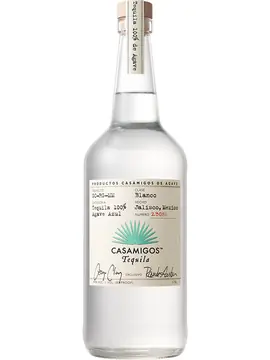
Casamigos Blanco
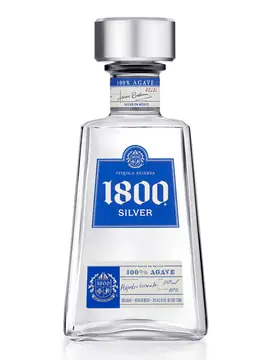
1800 Blanco (Silver) Tequila
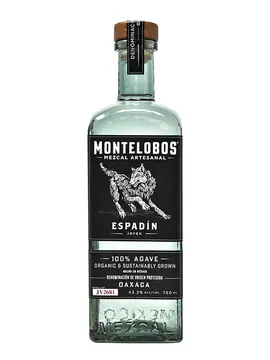
Montelobos Mezcal
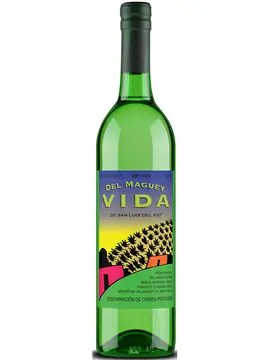
Del Maguey Single Village Mezcal 'Vida'
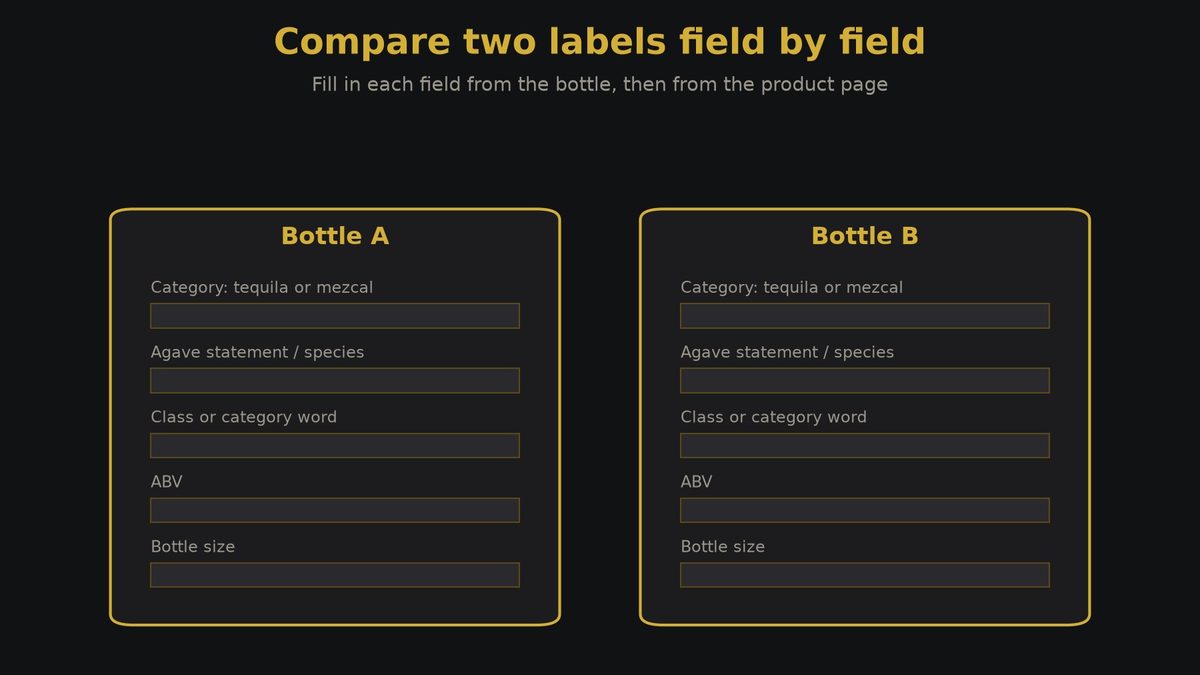
Steps: how to compare two labels side by side
- Read the category word. Does the bottle say tequila or mezcal? This is the legal identity of the spirit, and it comes first.
- Note the agave statement. For tequila, look for "100% agave". For mezcal, look for the species name, such as espadín or tobalá.
- Note the class or category word. For tequila, that is the ageing class (blanco, reposado, añejo). For mezcal, look for both the production category (mezcal, artesanal, ancestral) and the ageing class.
- Check the ABV and bottle size. Both categories are bottled across a range of strengths, usually between 35 and 55 percent ABV. The label and the product page give the exact figure.
- Open the live product page. Before you describe a bottle to anyone, check its page for the exact name and format.
Catalogue examples
At the time of writing, our mezcal category lists:
- Montelobos Mezcal
- 400 Conejos Mezcal
- Casamigos Mezcal
- Del Maguey Single Village Mezcal Vida, from the Del Maguey range
Our tequila category is much larger, with reposado and añejo sections. Blanco examples include Casamigos Blanco, Don Julio Blanco, Patrón Silver and 1800 Blanco. The Casamigos Reposado is a reposado example.
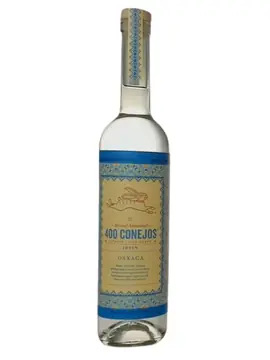
400 Conejos Mezcal
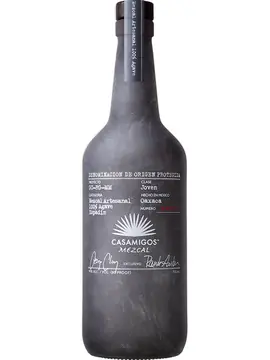
Casamigos Mezcal
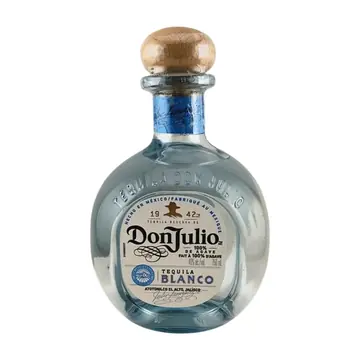
Don Julio Blanco
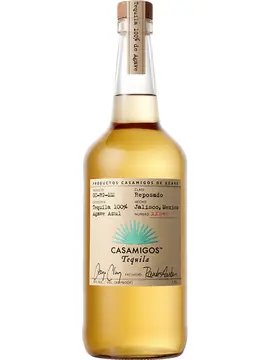
Casamigos Reposado
What this list does not include
We list what is in stock and nothing more. At the time of writing, our mezcal selection is small, and the product names do not state every species or production category. If a product page does not name the agave species or the category, we do not add one. Read the bottle's own label for those details, and treat anything not printed there as unknown.
Using them in drinks
Both spirits work in the same families of mixed drinks. The margarita and paloma in our classic cocktail recipes are written for tequila; some people use mezcal in the same measures, or split the base half and half. Measure every pour with a jigger: a 45 ml pour of a 40 percent spirit contains 18 ml of pure alcohol, just over one standard drink of 17.05 ml.
For holiday hosting, the holiday party gift edit and the tequila sale page are good places to start, and the case pricing guide explains how the per-bottle figure is worked out on case listings.
Frequently asked questions
Is mezcal a type of tequila?
No. They are two separate legal categories with separate designations of origin. Both are agave spirits, but tequila may only use blue Weber agave, while mezcal may use many species.
What agave is used for tequila?
Only blue Weber agave. A bottle labelled "100% agave" uses only its sugars; a bottle without that statement may contain up to 49 percent other sugars.
What does espadín mean on a mezcal label?
Espadín is the name of the agave species used. It is the most widely planted mezcal agave. Labels name the species so you know which plant the spirit came from.
Do mezcal and tequila use the same ageing words?
Partly. Both use blanco, reposado and añejo. Tequila also has joven and extra añejo; mezcal also has madurado en vidrio (rested in glass). The minimum ageing periods are set separately for each spirit.
What is the difference between mezcal artesanal and ancestral?
Both require pit cooking. Ancestral is stricter: the agave must be crushed by hand or stone wheel and distilled in clay pots over direct fire. Artesanal also allows mechanical shredders and copper pot stills.
Can the same brand make both tequila and mezcal?
Yes. Casamigos, for example, sells both a tequila range and a mezcal. Each bottle still has to meet its own category's rules, and the label tells you which one you have.
Related reading
You must be of legal drinking age in your province. ID and adult signature required at delivery.